Animal fancy: try a first dog ringcraft class
- Cost to start
- £9 first-class example
- Difficulty
- Beginner
- First result
- First willing stand and walk
Essex, England; checked Nov 2026; one handler and dog; travel extra
Short, reward-led handling with breaks for the dog
A few calm lead steps and one instructor suggestion
Explore animal showing through one gentle ringcraft lesson with a familiar dog, then decide whether the club suits you.
What you need to know
-
A suitable familiar dog
Use an existing, healthy dog comfortable around people and dogs. Get the owner's permission if it is not yours; do not acquire one for a lesson.
-
A confirmed club place
Ask the secretary about admission, dog eligibility, health rules, reward-based teaching, dates and fees before visiting.
-
Familiar supplies
Bring a familiar collar, lead, rewards and water bowl. Use a secure travel restraint; keep a coughing dog home and ask a vet about return.
-
Ongoing care capacity
Budget for ongoing exercise, food, grooming and veterinary care. The class fee covers none of these.
Animal fancy covers domestic breeds, varieties, care and showing. Each species needs its own welfare advice. With a suitable dog in your care, a ringcraft class introduces show presentation without buying an animal or entering a show. Show eligibility is separate.
Arrange a beginner place
Central Essex Dog Training Society in Colchester, England welcomes beginners. In November 2026 it listed £3 per dog for a Wednesday 7–7:45 p.m. class and £6 for annual single membership: £9 for one handler and dog. Membership runs to 31 December; everyone holding or controlling a dog in the hall must join. Confirm current fees. Vaccination is strongly recommended, not listed as mandatory; ask about current health rules and your vet’s advice.
Contact the secretary before visiting. The calendar lists 25 November 2026 as the last training night and 13 January 2027 as the return after the winter break; confirm the next class. If you have no suitable dog, ask to observe.
Follow the dog’s pace
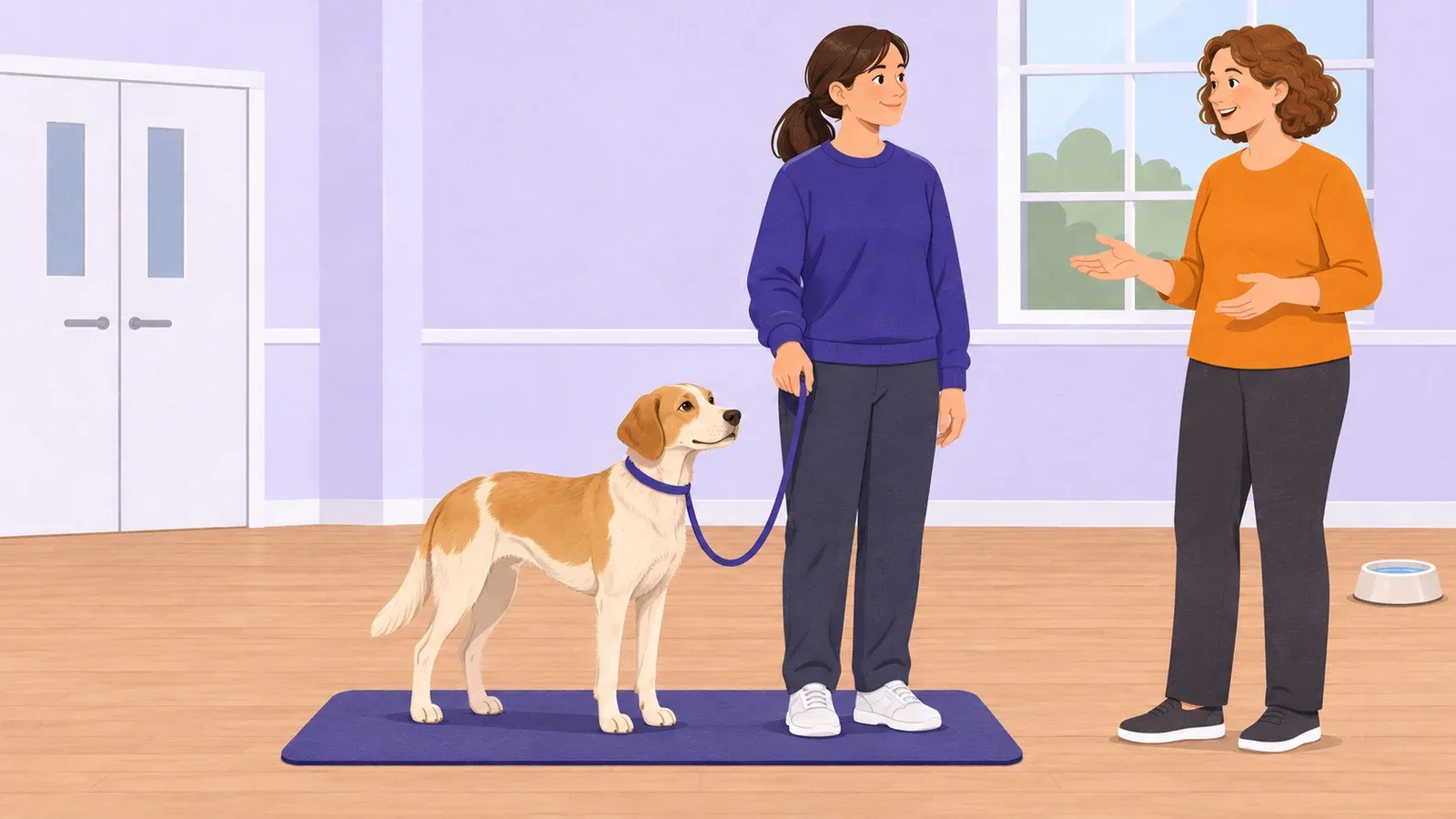
Let the instructor demonstrate. Reward a brief natural stand and a few calm steps on a slack lead, with breaks. Ask for one handling correction. The instructor may introduce a gentle examination if the dog is willing; it can wait. Do not hold a pose or force contact.
Watch for turning away, freezing or tension. Dogs Trust explains why stillness can signal distress. Give space or leave if the dog is uneasy; ask a vet about persistent changes. Practise one short, rewarded task at home. Ask a show organiser about eligibility before entering.
The £9 class and membership exclude dog care. Battersea’s October 2026 UK estimate is about £1,800–£2,000 a year, varying with the dog’s needs.

Showing, welfare and class details
- Royal Kennel Club ringcraft introductionUnderstand how handling practice relates to showing and how show eligibility differs by event.
- Central Essex ringcraft classCheck a real beginner class, secretary contact and its published membership and lesson fees.
- Battersea dog-care costsCompare the class fee with the continuing UK cost of caring for a dog.
- Dogs Trust stress guidanceRecognise when a dog needs space or a break during handling.
- PDSA kennel-cough guidanceCheck veterinary advice about illness before bringing a dog into a group setting.