How to start collecting antiquities with an evidence file
- Cost to start
- Free initial research
- Difficulty
- Moderate
- First result
- One candidate evidence file
Existing computer; expert review and buying costs are separate
Ownership and export history may be incomplete
Allow 60–90 minutes to record gaps and a hold or review decision
Choose one catalogued ancient ceramic, record what is claimed and documented about it, and decide what needs independent review before any purchase.
What you need to know
-
One ancient-object category
Start with ancient ceramics, such as Roman pottery, and choose one catalogue candidate with an identifiable seller and a stated history.
-
The catalogue record
Save the URL, lot or stock number, photos, description and date viewed. Download accessible supporting documents.
-
A simple evidence file
Make columns for a claim, its dated source, the document seen and what remains unverified. Keep original wording if the listing changes.
-
An independent review route
Identify an antiquities specialist and the relevant heritage or customs authority for later questions.
Record one catalogue candidate
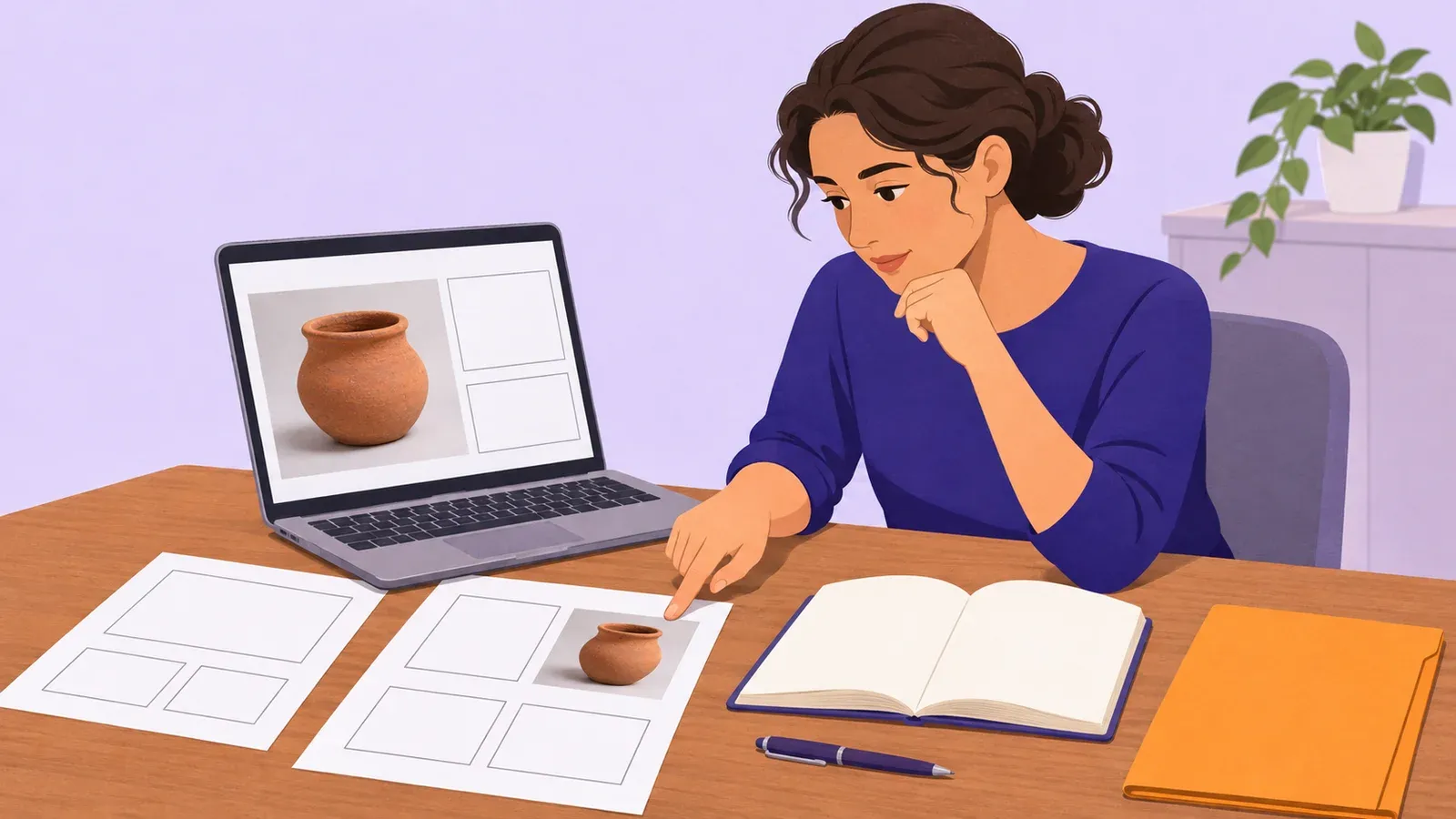
Pick one ancient ceramic from a dealer or auction catalogue. Spend 60–90 minutes making an initial file; this will not settle authenticity, title or export status. Record the seller, URL, lot number and date viewed. Copy the claimed culture, age, material, dimensions, condition and repairs. Note identifying marks. Label the description as a seller claim. Use the Responsible Art Market toolkit for ownership and document questions.
Build the ownership trail
In a dated table, record the claimed findspot, excavation, ownership chain, current authority to sell and border crossings. Beside each entry, put the document seen, its date, and what remains unverified. Ask for old photographs, inventories, earlier catalogue entries, invoices and export or import papers. Match their measurements and marks to this object.
If the listing says only “old private collection,” write down the missing owner’s name, dates and records. Mark that link unverified and ask the seller for the underlying documents. A receipt or seller’s certificate does not by itself establish lawful title; a pre-1970 history is no universal permission to own, export or import an object. An expert’s opinion on age or condition answers a different question.
Decide before spending
Check ICOM’s Red Lists for at-risk categories, not individual stolen objects. Record any planned INTERPOL database check as pending if you lack access. A database non-match cannot clear an unrecorded object.
Use UNESCO’s law database to find the relevant source-country rules and check their dates with the national authority. Check the export country and destination too. For an EU destination, consult the European Commission’s cultural-goods guidance. Ask the relevant authority or a cultural-property lawyer about title and permissions; ask an independent antiquities specialist about authenticity, condition and provenance. Do not validate a permit yourself.
End with hold, decline or independent review, and a reason. Keep bids, purchases, payments and shipments on hold until independent reviews address unresolved authenticity, title and movement questions. Decline if key history remains unsubstantiated. Get written expert and legal scopes, seller terms and full-cost quotes for price, premium, taxes, permissions, packing, shipping, insurance and storage before commitment.

Research the evidence
- Responsible Art Market antiquities toolkitBuild questions about ownership, authenticity, paperwork and missing history.
- ICOM Red ListsRecognize categories at risk of trafficking, without mistaking them for stolen-object listings.
- UNESCO national heritage laws databaseFind country-specific law records and identify questions for the relevant authority.
- INTERPOL stolen art databaseLearn which reported objects the database covers and how access works.
- European Commission cultural-goods rulesCheck EU import and export requirements and the relevant authorities.