How to start art collecting by choosing a first print
- Cost to start
- No purchase required to begin
- Difficulty
- Beginner
- First result
- A first-print decision
Allow for entry and travel; price framing and delivery
Choose for your taste and clarify what is being offered
Allow 45–60 minutes to compare two works and ask questions
Compare prints you enjoy, ask how they were made and editioned, and check condition, display needs and total cost before choosing your first acquisition.
What you need to know
-
Choose a place to look
Find a gallery or open studio with prints and someone who can explain them. Check hours, access and entry costs. Allow 45–60 minutes without a buying deadline.
-
Set a full-cost limit
Set a total budget and display or storage place. Measure it; image, paper and frame sizes differ. Allow for framing or protection and transport beyond the artwork price.
-
Bring notes and leave handling to staff
Bring a notebook or phone and ask before photographing. Let staff handle unframed sheets; keep hands, drinks and loose objects away from image surfaces.
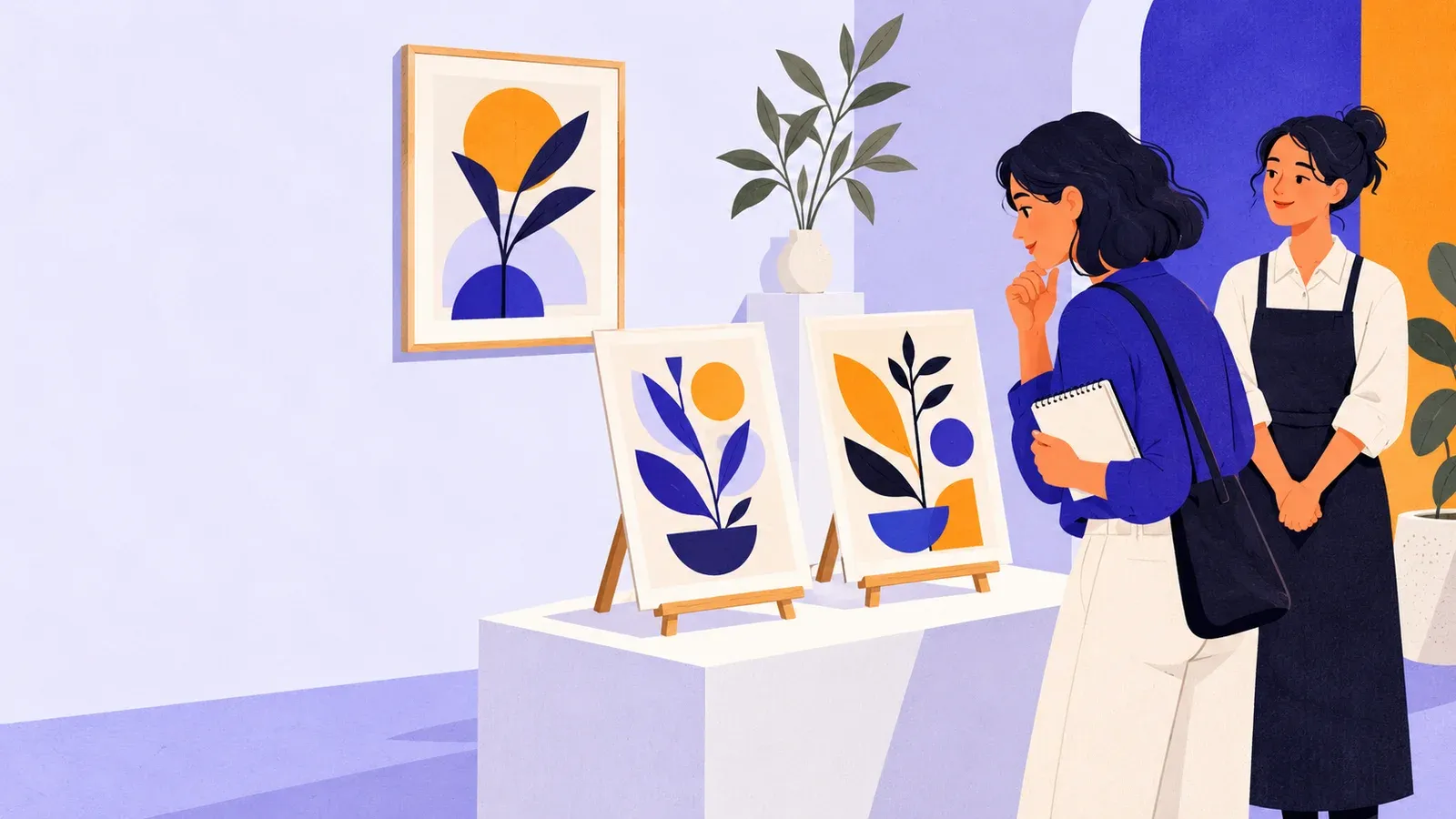
Compare two works on paper. Your first-print decision can be to choose, ask for information, or keep looking.
Choose with your eyes
Look at each print for a few minutes. Write a specific reason you would enjoy living with it: a line, subject, colour relationship or idea. Ask staff about the work. Compare its scale with your space. Record which you prefer and why; an edition number or price cannot supply that reason.
Ask what the print is
For the print you favour, ask for its artist, title, date, process, image and paper dimensions, and which sheet is for sale. Was the image made as a print or reproduced from another work? Multiple impressions can still be original artworks; the V&A’s introduction explains the processes.
Ask whether the edition is limited, its numbered size, this sheet’s number, and whether other proofs or versions exist. What written description or publisher documentation comes with this particular sheet? Tamarind Institute’s process guide distinguishes numbered impressions and proofs. Publisher practices vary. A signature or low number alone does not establish authenticity or quality.
Check condition, cost and care
Have staff show the actual sheet rather than a sample image. Ask about damage, changes or hand finishing, and note the answer. Add the price to framing or protective housing, packing and delivery costs in the relevant currency. Ask for the written description and the seller’s return terms before deciding.
Care depends on the paper and surface. Ask staff how this particular print should be packed and displayed; a plastic sleeve is not a universal solution. Keep paper away from direct light, heat and damp, and do not tape or clean it. The Library of Congress paper-care guide explains why materials and surfaces matter.
Choose this sheet, request an answer to an open question, or keep looking. Write your reason in terms of enjoyment, condition, space and total cost. If you buy, keep the receipt and description and let staff package the print.

Prints, editions and care
- V&A introduction to printsRecognize printing processes and understand how prints can be original artworks.
- Tamarind editions and documentationLearn about editions, proofs and the documentation to ask a print publisher for.
- Library of Congress paper careCheck handling and housing needs that depend on a work's paper and surface.

