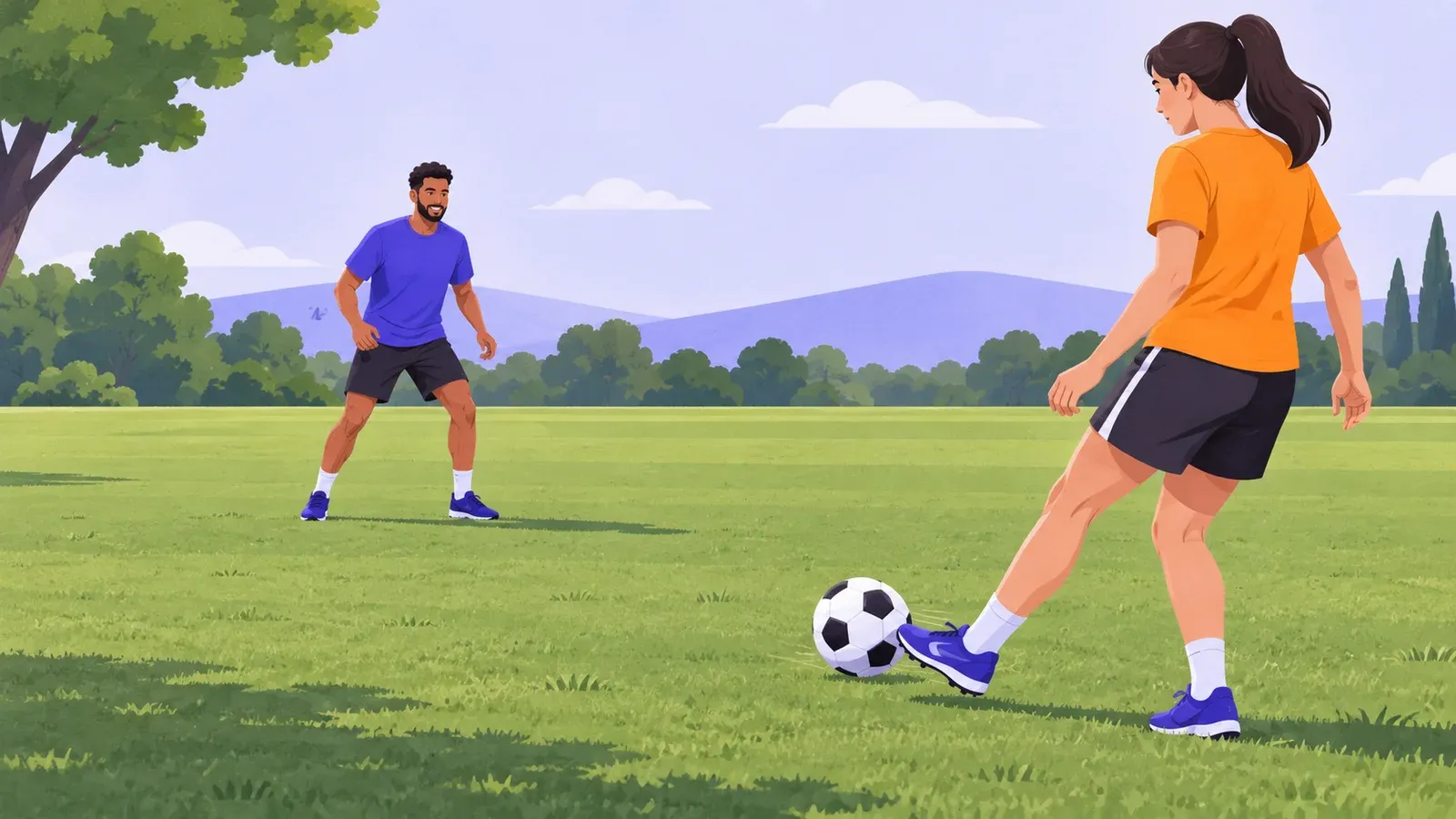
How to start association football with a partner
- Cost to start
- Free with a borrowed ball
- Difficulty
- Beginner
- First result
- Ten passes each
Assumes existing shoes and free space; gear or coaching costs extra.
Start with gentle ground passes and time to control each return.
Record controlled receptions during a 15–20-minute practice.
Try football with a partner using short ground passes and controlled first touches. Prepare a clear space, count your attempts and find a beginner session.
What you need to know
-
A borrowed football
Use an intact ordinary ball inflated according to its markings; no goal, cones or specialist ball are needed.
-
Shoes and clothes
Wear closed sports shoes with grip and clothes you can move in. If the ground is slippery, choose another spot or postpone.
-
A partner and clear grass
Agree on gentle passes in a permitted, dry, level space away from traffic, holes, obstacles and other users.
Association football, also called soccer, uses passes to teammates and controlled returns. In 15–20 minutes, make ten ground-pass attempts each and count controlled receptions. This is unopposed practice.
Pass to a ready partner
Walk and move your legs comfortably. Face each other about five metres apart, closer if needed. Keep the route clear and wait for the receiver’s ready signal.
Place your non-kicking foot beside the stationary ball, pointed toward your partner, knee soft. Turn the kicking foot outward so its broad inside faces the ball; keep the ankle firm. Swing through the ball’s middle and follow toward your partner. Keep your head and kicking knee over the ball to keep it low. Use enough pace to reach the receiver without making them brace. The Special Olympics Football Coaching Guide gives these passing cues on printed pages 74–75; it is not a current match rulebook.
Control, reset and count
Move into the rolling ball’s path with soft knees. Show the inside of one foot and let it give back slightly on contact. Leave the ball within an easy step, look up, check your partner is ready and make a separate return pass. Take another settling touch if needed. FIFA’s Part 1 pair exercise stresses a controllable pass pace; its later team exercises can wait.
Alternate until each person has made ten passes, twenty in total. A miss still counts. Pause, retrieve safely and give the ball to its intended receiver for the next turn. Each partner records how many of their ten incoming passes stayed within an easy step after the first touch. If passes lift, meet the middle rather than underneath and avoid leaning back. If first touches run away, pass more gently and let the receiving foot give. Move closer if chasing dominates. Stop for pain or uncertain balance; never chase into traffic.
Next time, try the other foot or ask a beginner group about sessions, fees, footwear and shin pads. In England, Just Play lists Learn to Play and Kickabout; elsewhere, ask a local club or association.

Learn the pass and find a game
- Special Olympics passing and control guideUse the passing and controlling sections of this coaching PDF to check your first touches and the pair drill.
- FIFA: passing and receiving in pairsRead Part 1 of this coached youth session for pass pace and controlled first touches.
- England Football: Just PlayIn England, explore Learn to Play and Kickabout, then check local availability and fees.