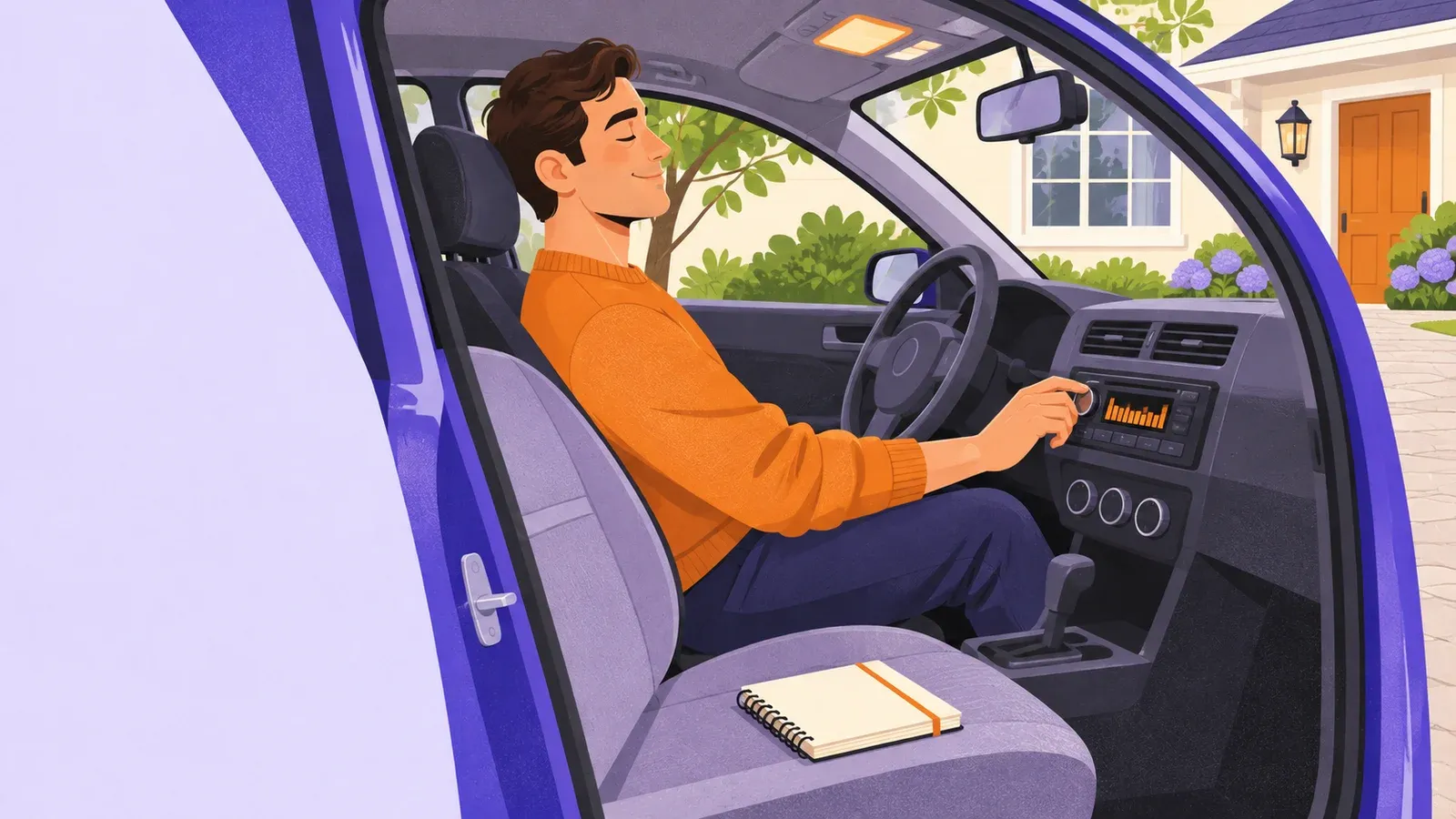
How to start auto-audiophilia with your car's stereo
- Cost to start
- Free with an existing car stereo
- Difficulty
- Beginner
- First result
- One car-audio comparison
Uses a working stereo, music and a connection you already have.
Compare one tone control at a steady volume and seat.
Allow 20–30 minutes in a safely parked car.
Compare one familiar passage in a safely parked car, test a reversible dashboard tone change and decide whether to keep or restore the original sound.
What you need to know
-
A working stereo and its manual
Use a car you may access and a working stereo. Get permission before changing someone else's settings. Check the exact vehicle and stereo manuals for engine-off audio operation, power limits and ordinary tone controls.
-
Familiar music
Choose a short passage with a voice and bass part you know, played through an existing connection or disc. Use the same source, passage and seat throughout the comparison.
-
A record of the starting point
Photograph or write down the current tone, balance and fader settings before touching them. Leave professionally configured or unfamiliar menus alone. A phone note or scrap of paper is enough.
Auto-audiophilia means listening to and improving car audio. Compare one familiar passage through the existing stereo, then record a keep-or-restore choice. No audible difference is a valid result.
Set up a stationary test
Park safely, secure the car as its owner’s manual directs and keep the engine off. Adjust only while stationary. Check the exact manual for engine-off audio operation and power limits; there is no universal battery-safe time. If the system shuts off or warns about the battery, stop. If this car cannot support the test, arrange a suitable parked-system demonstration instead of idling it.
Use the usual listening seat and a moderate volume. Crutchfield’s car-EQ guide explains ordinary tone controls in a parked car. Ask whether bass masks a familiar voice. Bass affects lower notes. Leave amplifier, crossover, calibration and service menus untouched.
Compare one change
Play the passage and notice the voice and bass. If your manual shows a normal bass control, lower it by one small step. Replay at the same volume, restore the original and replay again. Keep the source, seat and volume steady throughout.
If only presets are available, compare the original with one preset and record its name. A preset may change several settings. If sound rattles or distorts, lower volume and stop. The WHO’s safe-listening guidance links risk to level and duration; take breaks rather than raising volume to overpower noise.
Keep or restore
Record the track, passage, seat, original and tested settings, and what you heard. Keep the change only if you prefer it and the owner agrees; otherwise restore it. If unsure, restore and repeat on another familiar track later. Take a persistent rattle to a car-audio specialist for a parked assessment. SQOLOGY offers vocabulary for describing the sound when seeking feedback.

Car-audio listening and controls
- Crutchfield: adjusting a car equalizerLearn what ordinary dashboard tone and preset controls change while the car is parked.
- WHO: Safe listeningUnderstand how sound level and listening time affect hearing exposure.
- SQOLOGY: car sound-quality listeningLearn car-audio listening terms before seeking feedback on a sound-quality question.