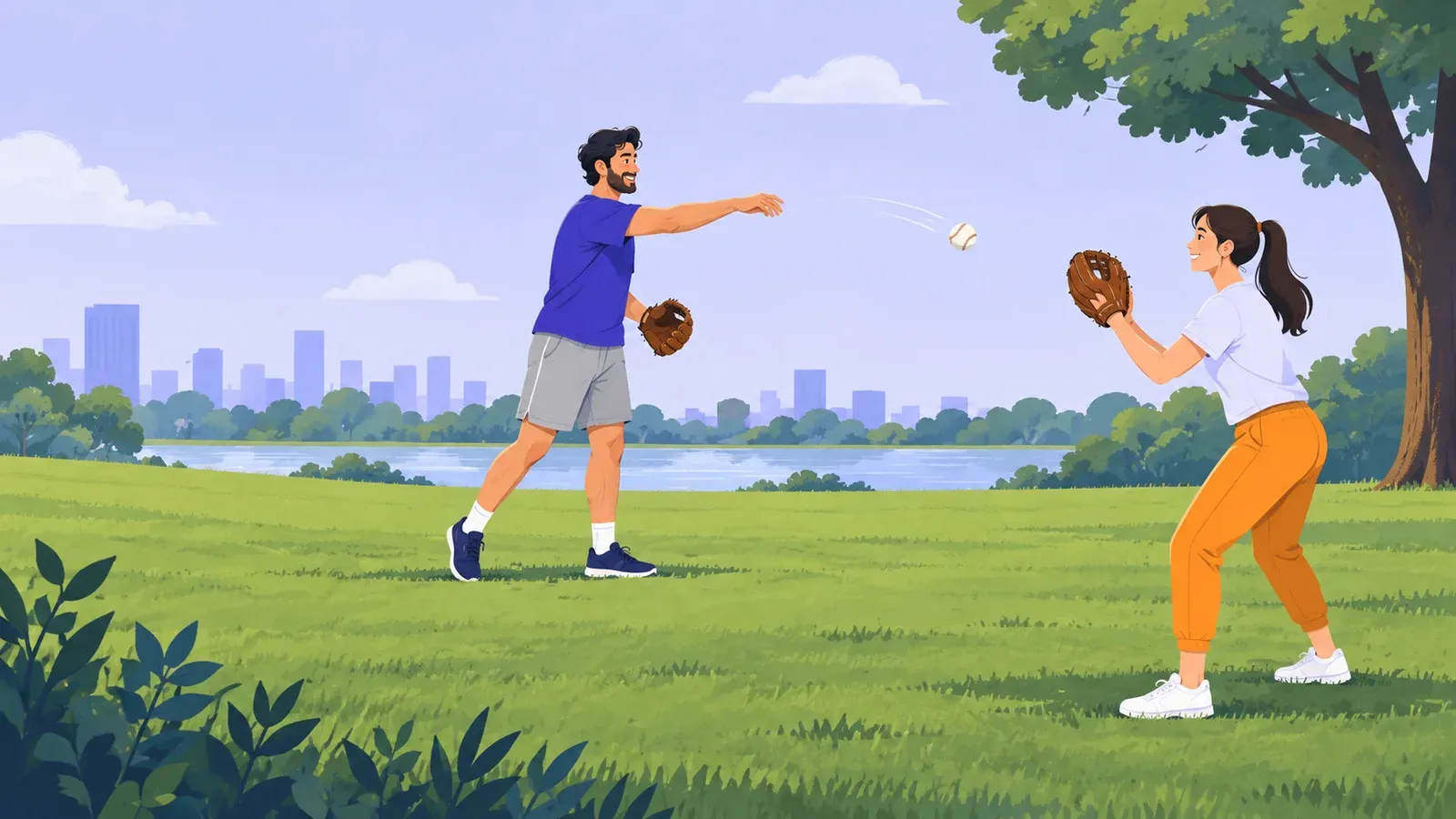
How to start baseball with a partner catch session
- Cost to start
- Free with borrowed gear
- Difficulty
- Beginner
- First result
- 15–20 minutes
Free space and borrowed gear assumed; travel and lessons cost extra.
Begin with gentle tosses and a partner who waits until you are ready.
Count comfortable catches from ten throws each.
Try baseball's throw-and-catch basics with a partner, borrowed gloves and a soft practice ball. Learn a ready target, gentle return and clear reset.
What you need to know
-
A partner and clear grass
Choose a patient partner and permitted, level grass away from traffic, others and breakables. Wear secure shoes.
-
One soft practice ball
Borrow a tennis ball or soft training baseball; avoid a full-speed hardball exchange for this first session.
-
Two fielding gloves
Borrow comfortable gloves that close easily. Each person wears theirs on the nonthrowing hand.
Baseball fielders catch, secure and return the ball. In 15–20 minutes, count comfortable catches from ten throws by each partner.
Show a target before every throw
Begin about three metres apart, or closer if needed. Exchange a few gentle underhand tosses to get used to the gloves; these do not count toward the ten throws each.
The receiver faces the thrower with soft knees and the open glove in front of the chest, fingers up. Keep the free hand near the glove, clear of the incoming ball’s path. Show that target or say “ready” before the other person throws. Aim gently at the glove, not the face. Watch the ball into the glove, close it, then secure the ball with the free hand before transferring it to the throwing hand. Little League’s first-week coaching plan diagrams the two-hand target and above-waist catch on printed pages 3–4. Its catch-and-transfer drill also waits for the receiver’s target before a return.
Make ten throws each
If both of you receive gentle tosses comfortably, try short overhand returns. Hold the ball with fingers on top and thumb below, without squeezing hard. Turn your glove-side shoulder toward your partner. Bring the throwing hand back and up, step toward the target with the foot opposite your throwing hand, then let the arm move forward and continue after release. Keep the throw gentle and chest-high. With a tennis ball, you do not need to find seams or a four-seam grip.
Take turns until each person has thrown ten balls, twenty throws in all. A missed catch still uses one throw. Each receiver notes how many of those ten arrived within easy reach and were caught comfortably. Rest or switch back to underhand if overhand returns are erratic. If the receiver reaches or flinches, shorten the distance and throw more softly. Let an unreachable ball land; stop before retrieving it. Stop for pain or discomfort.
Next time, repeat the exchange or try Little League’s location game, which rewards throws to the chest target. For batting, pitching and game rules, ask a local adult beginner group about coached sessions and equipment.

Learn the catch and return
- Little League: first-week coaching planSee the two-hand ready target and chest-height glove catch on printed pages 3–4 of this youth coaching PDF.
- Little League: catch and transfer drillPractise securing a catch, moving the ball to the throwing hand and waiting for a ready target.
- Little League: game of 21After basic catch feels comfortable, use this youth drill to practise gentle throws toward a chest target.