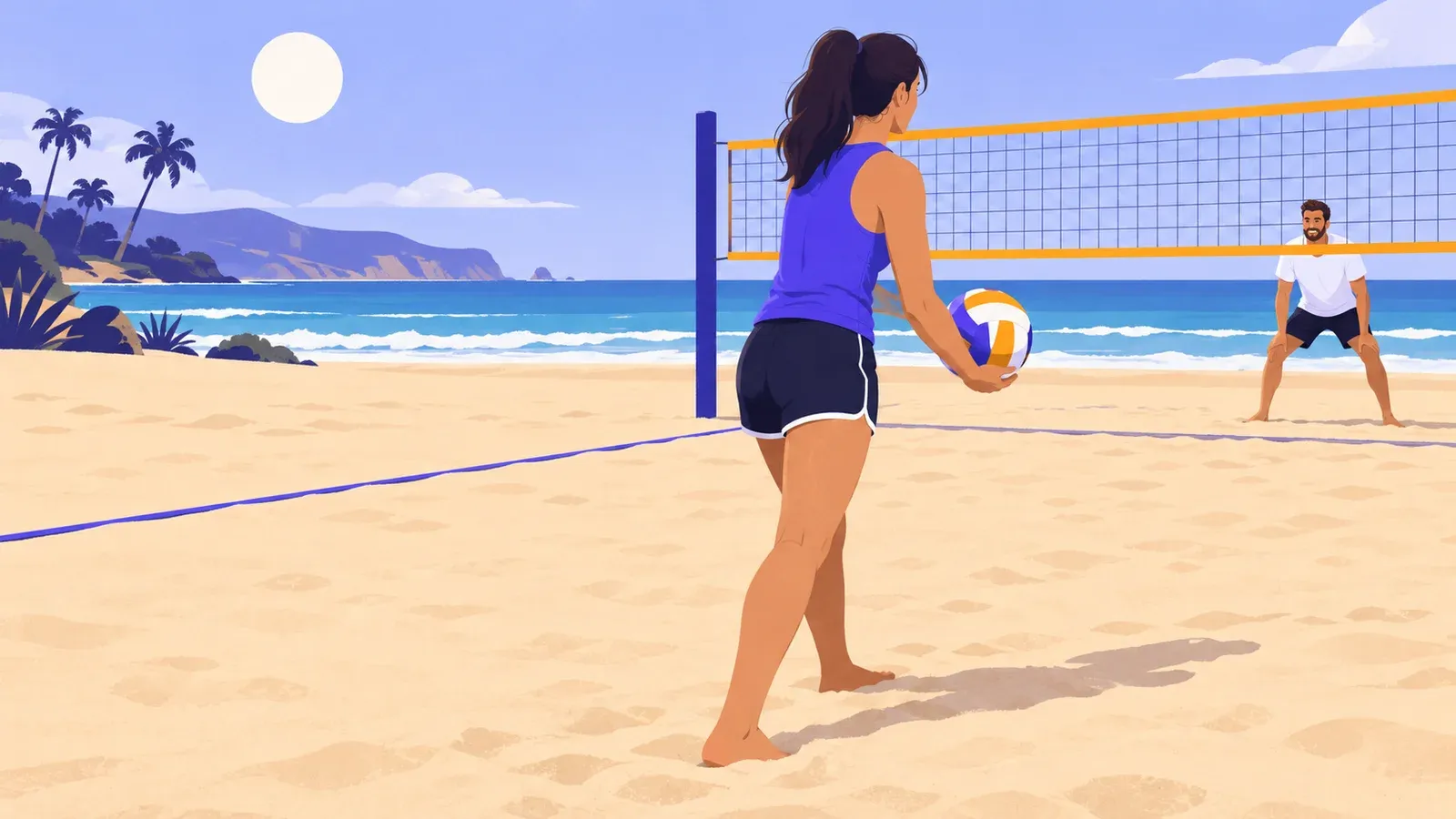
How to start beach volleyball with an underhand serve
- Cost to start
- Borrowed ball + court fee
- Difficulty
- Beginner
- First result
- Twelve practice serves
Borrow a ball; check local court or beginner-session charges.
Short underhand serves before full-court play.
Count twelve tries each, including serves that miss.
Try an underhand serve on a sand court with a partner. Start closer than the end line, count twelve attempts each and note where your serves land.
What you need to know
-
Permitted sand court and partner
Book or find a maintained court with a net, then check access, charges and a quieter time. Ask a willing partner to retrieve balls.
-
One beach volleyball
Borrow a suitable ball if available. Ask the venue about a loan or beginner session before buying equipment.
-
Outdoor basics
Bring water, sun protection and clothes for moving on sand. Follow facility footwear advice and weather closures.
Beach volleyball is usually played two against two on sand. In 20–30 minutes, practise standing underhand serves from a shortened distance. Count attempts and landings; this is not a match.
Set up on the sand
Check for sharp debris, holes and sand too hot to stand on. Report unsafe ground and stop for thunder. Walk and side-step to feel your footing. Leave diving and hard hits for coached play. The FIVB drill book has beginner sand warm-ups and smaller-court games.
Stand about three metres from the net, facing the opposite court’s middle. Your partner waits to the side on the far half, clear of the ball’s flight. They let each serve land before retrieving it.
Release, strike and count
Put the foot opposite your hitting hand slightly forward. Hold the ball low in your other hand. Swing the hitting arm back and forward like a small pendulum. Release the ball before contact, then strike its lower rear with the heel of a firm open hand. Follow toward the target. A low release is enough; no high toss or jump is needed. FIVB rule 12.4.1 requires release or toss before contact.
Make six attempts, including misses. Count a landing when the ball crosses the net and lands in the opposite court. Pause while your partner collects the stopped ball and returns it gently once you are ready. Swap roles for six serves, then repeat. Each person makes twelve attempts, twenty-four together. Record each six-attempt tally and the starting distance. This is practice, not match scoring.
If serves fall short, move nearer for practice or ask a coach to check contact. If they veer, check your arm swing’s direction. Note distance changes beside your tally. Formal serves start behind the end line under FIVB rule 12. For receiving, two-player positioning and full-court serving, look for beginner coaching. In England, Volleyball England offers a club-finder route; check places, equipment and fees.

Learn serving and find a session
- FIVB: beach volleyball drill bookRead the beginner warm-ups and smaller-court games for a later coached session.
- FIVB: beach volleyball rules 2025–2028Check rule 12 for formal serving and rule 1 for the court and playing area.
- Volleyball England: beach volleyballExplore the game and a club-finder route in England, then check local sessions and fees.