Try beekeeping at a supervised apiary visit
- Cost to start
- Free Welsh taster example
- Difficulty
- Beginner
- First result
- One dated hive observation
Loan suit. Gloves, wellies and travel extra
Observe while an experienced beekeeper handles the hive
A booked visit is roughly two hours when weather allows
Join an adult teaching-apiary visit, learn to spot developing bees and food stores with the beekeeper, then leave with one dated observation and a next step.
What you need to know
-
A confirmed teaching-apiary visit
When booking with an association, ask about weather cancellation, uneven access, suit sizes, the fee and whether an open hive is likely.
-
Gloves, boots and covered clothing
Ask which gloves the organiser accepts and wear boots covering your ankles. Check the loan suit's fit before entry. Leave hive and tool purchases for later.
-
A note to make afterwards
Keep a notebook or phone ready for a note after the visit. Listen while the hive is open.
Book an adult taster visit
Use the Welsh Beekeepers Association to find a local taster. In Penllergaer, Wales, UK, West Glamorgan Beekeepers Association listed free Sunday visits, 10am to noon from late April to September, weather permitting (checked November 2026). Book ahead. They lend a suit. Bring gloves and wellies. Travel and missing kit cost extra. Confirm availability and fees elsewhere.
Tell the organiser about a known bee-sting allergy or past serious reaction. Seek personal clinical advice before a live-bee visit if you have reacted severely.
Let the beekeeper handle the hive
Have the leader check your veil zip, cuffs, gloves and covered ankles before entry. Ask where to stand and what to do about a sting or bee inside your suit. The Welsh association’s precautions call for these checks. Protection cannot prevent every sting. If stung or a bee enters, tell the leader, follow their exit instructions and keep your veil closed until clear.
In the UK, call 999 after a sting if breathing is difficult, the mouth, throat or tongue suddenly swells, or someone collapses. Use the local emergency number elsewhere. The NHS guide covers ordinary care.
Look at one frame and write it down
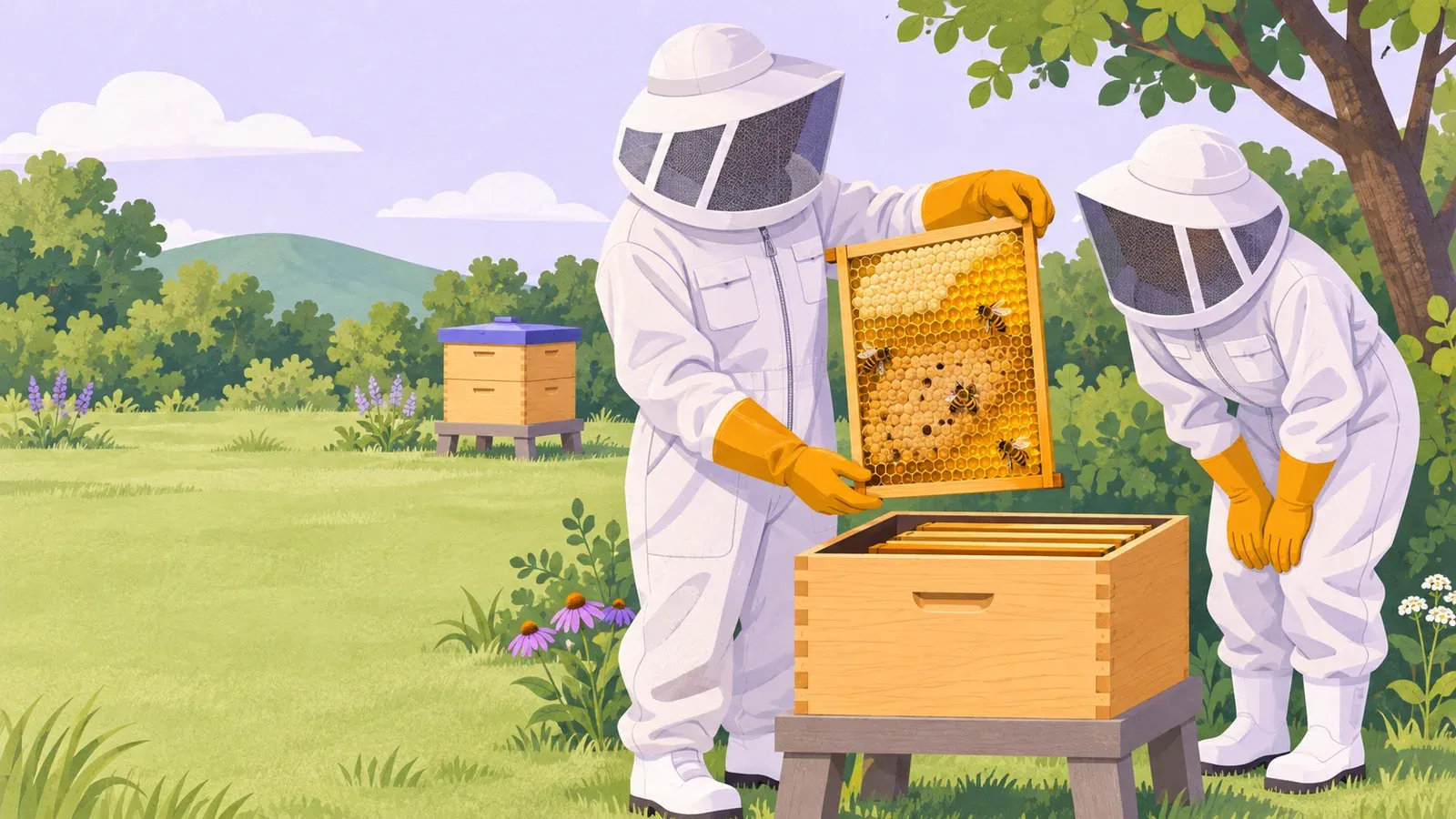
Watch the beekeeper hold a frame above the hive. Ask them to show wax-capped brood cells (developing bees) and stored pollen, if visible. The University of Guelph’s hive guide explains both uses of comb. There is no need to find the queen. Do not lift frames or use the smoker.
When the leader closes the hive and clears you to remove protection, note the date and a question. A sample observation is “The beekeeper showed capped brood and pollen in the comb.” If either was not shown, write that instead. Ask about a beginner course, mentoring and seasonal care before considering ownership.

First-visit guides
- Welsh Beekeepers Association beginner trainingFind Welsh association taster days, courses and local contacts.
- West Glamorgan free taster visitCheck the seasonal visit, loan suit, clothing requirements and booking contact in Wales.
- Welsh Beekeepers Association apiary precautionsReview protective clothing checks and the sting procedures a visit leader should explain.
- NHS insect sting guidanceRead UK first aid advice and signs that need urgent or emergency help.
- University of Guelph inside the beehiveLearn how frames hold comb used for developing bees and food storage.