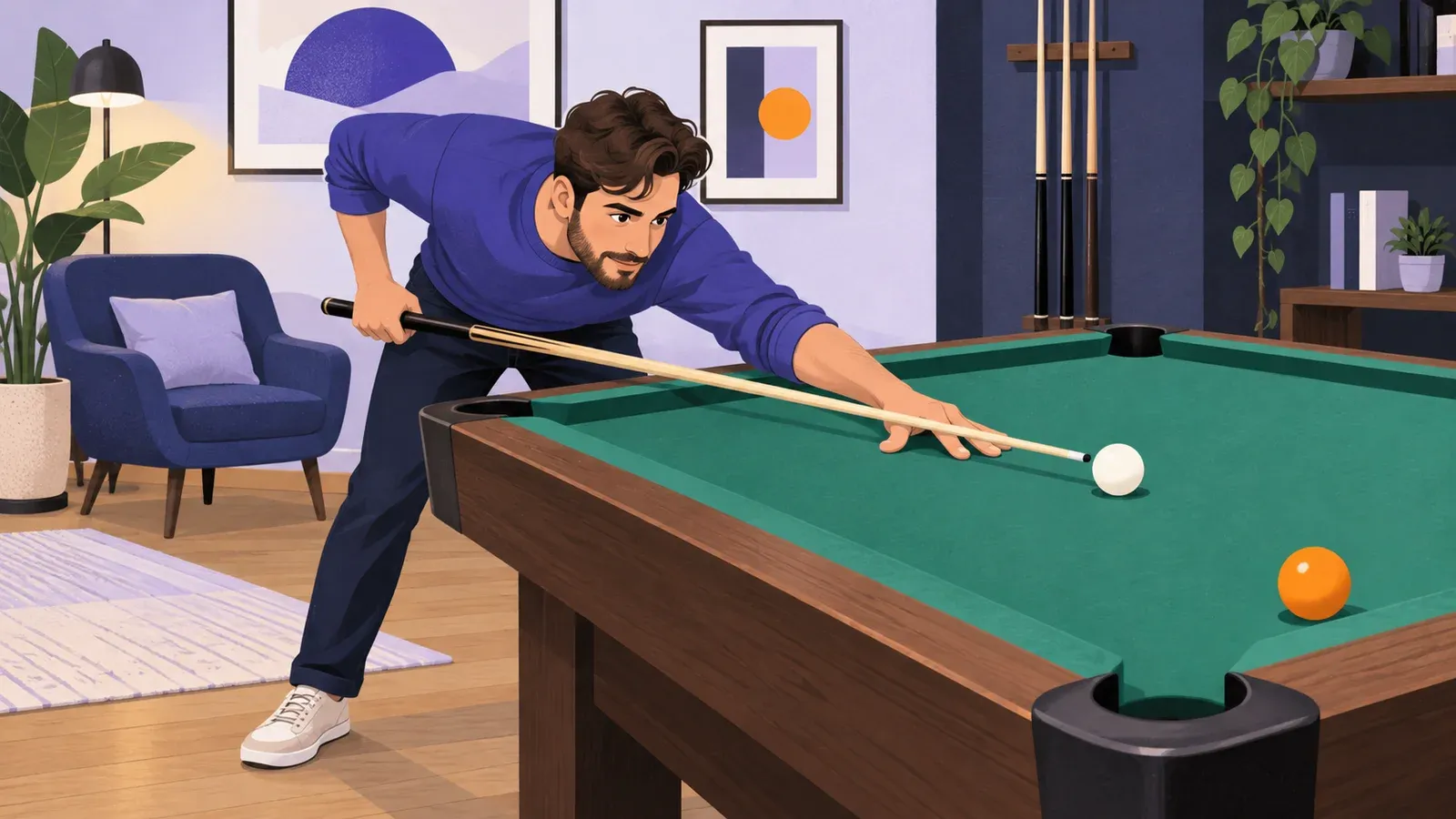
Start billiards with a simple pool practice
- Cost to start
- Venue fee or free access
- Difficulty
- Beginner
- First result
- Ten straight-shot attempts
Check minimum booking, equipment and ball-reset terms first.
Start with short straight shots and a comfortable stance.
Record object balls potted and cue-ball scratches separately.
Try billiards on a pool table with a borrowed cue, a steady bridge and ten close shots. Learn what to prepare, count and change on your first visit.
What you need to know
-
A resettable pool table
Check that you can practise at a six-pocket table, retrieve pocketed balls and reset them. Confirm the minimum fee or booking.
-
Cue and chalk
Borrow an intact house cue with a sound tip and cue-tip chalk; ask staff for a comfortable cue.
-
Two balls and a tally
Use the table's white cue ball and one object ball. Record pots and cue-ball scratches on paper or your phone.
Billiards includes pool, carom and snooker. On a six-pocket pool table, make five cue-ball strokes and ten close pot attempts in 20–30 minutes. Record pots and scratches. Confirm resets are allowed and keep any booking within budget.
Send the cue ball along a line
Leave space behind the cue and wait for others to clear its path. Keep drinks off the table. Chalk the tip. Choose a line from mid-table toward the centre of an end cushion, then take a balanced stance. Rest your front palm on the cloth, fingers spread; raise your thumb against your index finger to form a V for the cue. Hold the back lightly and nearly level. Dave Alciatore’s illustrated checklist shows this bridge and grip.
Make a few slow practice strokes, stopping short of the white ball. Strike near its centre gently and smoothly, keeping your bridge hand and body still. Let the cue follow through without pushing the ball. Watch it roll toward the cushion. When it stops, retrieve and reset it. Make five strokes, noting whether the ball starts along your chosen line. If it wanders sideways, check bridge and cue alignment.
Try ten short straight pots
Place an object ball 20–30 cm from a corner pocket and the white ball about 30 cm behind it, their centres lined up with the pocket. Leave room for your bridge; reposition the balls rather than stretch. Aim through the white ball’s centre toward the object ball. Stroke smoothly to send the object ball toward the pocket. Wait for both balls to stop, reset the layout and repeat ten times.
Mark a pot when the object ball enters the pocket. Mark a scratch separately if the white ball enters any pocket, even on a pot. The WPA rules define scratches and shot completion; agree on rules before a game. If pots keep missing, check the alignment and stroke. If scratches recur, ask an instructor about cue-ball control; gentler pace alone may not solve them. The PBIA directory lets you ask about lesson terms.

Build a stroke and learn what follows
- Illustrated grip, bridge and stroke guideUse Dave Alciatore's photos and checklist to make a stable bridge and smooth stroke.
- WPA pool rules: eight-ballRead the eight-ball section before a first game and agree which rules to use.
- PBIA instructor directorySearch for an instructor, then ask about a beginner lesson, location and price.