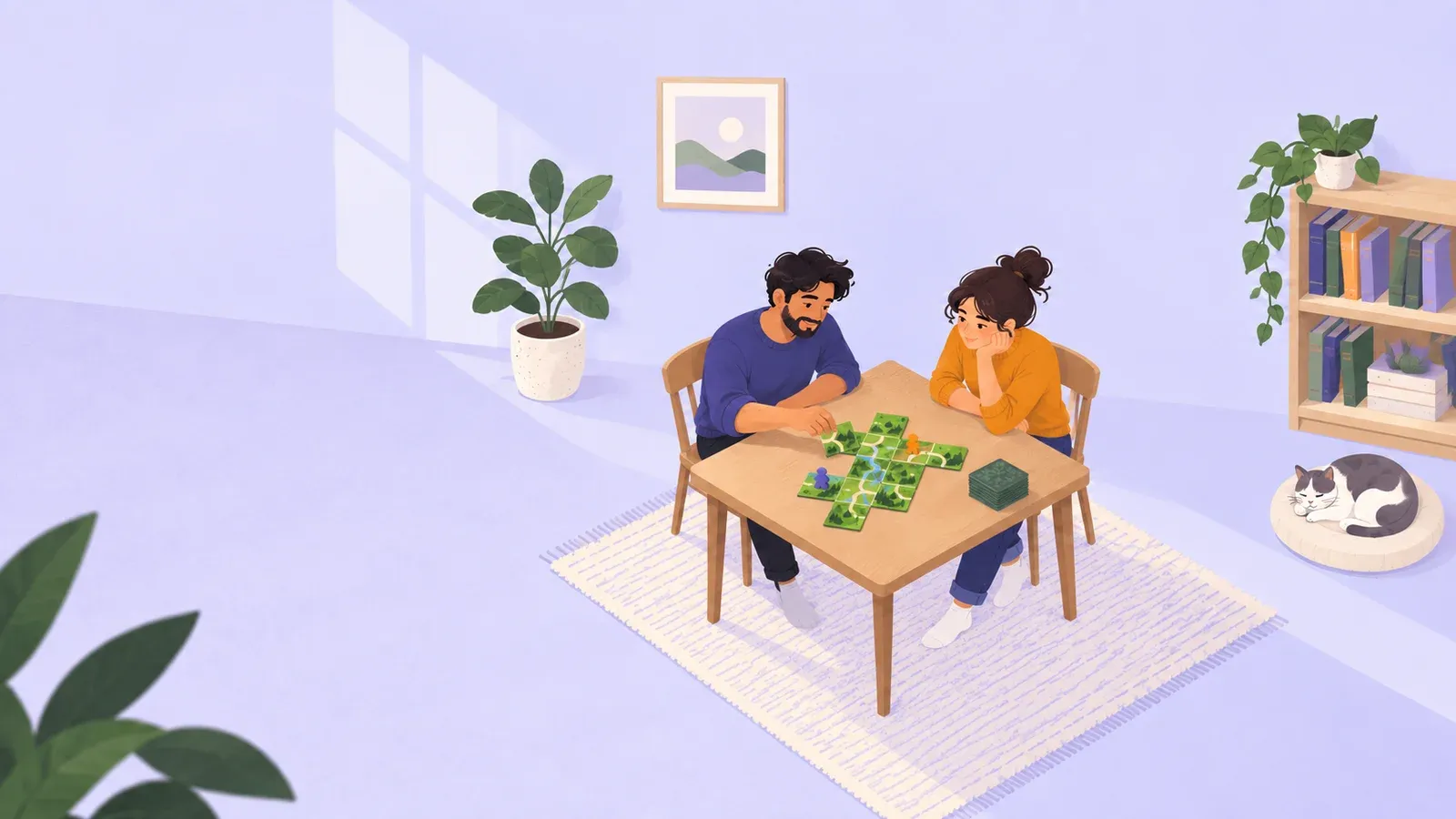
How to start board and tabletop games with a first game night
- Cost to start
- Free with a borrowed game
- Difficulty
- Easy
- First result
- 60–90 minutes
Home session; game purchases and venue fees are optional
Pick a short game and allow time for teaching
Learn and finish one short game together
Choose a game that fits your group, learn the rules, and finish a relaxed first play. Begin with a borrowed box and build a game night people want to repeat.
What you need to know
-
Choose for the people who will play
Check player count, reading demands, theme and available time. A short game everyone wants to try is a better starting point than a highly rated game nobody has time for.
-
Borrow one complete base game
Ask friends, a local library or a game group about a loan or teaching session. Check the components against the rulebook before people arrive.
-
Learn the ending before the first turn
Everyone should know what they are trying to achieve, what happens on a turn and what ends the game. Demonstrate these with the actual pieces.
-
Treat the first play as a shared lesson
Allow questions and agree how to handle accidental moves. Finish the game, check the score together and decide whether the group wants another play.
Board and tabletop games turn a set of rules and physical pieces into a shared problem, contest or story. You might build a landscape, trade cards, solve a mystery or work together against the game. The hobby can be as small as two people replaying a favorite box on a quiet evening.
For your first session, choose one short game, one willing group and enough time to learn without rushing. A borrowed game makes a home session free. Allow 60–90 minutes for a game advertised as taking roughly half an hour, including setup, explanations and questions. Your first result is a finished play and a decision about what the group would enjoy doing again.
Match the game to the people at the table
Start with the actual number of players and how much uninterrupted time they have. Check the publisher’s player range rather than assuming every game works with two people or a large group. Ask whether people want light conversation, a shared challenge or a contest in which each player makes their own plans.
Consider reading and physical access too. Can everyone read the card text, distinguish the symbols and reach the shared pieces? Does the game require fast reactions, spoken clues or hidden information? A visually attractive box can still be a poor fit for someone’s needs. Look at the components and rules before choosing.
Two examples show the difference in feel. Carcassonne is a competitive tile-laying game whose publisher lists two to five players and 30–45 minutes. Players develop a shared landscape while scoring individually. Forbidden Island is a cooperative adventure listed for two to four players and about 30 minutes, with a team working to retrieve treasures and escape. These are examples to borrow or try, not a required shopping list.
Choose a standalone base game for the first evening. An expansion usually adds rules or requires another box; check before borrowing one by mistake. Save campaign games with persistent progress for a group that already knows it wants repeated sessions.
Borrow a box and check what is inside
Ask a friend to lend a complete game or teach one they know. Local game groups, shops and libraries may offer demonstrations or play sessions. In the United States, the American Library Association’s Games and Gaming Round Table supports game collections and programming. Availability is local, so ask your library directly about borrowing, reservations and event requirements.
A game café can be useful when someone is available to explain the rules, but check its table fee, time limit and any food or drink minimum. If you buy a game, compare the complete cost in your currency and confirm the edition and language. Card text can make language matter even when an online rulebook is available.
Open the box before inviting everyone. Use the component list to check the important cards, tiles and tokens. Keep different decks separate, and identify the setup pieces. A missing scoring token may have a harmless substitute; missing unique cards can prevent proper play. Ask the owner before marking, replacing or changing anything in a borrowed copy.
Clear enough table space for the game to grow, put drinks out of the playing area and provide comfortable seating. Leave room for the rulebook to stay open. You need the game and its instructions; accessories such as playmats, sleeves and storage inserts can wait.
Learn the goal and rehearse a turn
One person should prepare to explain the game. Read the objective, setup, turn sequence and ending before concentrating on unusual exceptions. Use the rulebook that belongs to the edition you have. The publisher’s website is the best first place to look for a replacement or an official correction.
Set the game up alone and move through a sample turn using two player positions if appropriate. Ask four questions: What can I do? What limits that choice? What changes afterward? When does someone win or the game end? Put a bookmark beside anything you cannot yet explain.
A teaching video can help show the flow, but check its edition and return to the written rules for uncertain details. Take a few brief notes in your own words. Avoid making everyone sit through the entire rulebook read aloud when a demonstration would make a turn clearer.
For the tile-laying example above, the useful overview is that players add to a shared map and use a limited supply of pieces to claim scoring opportunities. Demonstrate the placement and scoring rules with the actual tiles, following the supplied instructions. You do not need a strategy lecture before people understand what a legal turn looks like.
Give everyone a practice turn
Begin by explaining the premise and the objective in a sentence or two. Show the ending condition early so people understand what their choices are building toward. Point out shared supplies, personal pieces, turn order and any information that must stay hidden.
Demonstrate one ordinary turn, including any automatic cleanup or refill that follows it. Then invite each person to try a practice turn and say what they think happens next. Use questions to check understanding: “Where could this piece go?” is more useful than repeatedly asking whether everyone understands.
Agree whether those turns count or whether you will reset before the real game. Do not discover halfway through that some players thought they were still practicing. Explain how you will handle accidental moves: allowing a simple correction before new information appears is one possible learning-session agreement, provided everyone accepts it.
In a cooperative game, give the active player room to decide. Discuss options, but ask before taking over their turn or moving their pieces. A shared win is more enjoyable when everyone has participated in reaching it.
Finish the game without chasing perfect play
During the first play, expect pauses. Keep the rules nearby and nominate someone to look up a disputed point while others leave the position intact. Search the relevant heading or example first. If you cannot settle a minor ambiguity quickly, agree on a temporary ruling, note it and check afterward. Apply it consistently for that session.
Keep advice proportionate. Explain a rule someone missed, but avoid narrating the best move for every player. Give people time to discover why a choice matters. If a decision stalls, help narrow it to a couple of legal options without demanding that someone optimize the entire game.
When the ending condition occurs, walk through scoring or the cooperative result together. Check any end-of-game bonuses separately from points already counted. Notice one moment that became clearer as you played: conserving a limited piece, timing a move or spotting what another player needed.
A loss or a rules mistake does not erase the session’s value. The practical success is that the group reached the end, understood the result well enough to discuss it and learned what to change for the next play.
Repeat before building a collection
Ask each person what they enjoyed and what slowed the game down. Keep the discussion concrete: too much reading, long waits, interesting choices or a satisfying shared plan. Those observations make the next selection easier than a numerical rating alone.
If the game went reasonably well, replay it before switching to something new. The second play gives you a chance to make decisions with the rules already in mind. If it was a poor fit, change one major feature next time, such as session length or cooperation versus competition.
Photograph the packed components if that helps you return a borrowed game correctly. Check under the table for missing pieces and arrange the return. Then schedule another manageable session. Buy a copy only when you know who will play it and when; a small collection that reaches the table regularly can support years of enjoyable evenings.
Two game examples and a place to look
- Carcassonne publisher pageA tile-placement example for two to five players. Includes the official description and rulebook downloads; check the rules for the edition you borrow.
- Forbidden Island publisher pageA cooperative example for two to four players, with a shared objective and official rules. Useful for comparing cooperation with individual scoring.
- American Library Association GameRTExplains library game collections and programming in the United States. Ask your own library which local borrowing or play sessions are available.