Boxing: start with a non-contact beginner class
- Cost to start
- £13 England class example
- Difficulty
- Beginner
- First result
- Balanced stance and short steps
Nov 2026 class fee; wraps and travel extra; confirm full price
Coach-led movement without person contact
Light target jabs only if the coach approves
Book a coached class without sparring, practise balanced footwork and try a few light jabs on a pad if the coach says you are ready.
What you need to know
-
Prepare for the class
Confirm the adult beginner slot, session length, arrival time and forms to complete. Ask about any access arrangements before travelling.
-
Arrange gloves and wraps
Ask whether the club lends suitable gloves and requires your own clean wraps. Have the coach check both before pad work and refit tight wraps.
-
Wear clothes you can move in
Choose comfortable sports clothes and secure trainers. Remove jewellery as the club asks. Check its equipment list before buying anything.
-
Plan water and rests
Bring water and tell the coach you want an easy first pace. Take breaks when needed rather than trying to finish every round.
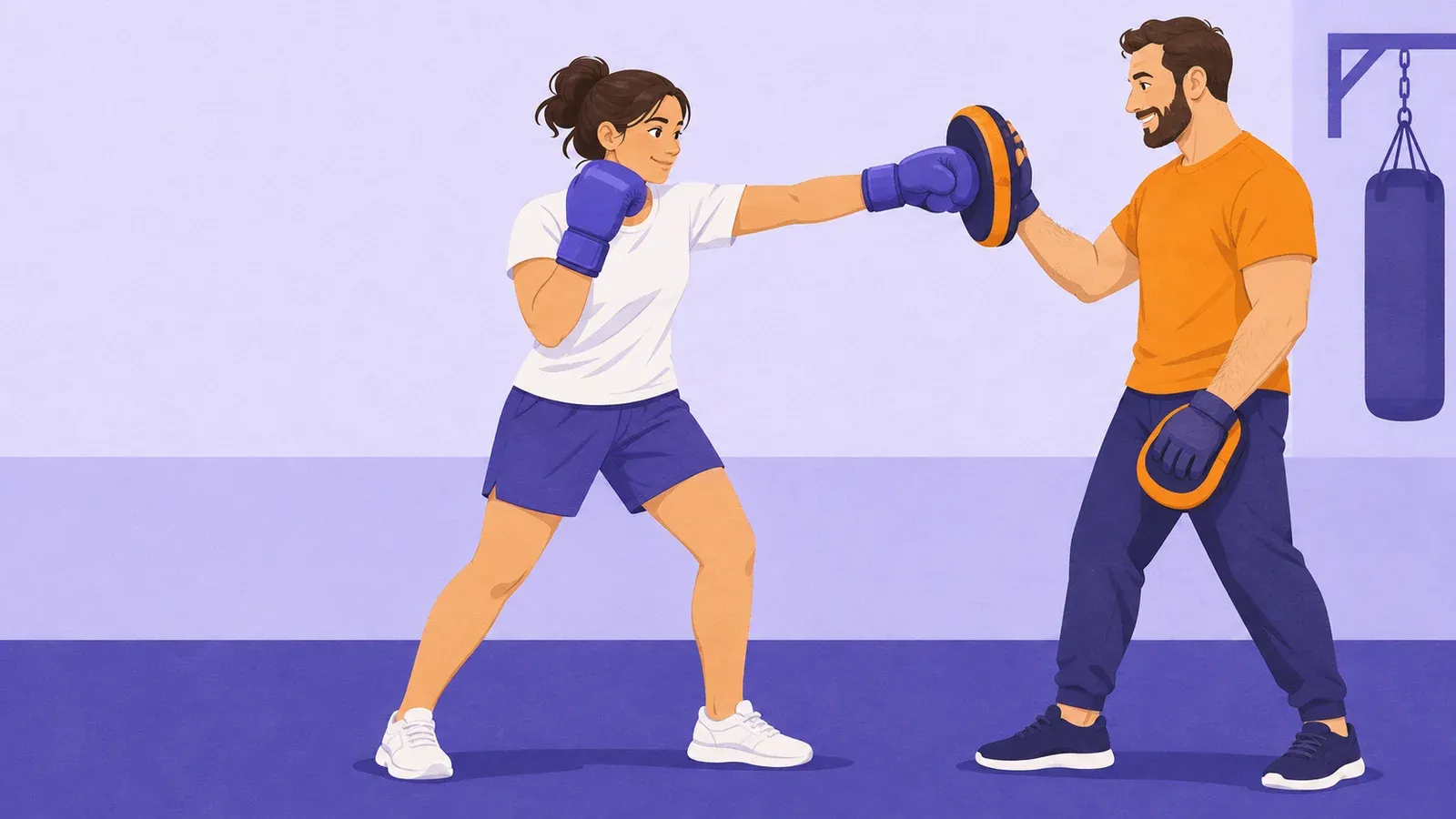
A first class can focus on stance, guard and small steps. If ready, try a light straight lead-hand jab on equipment. Nobody punches another person.
Choose a non-contact beginner class
Use England Boxing’s guidance to check an English coach’s licence. Before paying, confirm a beginner session with no sparring, partner contact drills or punches at people. “Recreational” does not guarantee that. Tell the coach about injuries, access needs and symptoms. If suitability is uncertain, especially after a recent concussion, seek medical advice first.
In November 2026, Islington Boxing Club in London, England listed a £13 adult non-member class fee, with loan gloves and required wraps. Wraps and travel cost extra. The listing does not secure a future place, a no-contact reservation or personal pad time. Confirm the full price, booking terms and class format.
Find your stance and try a light jab
Warm up as directed. Have the coach check glove and wrap fit before hitting equipment. Set feet staggered with knees soft and hands up; practise short steps without crossing your feet. The England Boxing coaching handbook explains stance, footwork and the jab on pages 66–73.
Practise a slow lead-hand jab in the air. If the coach approves pad or bag work, jab lightly with a straight wrist. Breathe out and return the hand to guard while the other stays up. If you reach toward the target or cross your feet, stop, reset with the coach and shorten the reach. Continue footwork if target work must wait.
Stop and report hand or wrist pain, dizziness or feeling unwell, following NHS exercise advice. If you hit your head and have possible concussion symptoms, end training and seek medical assessment. Cool down as directed; ask for one cue to bring to the next non-contact class. The lesson gives no sparring clearance.

First classes and preparation
- England Boxing coach checkLearn how to check a coach's qualifications and licence before booking an English club session.
- Islington Boxing Club recreational classesCompare the listed England class fee and kit requirements, then confirm a strictly non-contact booking.
- NHS exercise warm-upReview simple warm-up movements and advice on exercise suitability and stopping for pain.