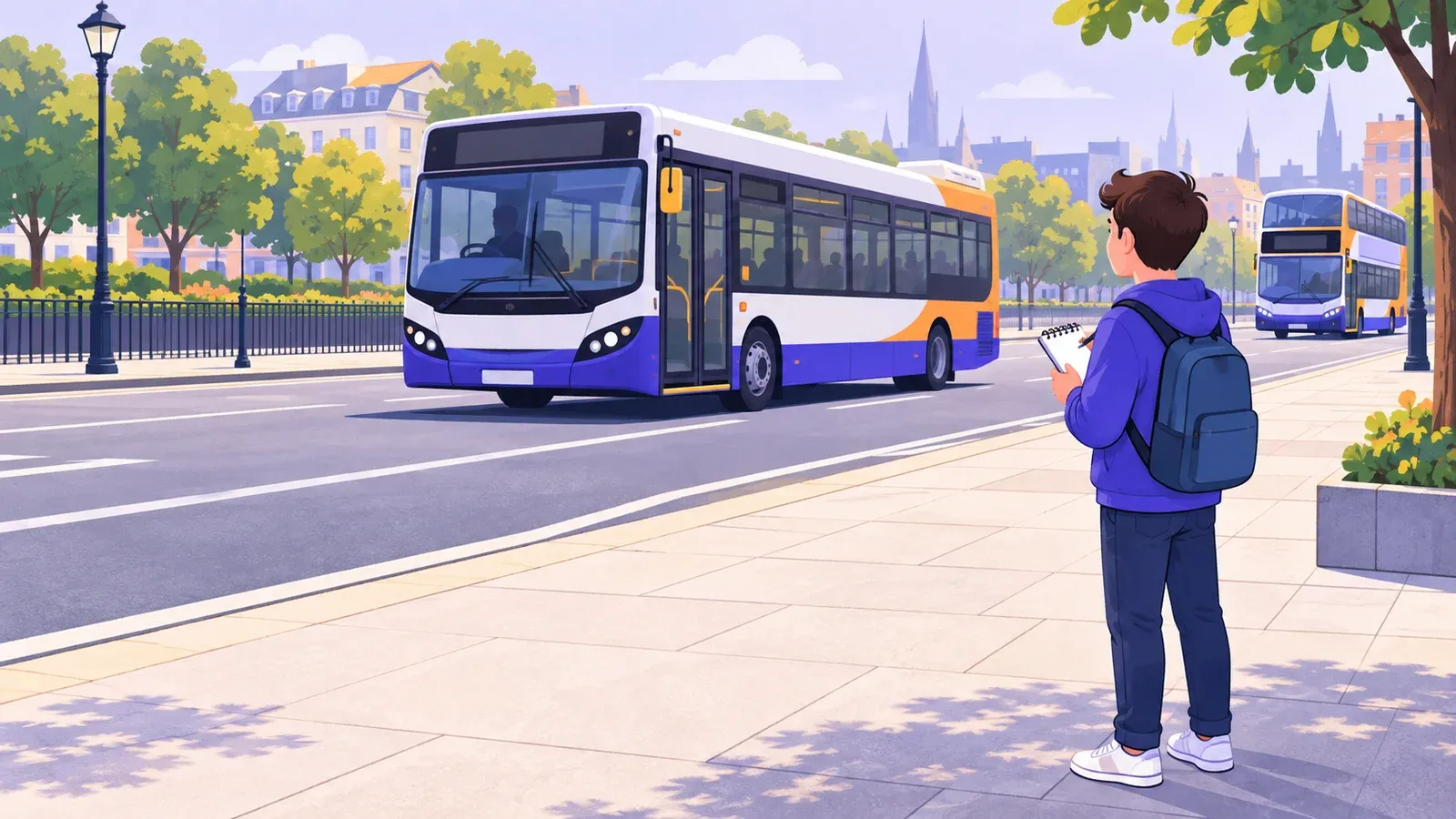
How to start bus spotting near home
- Cost to start
- Free with a notebook or phone
- Difficulty
- Easy
- First result
- A short bus log
Assumes a public pavement; travel may cost extra
Learn route numbers and individual vehicle identifiers
Allow 20–30 minutes on a route with regular service
Choose a safe public viewpoint, record the buses serving a local route, and learn to separate route numbers from vehicle identifiers without buying special kit.
What you need to know
-
Choose a route and a broad pavement
Check current local service information and visit in daylight. Stand where you can see buses without blocking a stop queue, boarding area or crossing; choose another place if space is tight.
-
Prepare a small log
Bring a notebook and pen or a charged phone. Leave space for date, time, direction, operator, displayed route and destination, and any legible vehicle number. A camera is optional.
-
Plan for the weather and trip home
Wear clothing for the forecast and know your return route. A child should go with a responsible adult. Check access and photography rules before using a bus station instead.
Bus spotting suits people who enjoy noticing vehicle design. Aim for three actual sightings from one public pavement; service may change.
Watch from one safe place
Stand on a broad public pavement, back from the kerb and clear of queues, crossings and cycle tracks. Do not enter a bus lane, follow a bus across traffic, or enter a depot for a photo. The Highway Code’s pedestrian guidance covers Great Britain; elsewhere, check local guidance.
Check local timetables or service updates. TfL’s bus maps show London routes and stops. A timetable helps choose a time, not prove a sighting. If the space gets crowded, move safely or end the session.
Separate route from vehicle
After each bus passes, record its displayed route and destination, operator if recognizable, and any legible fleet number or registration. The route identifies the service; a fleet number or registration can identify the particular bus. Keep the operator with a fleet number, as another company may reuse it.
If an identifier is unclear, write “unknown” and describe whether the bus has one or two decks and its colour. Stay put rather than moving toward traffic. The same bus seen twice makes two sightings, one vehicle. Where photography is allowed, keep flash off and avoid making passengers or staff the subject.
Check one entry afterward
Compare a clear identifier with the operator’s fleet list. Reading Buses’ fleet table is an England example separating fleet number, registration and model. Add a model only when supported; keep the later lookup separate from your observation.
If no bus passes, finish on time and check service information before returning. Next time, watch for a different vehicle on the same route.

Plan, watch and identify
- TfL bus maps (London)Find London routes and stops; use your local operator's information elsewhere.
- Reading Buses fleet list (England)Compare fleet numbers, registrations and models in an operator's own table.
- Highway Code pedestrian guidance (Great Britain)Review pavement and road-crossing precautions before a roadside session in Great Britain.