How to start camping with one night in a borrowed tent
- Cost to start
- Site fee; borrowed gear
- Difficulty
- Beginner
- First result
- One night
Check local booking, access, food and travel costs
Practise the pitch and check overnight warmth
Pitch, sleep and pack down at an established campground
Book an established campsite near home, practise pitching a borrowed tent, and plan one mild-weather night with a checked sleep setup and simple food.
What you need to know
-
Book a permitted tent pitch
Choose an established campground near home. Confirm a tent pitch, toilets, drinking water for your dates, check-in and an early exit.
-
Borrow a complete tent
Borrow a two-layer dome tent with poles, rainfly, stakes, guylines and instructions. Have its owner demonstrate the setup.
-
Check the sleep kit
Borrow an insulating pad and bag suitable for the overnight low. Test both at home.
-
Pack for a simple night
Bring a working headlamp, warm dry layers, rain protection, water, no-cook food and personal essentials.
Choose mild weather and a permitted pitch near home. Postpone if your shelter, warmth or way home is uncertain.
Practise with the borrowed tent
Pitch the tent at home with its owner and instructions. Check poles, fly, stakes, guylines and zips. Try the pad beneath the bag, and check both against the forecast overnight low. The US National Park Service planning guide lists questions for your campground; local rules decide what is allowed.
Confirm current water, toilets, arrival time, food rules and weather alerts. Tell someone your location and check-in plan. Know how to contact the host and get home early. Public access alone is not camping permission.
Pitch in daylight
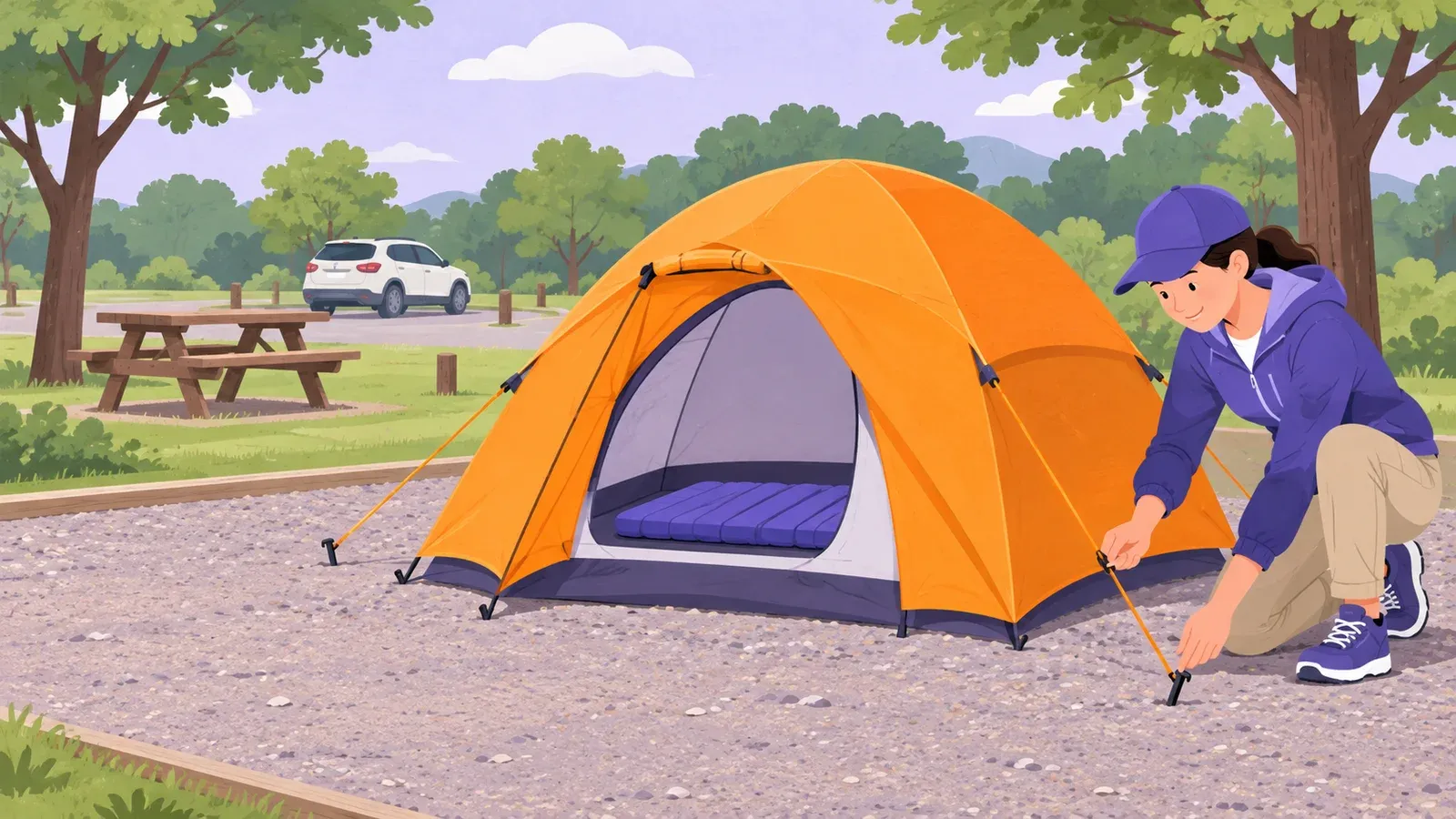
Check in and find your assigned level space, away from dead branches and hollows. Follow your model’s pitching order. Seat pole sections fully, attach the tent body and rainfly as shown, and secure the stakes and guylines. Keep lines clear of paths. Tuck a separate groundsheet fully beneath the floor so it cannot catch rain.
Tension the fly evenly, leaving a gap from the inner tent. If its shape distorts, check pole seating and tension rather than forcing parts. Leave designed vents open as conditions permit. Dampness may be condensation; move wet clothing out, improve airflow and check the fly gap. Investigate persistent dripping. REI’s condensation guide explains more.
Sleep, then clear the pitch
Put the pad under your bag and keep sleep clothes dry. Eat outside. Store food, rubbish and scented items as the campsite requires, outside the sleeping tent. Use a headlamp. Never use a stove, charcoal barbecue or fuel-burning heater inside a tent or enclosed porch; Cheshire Fire and Rescue explains the carbon monoxide risk.
If you cannot stay warm and dry or severe weather approaches, use your exit plan. In the morning, collect stakes and litter, check the pitch, and dry the tent fully before returning it. Note one change for next time.

Planning and shelter safety
- NPS planning before a campout (US)Check questions to ask a campground before booking; follow local rules where you camp.
- REI guide to tent condensationDistinguish likely condensation from rain entry and improve airflow around the fly.
- Cheshire Fire and Rescue camping safety (UK)Learn why stoves, charcoal and other fuel burners stay out of tents and enclosed porches.

