
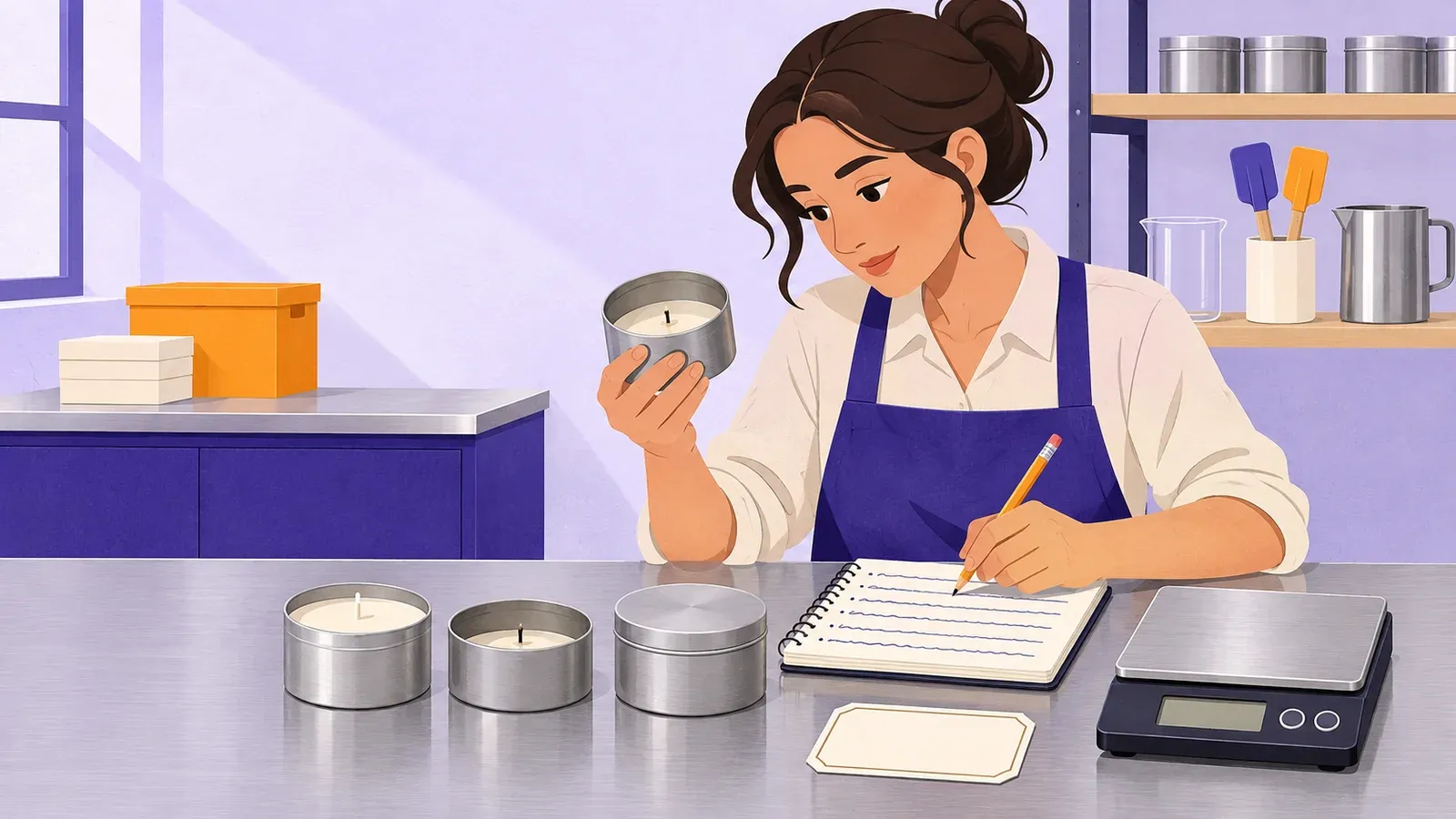
Test one tin candle before selling it locally
- What it pays
- Example US$120 gross in one month
- Cost to start
- US$212+ development example
- Difficulty
- Demanding
- First result
- Complete test record
US$50 contribution before overhead, tax and labour
Materials, tests, insurance and rejects
Needs candle skill, full-life tests and label review
Allow several weeks, then cost a product sheet
Document full-life testing and label review for one unscented tin candle before local sales.
What you need to know
-
An existing candle-making setup
Use one wax, metal tin and nonmetal-core wick. Skip scent.
-
A safe attended test space
Use a heat-resistant space clear of combustibles, children and pets.
-
Standards and review
Obtain fire/label standards and a finished-product test quote.
Develop one finished candle
Experienced makers choose one unscented soy wax, purpose-made tin and nonmetal-core wick. Ask the supplier for a starting wick for that wax and tin diameter. Skip dye and inclusions. Follow cure directions and record formula, fill weight and lots.
Obtain ASTM F2417-26 and F2058-07(2021). Ask a competent service to scope finished-product samples, full-life tests and label review. These are voluntary US standards, not a blanket federal certificate, as CPSC explains. Supplier development trials alone cannot establish compliance.
Record every test cycle
Give each development sample an ID. Log cure, dates, attended cycles, elapsed time, photos, flame, soot, wick and tin condition through useful life under the agreed plan. Never leave a flame unattended. Use a stable heat-resistant space clear of combustibles, children and pets. Stop at the agreed safe endpoint.
If heavy soot persists later, extinguish the candle and mark that sample failed. Seek advice, change one component, make fresh samples and repeat the full test. A wick swap in a burned candle is no retest. Never sell or gift failed, incomplete or test-burned candles.
Prepare the local offer
After passing agreed tests and label review, with permissions and product-liability cover, consider matching untouched stock. Draft a sheet with your photo, measured net wax weight, unscented description, price, pickup/payment, returns and contact. Check US FTC identity, business-name/place and dual-unit net-content rules. Add a batch code and visible warning about supervision, combustibles and children. Avoid unsupported burn-hour or health claims. Link sales to batches.
Cost development and sales
With existing tools, US$212+ is an example: US$80 fire standard + US$72 warning standard + assumed US$60 trial materials/postage. Add lab, failure, insurance and local costs. Check home-production, fire, zoning, sales-tax and business rules before supply.
After readiness, assume ten untouched candles at US$12 each before tax, with cash pickup. US$120 gross − US$50 assumed landed consumables/packaging − US$20 ongoing tests/rejects = US$50 contribution before insurance, electricity, permits, income tax and labour. Development costs remain unrecovered. Assume eight hours making, packing, buyer communication and handoffs, plus supervised test time.
Finding your first clients
-
Show the unlit prototype
Ask local gift buyers about occasion, size and price. Take no deposits.
-
Share after readiness
Share photo and care sheet where allowed.
-
Offer a pickup batch
Write price, tax, pickup, payment and return terms.
-
Record the handoff
Log batches and ask about packaging and care.

Test the finished candle
- CPSC candle business guidanceCheck US legal requirements and how voluntary candle standards fit them.
- CandleScience burn-test guideUse a supplier record routine from first to last burns, then retest fresh samples after changes.
- ASTM F2417 fire-safety specificationObtain the current US fire-safety specification for the finished candle and its test plan.
- ASTM F2058 warning-label specificationCheck current warning-label requirements and visibility at point of sale.
- Intertek candle testingAsk for a product-specific finished-candle test and label-review scope and quote.
Prepare the local offer
- FTC package-label rulesCheck identity, business name and place, and net contents in US customary and metric units.
- SBA launch guidanceCheck location, permits, tax and insurance requirements before paid supply.
- CandleScience on insuranceCompare product-liability and property-cover needs and seek a suitable quote.