
How to start indoor bouldering with one easy problem
- Cost to start
- Entry, induction and shoe hire
- Difficulty
- Beginner
- First result
- One gym visit
Check local prices and what the booking includes
Start low and follow the gym's safety instruction
Induction, a few moves and a controlled descent
Take a gym induction, learn its landing and downclimbing rules, and try a few controlled moves on an easy marked boulder.
What you need to know
-
Book a staffed introduction
Ask for a beginner session with an induction, supervised landing and downclimbing practice, and help choosing an easy climb.
-
Confirm entry and hire
Check the visit fee, forms, rental shoes, and included instruction. Mention access needs or relevant injuries before booking.
-
Dress for movement
Wear clothes that will not catch. Empty pockets, remove rings and loose jewellery, and fit rental shoes as directed.
-
Keep supplies off the mats
Bring water, but leave bottles and bags in the designated area away from landing zones.
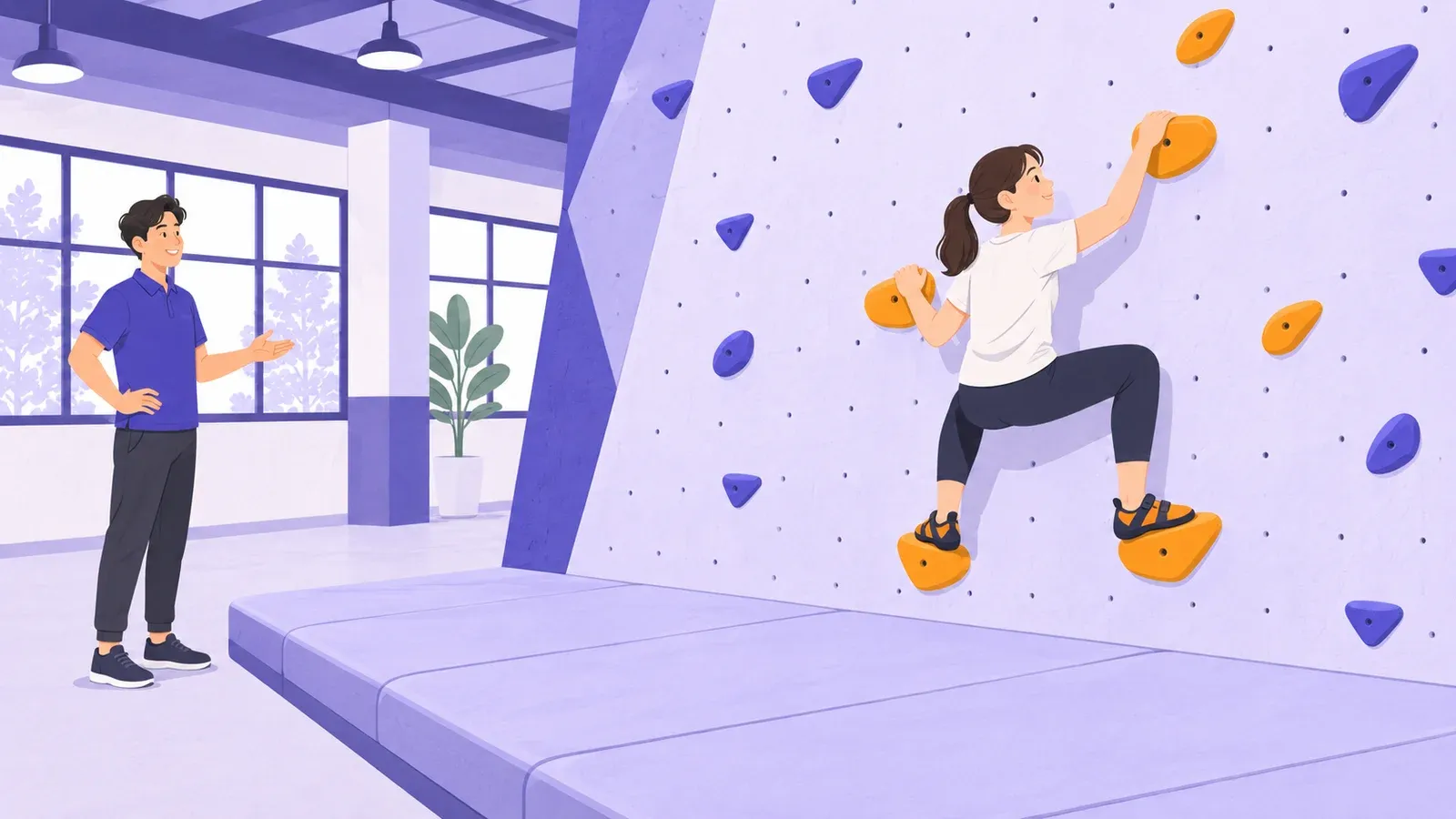
Indoor bouldering uses short marked climbs without ropes above padded flooring. Each climb is called a problem.
Book an introduction
Choose a staffed beginner introduction covering landing, downclimbing, and a first problem. Ask what check-in requires. The Climbing Academy’s Glasgow induction is one example; it is optional there, so follow your gym’s entry rules. Tell staff this is your first visit, and have missed instructions repeated. A video can prepare you, but follow the staff instruction you booked.
Learn the landing rules before climbing
Have staff demonstrate low landing and downclimbing, then practise under supervision. Padding does not remove injury risk. Ask which holds you may use to climb down; the descent need not follow the problem’s colour. Plan the way down before starting and stay low. If unsure how to descend, stop and ask staff rather than climbing higher.
Keep people and objects out of the landing area. Wait outside that area, never pass beneath another climber, and check whether a nearby climb crosses your space. Give way to someone already on the wall. The ABC safety script lists precautions; follow your venue’s rules.
Try one easy marked problem
Ask staff for a low problem with large holds and have them show its start, finish, and downclimb. Colours and grades vary. Warm up as instructed. From the marked start, find a foothold, place your foot deliberately, then shift weight for a few controlled moves. Ask how your legs can help if you are pulling mostly with your arms.
Climb down while in control, using the route staff showed. Finishing is optional. Stop and tell staff if afraid, hurt, or unsure of the descent. Rest away from the landing area, ask for one foot-placement or balance correction, and try again if comfortable. Next time, follow the gym’s sign-off rules or join a beginner movement class.


