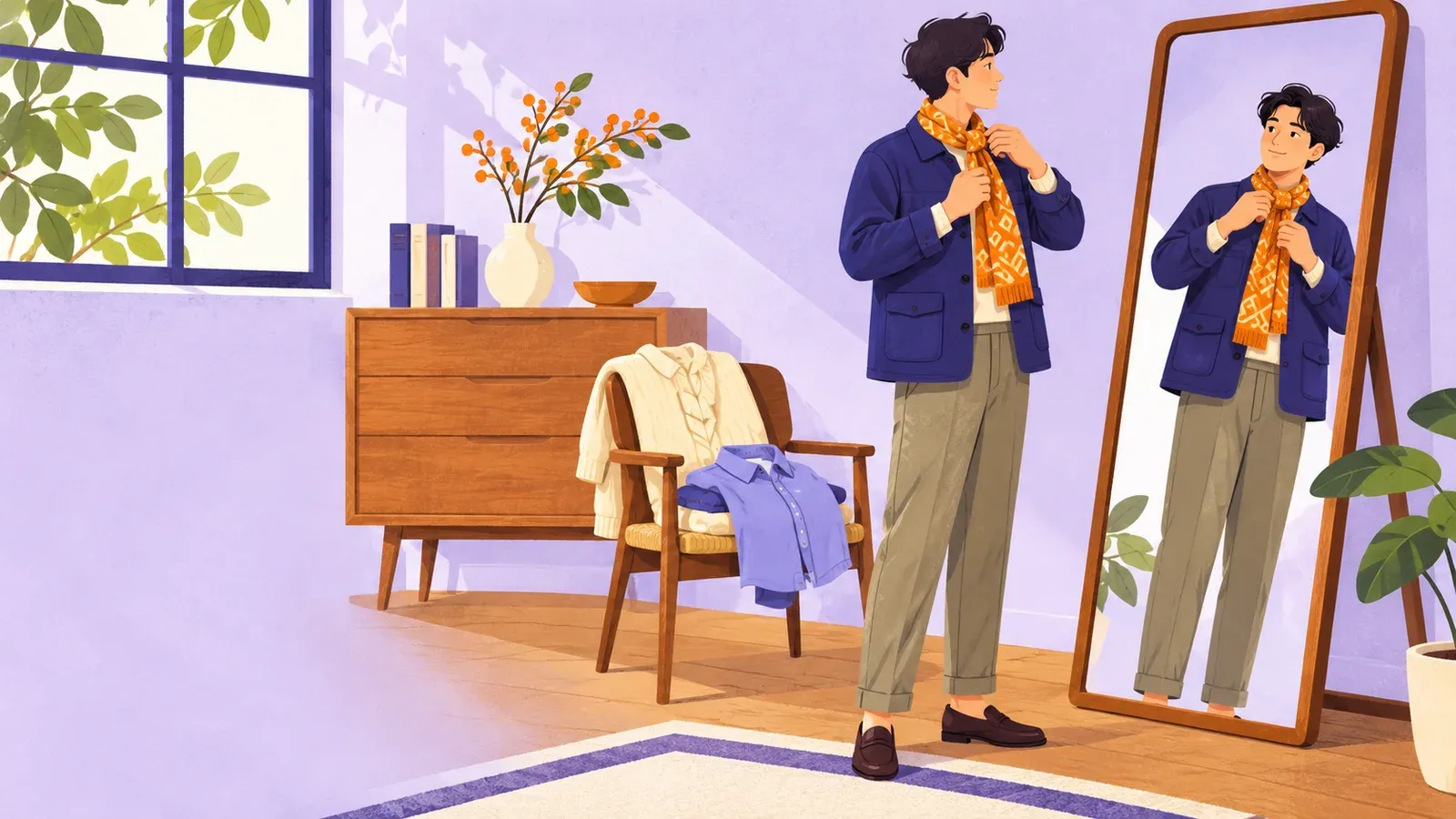
How to start dandyism with an outfit you own
- Cost to start
- No new spend with owned clothes
- Difficulty
- Easy
- First result
- One expressive outfit to repeat
Alterations and purchases are optional; use what already fits.
Try one outfit change; tailoring can wait.
30–45 minutes with clean, ready-to-wear clothes.
Explore deliberate personal dress by assembling one expressive outfit from clothes you have, checking how it moves and keeping a choice you like.
What you need to know
-
Clothes and shoes you own
Choose clean, ready-to-wear pieces suitable for an occasion in your life. Include shoes you can move in; a new wardrobe or suit is unnecessary.
-
A way to see the whole outfit
Use a full-length mirror if available, or a private photo if that is easier. The photo is only for you and can be deleted afterward.
-
One distinctive choice
Set out a garment or accessory you like, such as a jacket, scarf, shirt or piece of jewellery. Its colour, shape, texture or personal meaning can guide the outfit.
Dandyism uses dress as deliberate self-presentation. The Met’s account of Black dandyism describes style as a way to express identity and resist social limits. Try your own expression with clothes you already have, whatever your gender.
Build a look for one occasion
Choose a real setting, such as dinner at home or seeing a friend. Start with the piece you set aside. What draws you to it: colour, shape, texture or a memory? Add familiar clothes around it until you have a complete outfit. A jacket over a shirt with a favourite scarf is one route; your centrepiece might instead be a patterned skirt, bright shoes or a distinctive shirt.
Put on the shoes you would wear with it. Look at the whole outfit, then sit, reach and walk. If a fastening pulls, a hem catches underfoot or a layer pinches, swap that piece for one that lets you move. Put This On’s outfit guide also checks fit in motion. There is no need to force a particular silhouette.
Change one detail
Try a second version by changing one thing: remove the scarf, switch a layer, turn up a cuff or repeat a colour in a small detail. Compare the two. Does the change draw attention where you wanted, or make the outfit feel busy? Keep the version that feels more like your intention. If neither works, choose another centrepiece rather than shop for a fix.
Before washing or pressing an unfamiliar piece, check its label; GINETEX explains the care symbols. If care is unclear, choose something ready to wear today.
Wear it for a while
Wear the chosen version for ten minutes at home or during your outing. Notice what stays comfortable and which detail you want to repeat. A private photo or short description can help you remember it; a public post is optional. Next time, build another outfit around that detail. If a historical look inspires you, learn about the people and context behind it before treating it as a costume.
