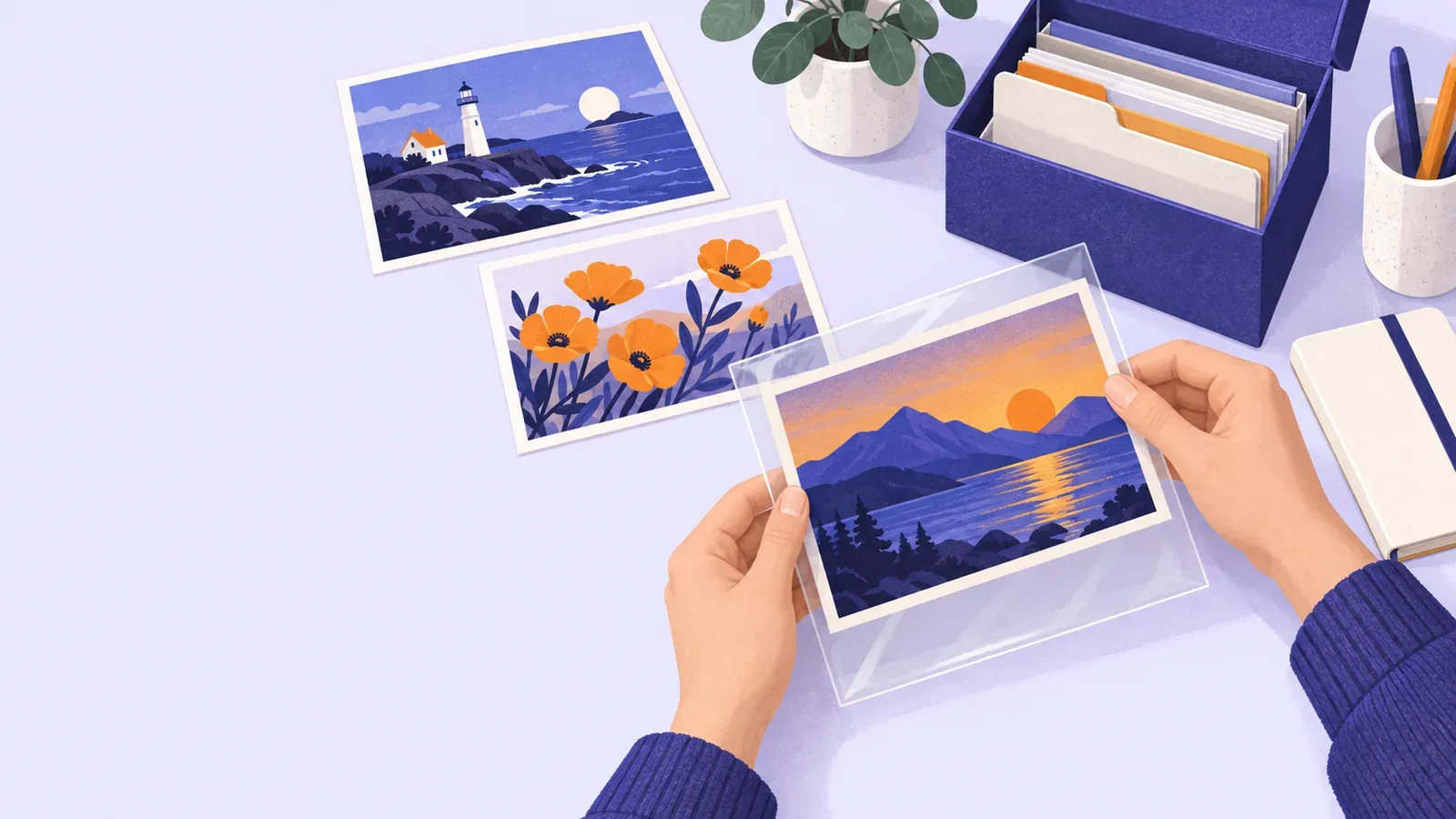
How to start postcard collecting with three recorded cards
- Cost to start
- $0 with cards you own
- Difficulty
- Easy
- First result
- 30-45 minutes
Budget separately for protective folders and any new cards
Choosing a theme is easy; exact dates may require research
Three catalog entries with protected cards and a collection theme
Choose a postcard theme, inspect both sides, make a simple catalog, and store your first three cards safely before spending more on a collection.
What you need to know
-
Start with three cards
Use cards you own or buy a few individually; choose a subject you like before considering large mixed lots.
-
Keep a separate catalog
A notebook or simple digital table holds each card's code, subject, publisher, dates, condition, source, and cost.
-
Choose protective enclosures
Use acid- and lignin-free paper folders; for photographic cards, choose photo-safe enclosures documented as passing the Photographic Activity Test.
-
Work on a clean surface
Keep food and drinks away, handle cards with clean dry hands, and avoid touching photographic image surfaces.
Postcard collecting suits people interested in places, illustration, or everyday correspondence. Choose a small theme: your hometown, railway stations, or one kind of animal. New souvenir cards count too.
Inspect both sides and record what you know
Lay out three cards and assign codes such as P01. Put the codes on their folders and catalog entries, rather than writing on the cards.
Record the pictured subject, printed caption, publisher, series number, and any artist or photographer credit. Check the reverse for a message, stamp, and legible postmark. Keep the printing date, message date, and postal date in separate fields; a postmark does not tell you exactly when the card was printed. Mark uncertain information as unknown.
Note bends, tears, stains, trimmed edges, and writing. Add where you obtained the card, the acquisition date, and what you paid. Photograph both sides so you can compare cards without repeatedly handling them.
Give each card supportive storage
Place each card in an enclosure large enough to avoid bending its corners. Keep the folders flat in a protective box in a cool, dry, stable room away from direct light and possible leaks. The Library of Congress paper guide explains suitable materials.
Some postcards are actual photographic prints. Follow the photograph-care guidance for those, including photo-safe housing. Avoid adhesive album pages, tape repairs, rubber bands, and lamination. Leave stuck, flaking, or fragile cards for a conservator’s advice instead of peeling or cleaning them yourself.
Research one card before buying more
Search its publisher and printed number through the Newberry’s research guide. Use a dating guide only for the publisher it covers. An unsuccessful search leaves rarity unverified.
Compare your three entries and decide what would make the next card useful: another view of the same street, a different artist, or a related animal. Set a spending limit before browsing, and request clear front-and-back photos for online purchases. Hide names, addresses, and private messages in any images you share publicly.
