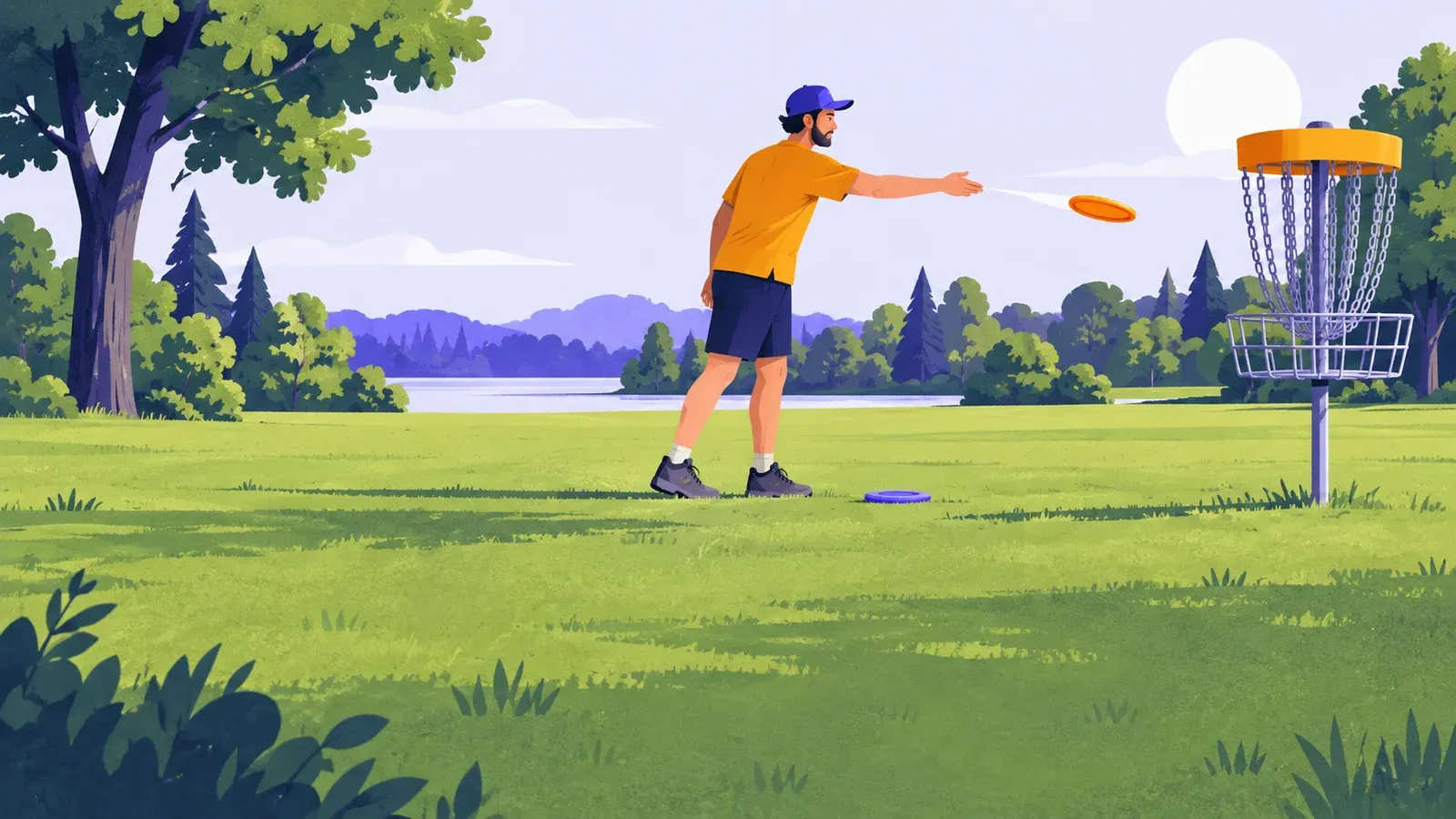
How to start disc golf with short putting practice
- Cost to start
- US$0 if you borrow a disc
- Difficulty
- Easy
- First result
- 20–30 minutes
Requires a free practice area; check access and rental fees
Start close to the basket and use gentle, controlled putts
Twenty short putts, a tally and one adjustment to try
Try disc golf with one borrowed putter, find a suitable practice basket, and learn a controlled short throw before keeping a simple putting tally.
What you need to know
-
One disc-golf putter
Borrow a slow, rounded-rim putter if available; otherwise check the local rental or purchase cost before starting.
-
An authorized practice basket
Find a flat, clear practice area and confirm basket access and fees; do not occupy an active hole for repeated throws.
-
Grippy shoes and a tally
Wear shoes suited to the ground and use paper or a phone note to record each set of ten attempts.
Disc golf aims to reach a target in as few throws as possible. This 20–30-minute session is putting practice, not a scored round. The PDGA course directory lists venues; confirm practice-basket access before travelling.
Set up one short putt
Stand roughly 2–3 metres from the basket. Check the throwing area, including behind the target, and wait if anyone or a pet enters it. Keep companions behind you and take turns with other users. The PDGA courtesy rule says not to throw when a throw might injure someone or distract another player.
Face the basket with feet planted and knees relaxed. Try a fan grip: thumb on top, middle, ring and little fingers spread beneath the disc, index finger on its rim. Hold it roughly level, move it smoothly forward and finish with your hand pointing toward the chains. UDisc’s putter guide describes this grip and a controlled standstill motion. A hard wind-up or run-up is unnecessary here.
Make two sets of ten
Throw once, regain balance behind your starting spot, and retrieve only when everyone has finished throwing. The PDGA putting rule requires controlled balance after release before advancing in a round. Return to the same spot for ten putts. Count a make only when the disc comes to rest supported by the basket’s tray or chains below the chain support. Hitting the chains alone does not complete a hole. Record distance and makes out of ten.
If putts fall short, use a slightly fuller forward motion or move closer. If they fly past, reduce effort. Keep the release angle steady rather than twisting the wrist at the last moment. Change one thing, then take ten more putts. Record a changed distance; tallies from different distances are not direct progress measures. If you feel pain, stop rather than forcing the motion.
Next time, repeat the same distance before stepping back. For a first full round, choose short tees with an experienced player and read the PDGA rules for teeing, play order, lies and scoring. The ten-putt sets here are practice counts, not match rules.

Find a basket and learn the basics
- PDGA course directoryFind nearby courses, then check with the venue about practice baskets, access and fees.
- UDisc's guide to puttersLearn what a putter is and try its fan-grip and controlled-throw advice.
- PDGA official rulesCheck putting, basket-completion and courtesy rules before moving on to a full round.