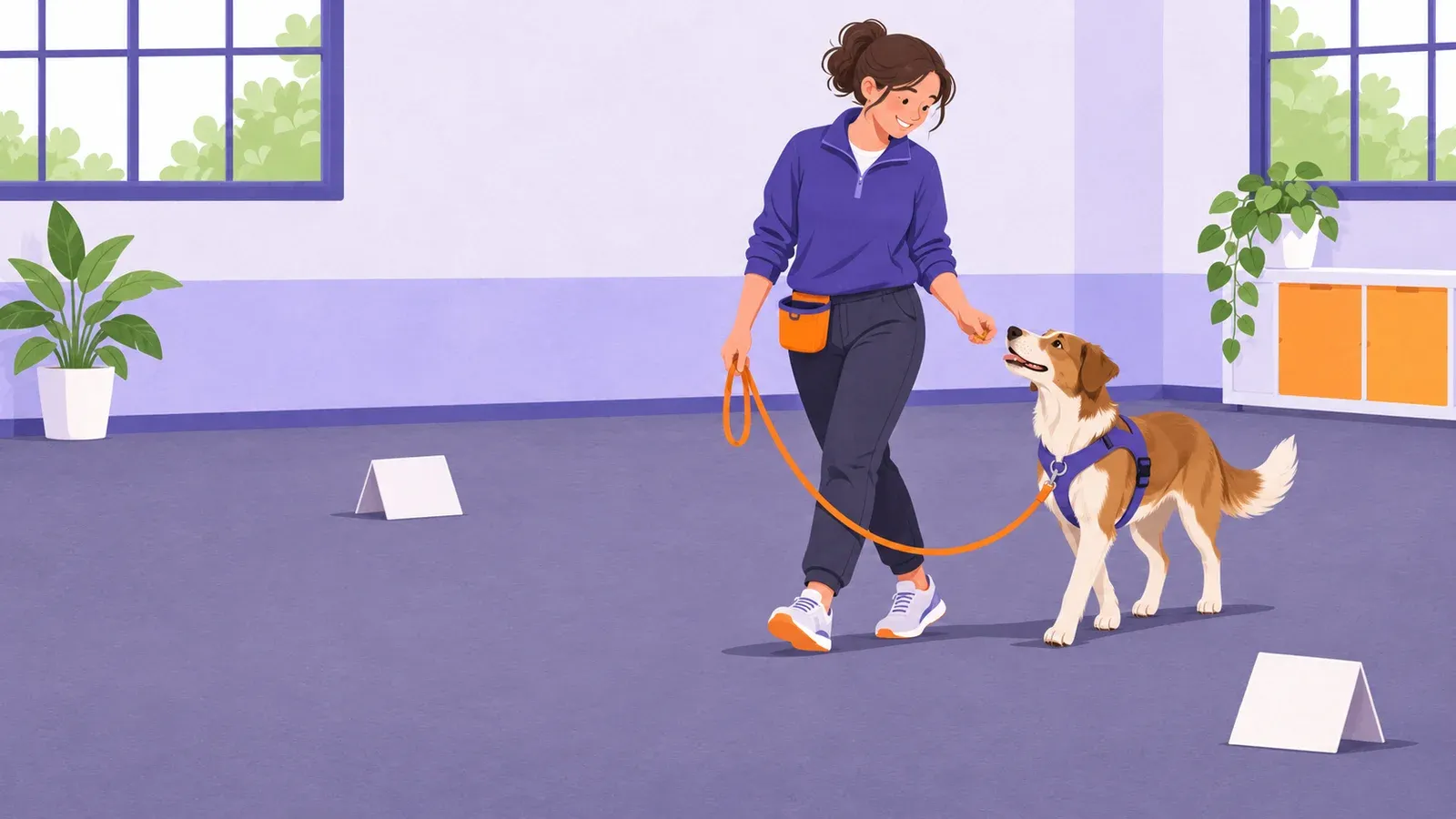
How to start dog sports with a short rally session
- Cost to start
- No new spend with owned kit
- Difficulty
- Beginner
- First result
- A two-station rally try-out
Existing lead and rewards; class and event fees vary.
Start with a dog that walks on lead and knows a sit cue.
Allow 15–20 minutes with one- or two-minute working bouts.
Try two simple rally actions at home with a dog that already walks comfortably on lead and knows a sit cue, using brief, rewarded practice.
What you need to know
-
A dog ready for these basics
Work with a dog you know who walks comfortably on lead and sits on cue without being pushed. For limping, pain or known mobility concerns, ask a vet about suitability before this route.
-
Familiar walking gear
Use the dog's ordinary well-fitting harness or flat collar and a standard lead. No jumps or special equipment are needed.
-
Rewards and water
Bring small familiar rewards and water. Work for one or two minutes, rest, and stop while the dog is willing.
-
A clear indoor path
Choose a quiet, secure room with non-slip footing. Put two paper markers several steps apart and outside the dog's walking path.
Dog sports offer different kinds of work: scent work uses the nose, agility involves obstacles, and rally follows a route of handler-and-dog actions. The AKC’s US overview can help you compare them. Try a right turn and halt-sit at home.
Set two stations
Write “Right turn” and “Halt-sit” on the markers. Walk the route yourself: turn 90 degrees right at the first marker, take a few steps, then stop at the second. The AKC Rally resource center links the US signs and explanations.
If your dog does not yet walk comfortably beside you on lead or respond to a familiar sit cue, skip the route today. Reward a few willing steps together and build the missing skill with RSPCA reward-based guidance or a reward-based instructor.
Practise, then link
Start with the dog beside your left leg. Reward a glance toward you and one or two steps together, delivering the reward near that side. Keep the lead slack. Use rewards without leash corrections or punishment. In one short bout, turn right together and reward. After a rest, walk a few steps, halt, ask for the familiar sit and reward. Do not pull the dog into place or push it down.
If both actions stay comfortable, follow the markers and reward after each. When the dog loses the thread, return to one step or one familiar action. Finish after a willing success; precise heelwork can wait.
Let the dog decide when to stop
Moving away, freezing, a tucked posture or unwillingness to continue means pause and give the dog space. Dogs Trust explains why context matters when reading these signs. Seek veterinary advice for pain or persistent changes. If your dog enjoyed this, observe a local reward-based rally class before joining, or explore another sport that suits them. Event rules vary by organization and country.

Choose a sport and train kindly
- AKC: choosing a dog sport (US)Compare scent work, agility and rally against your dog's health, interests and comfort.
- AKC Rally resource center (US)Check the signs and explanations for the right turn and halt-sit actions.
- RSPCA: reward-based trainingLearn short, reward-based practice and build a sit cue before linking the route.
- Dogs Trust: signs of stressRecognize body-language changes that call for more space, rest or stopping.