Dowsing: try the rods and record ten guesses
- Cost to start
- Free with borrowed supplies
- Difficulty
- Easy
- First result
- A ten-trial log
Buying rods or missing supplies adds cost
A helper must conceal each placement and keep the record
Allow about 30 minutes after setup
Handle dowsing rods, then make ten recorded guesses about a hidden water bottle. Compare the results while keeping the limits of this home test clear.
What you need to know
-
Two safe, freely turning rods
Borrow L-shaped rods with smooth, blunt ends and loose handles. Check for burrs; no wire cutting or special purchase is needed.
-
Two matching boxes and one bottle
Use closed opaque boxes that look identical with or without the same sealed, room-temperature water bottle. Keep their exteriors dry.
-
A helper and a prepared log
Bring a coin and notebook. Prepare ten rows for trial, choice, actual side and hit or miss.
-
A calm, permitted outdoor table
Choose a sheltered, stable spot away from traffic. Keep both boxes in reach and rod tips away from faces and the edge.
Dowsing uses rods in an attempt to find hidden material. Scientific evidence does not support it as a reliable detection method. Expectation can produce small unintended hand movements that turn the rods, called the ideomotor effect. Keep this exercise recreational; do not use it for drilling, utilities, missing people, health or financial decisions.
Get a feel for the rods
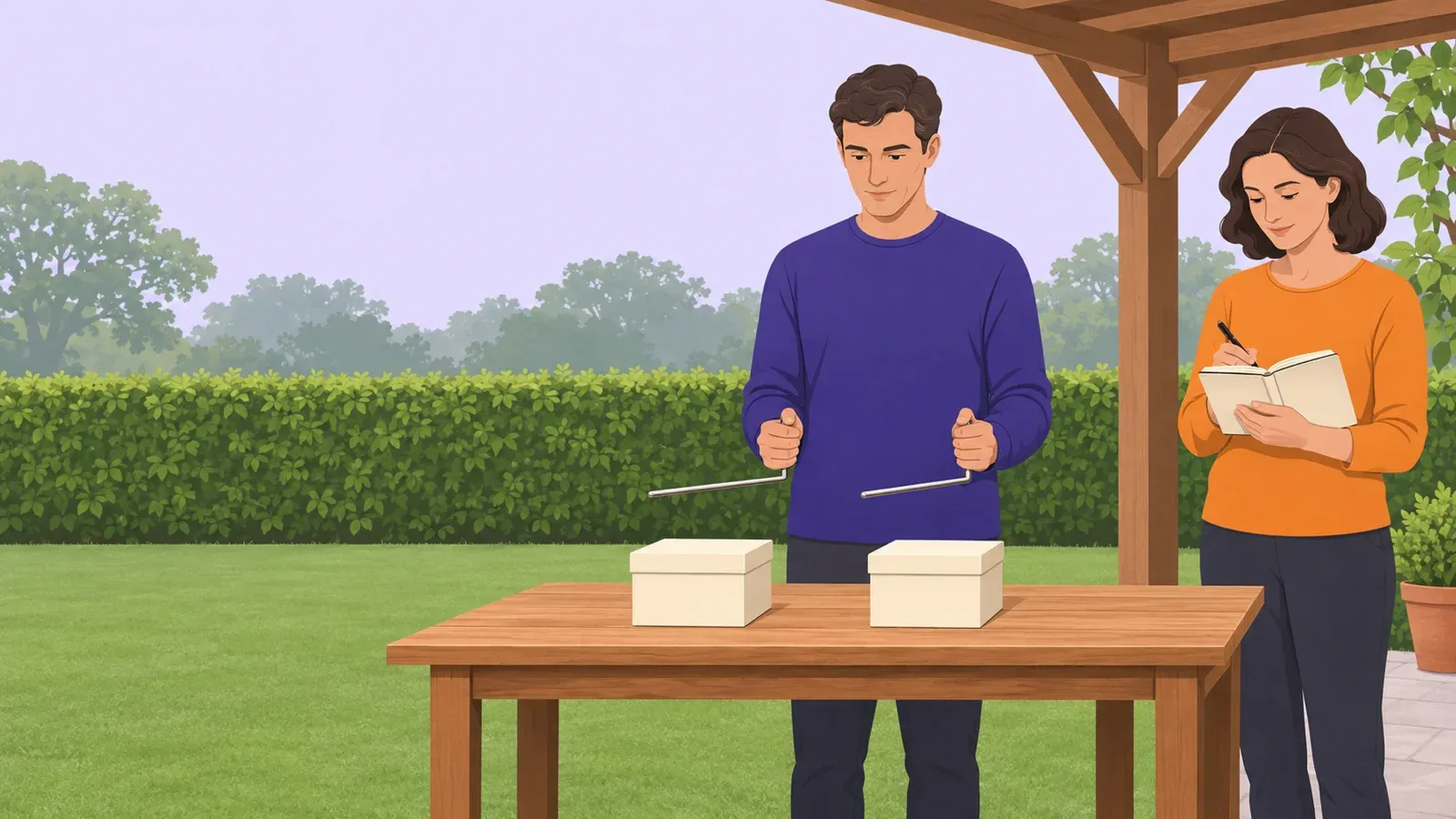
Stand at the table with one short handle in each hand. Point the long arms forward, roughly level and 25 cm apart; let them turn freely. Tilt your hands slightly to see how readily the rods swing, then level them again. Crossed rods are traditionally taken as a response near a target, but movement does not establish detection. Still rods are fine too. The archived JREF module illustrates the handling.
Make ten concealed choices
Agree on ten trials and one left/right choice each time. Wait out of sight and hearing while your helper tosses the coin afresh: heads puts the bottle left, tails right. The helper closes both boxes, records the actual side on a separate hidden page, then leaves your view before you return.
Hold the rods above each closed box while standing still. Do not touch, lift, shake or open them. Write exactly one choice before the reveal, even if the rods stay still; note stillness separately. Reveal the bottle, record hit or miss, then reset with a new toss.
If you saw or heard setup, noticed a mark or bulge, or received a hint, mark that trial spoiled before the reveal and redo it with a fresh toss. Do not relabel misses. Keep placement notes hidden until the choice is written.
Read the whole log
Fair independent guesses average five hits in ten across many sets; one set may differ. A home series cannot establish detection or explain every rod movement. Keep all ten results, including misses. If curious, swap roles for another pre-set round using the same rules.

