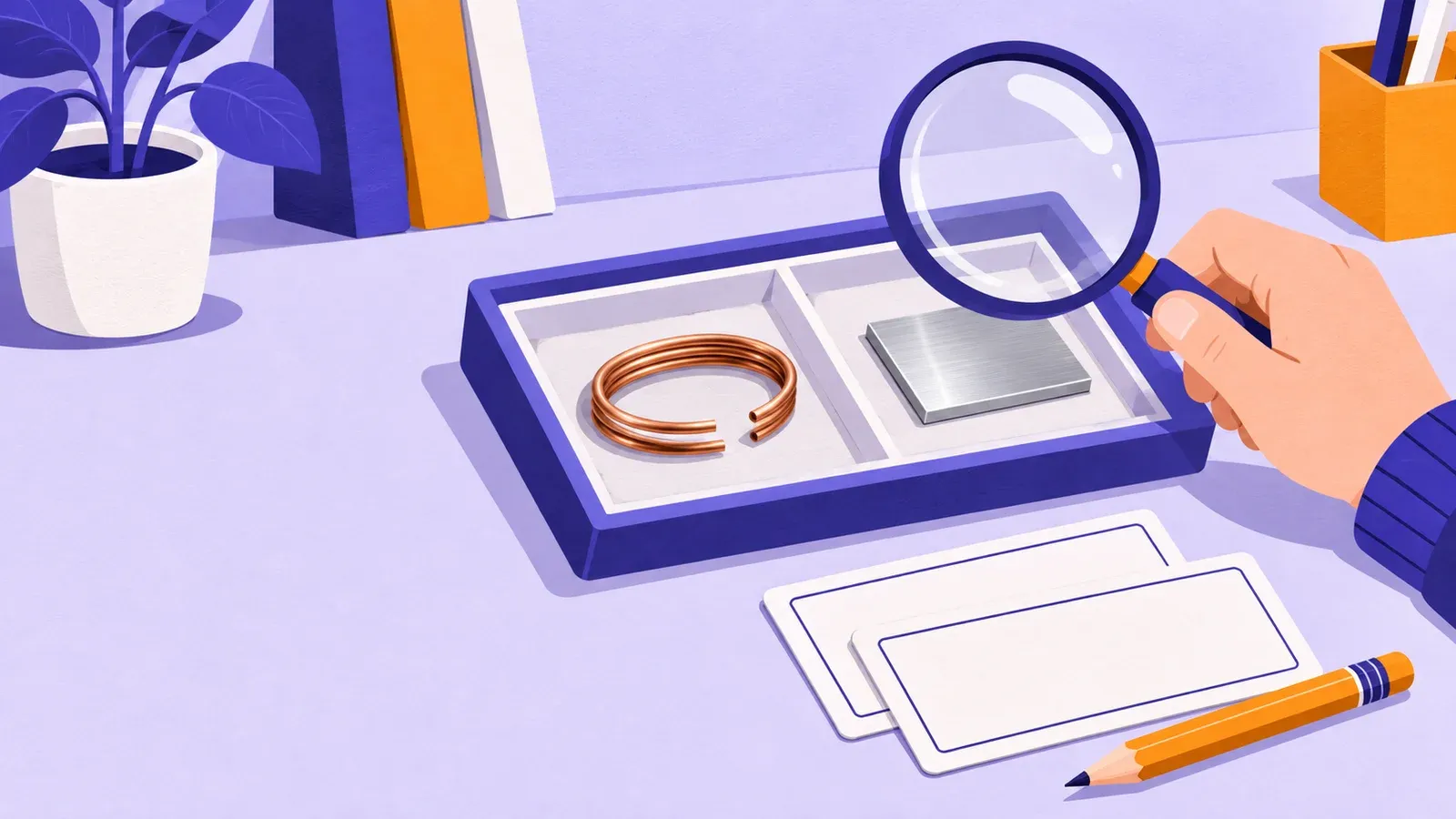
Element collecting: catalogue two metal samples
- Cost to start
- US$20–40 planning budget
- Difficulty
- Beginner
- First result
- 30–45 minutes
Allow extra for delivery; reuse boxes and check the full order cost
Record supplied identities without chemical tests
After delivery, two labelled samples with records
Start a small element collection with labelled copper and aluminium, record each sample's source and stated purity, and arrange a simple display.
What you need to know
-
Two documented metal samples
Obtain small, intact copper and aluminium pieces from an educational materials supplier, with the stated purity and handling advice for each product.
-
Separate lidded containers
Reuse the original display boxes if they protect the samples and keep each label with its piece.
-
A notebook and periodic table
Use paper or a spreadsheet to record each sample; a pencil and the free references below are enough.
Start with two owned, labelled metal samples. An element contains one kind of atom, though a purchased sample can contain small impurities. Brass is a copper and zinc alloy; table salt is a compound. Neither belongs in this starting collection.
Match each sample to its record
Before ordering, check that each listing names the element, describes the solid form, states its purity and gives handling advice. Choose finished pieces without sharp edges. Skip powders, filings, plated objects and unidentified mixed sets. Keep the invoice and original labels. The US$20–40 figure is an editorial spending allowance. Existing documented samples may cost you nothing.
Work on a dry table, away from food and drink. Leave each piece in its display box if possible. Mark the containers E01 and E02. For each code, record the supplied name, symbol, atomic number, form, seller or donor, acquisition date and claimed purity. Mark the purity “supplier-stated.” Write “unknown” where a detail is missing and ask the supplier; do not test an unidentified metal or infer purity from its appearance.
Compare and store the pair
Look up aluminium (Al, 13) and copper (Cu, 29). In a separate observation column, note each piece’s colour, surface and shape. Copper is usually reddish-gold and aluminium silvery-white, but colour alone does not prove identity. If you copy a published property into your record, label it “reference, not measured.” Use the supplier’s stated identity on your label; leave verification to a qualified specialist.
Photograph each piece beside its code if useful. Observe through any sealed original container. Close and label the boxes, then place aluminium before copper by atomic number. Keep them dry, out of reach of children and pets, and wash your hands after handling. Do not heat, grind, polish, dissolve or chemically test the metal. Skip toxic, reactive and radioactive specimens, and do not dismantle household objects for samples.
Keep the two records with their labelled boxes. Read about one everyday use of either metal before choosing another documented specimen for comparison.

Element and sample references
- Purdue University elements, compounds and mixturesLearn how an elemental sample differs from a compound or mixture before labelling your collection.
- Royal Society of Chemistry copperCheck copper's symbol, atomic number and reference properties against your sample record.
- Royal Society of Chemistry aluminiumCompare aluminium's reference properties with copper and learn why everyday aluminium products may be alloys.