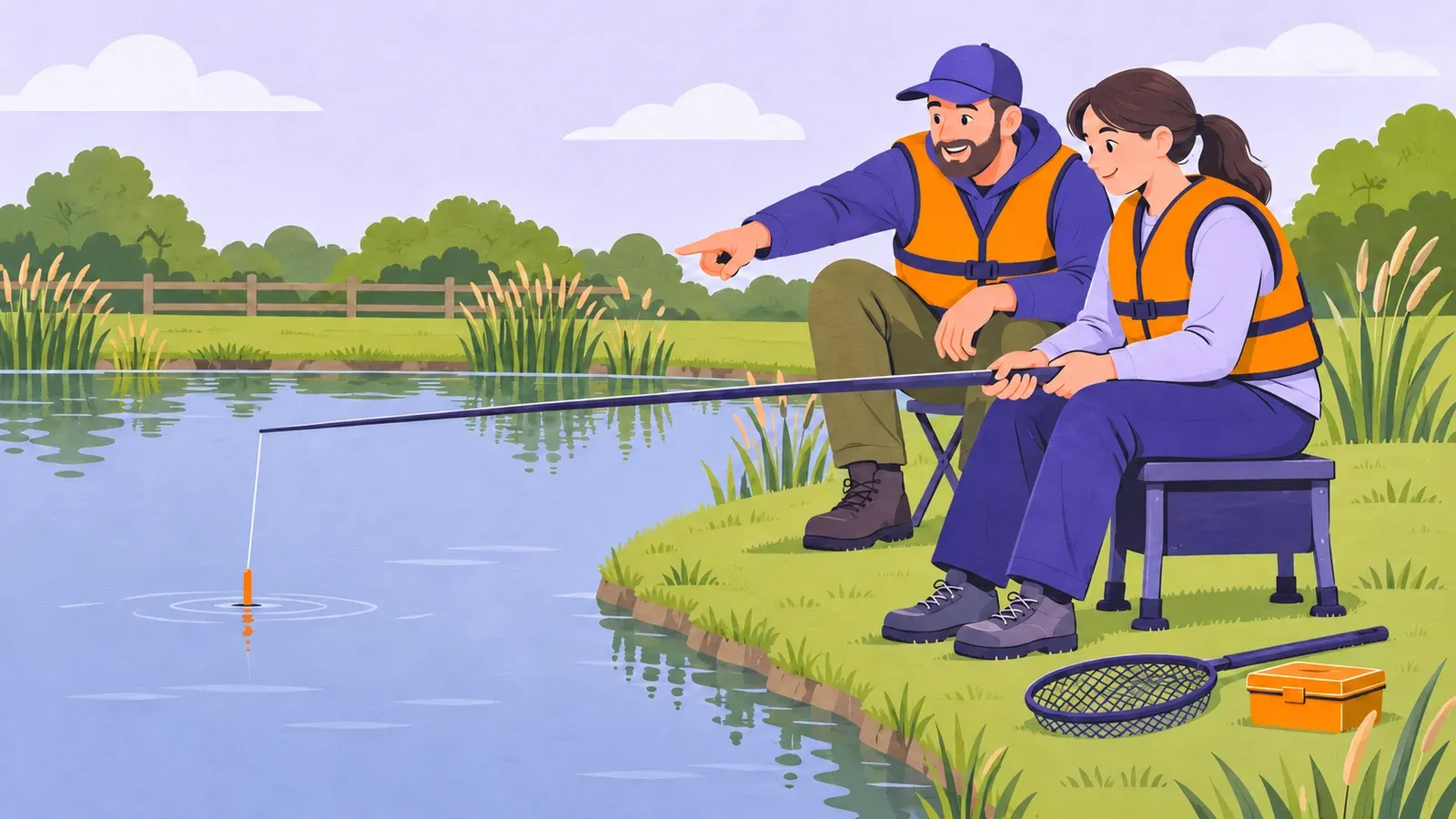
How to start freshwater fishing by watching a float
- Cost to start
- Taster fee; tackle supplied
- Difficulty
- Beginner
- First result
- One coached session
Confirm bait, access, licence arrangements and travel costs
Learn float movement with a coach beside you
Place a float and recognize a possible bite
Join a coached shore session, check local permission, and learn to place a supplied float rig and recognize a possible bite. Catching a fish is optional.
What you need to know
-
Book a local beginner session
Find a coached session at a managed freshwater pond or lake with a level bank. Confirm a whip-and-float lesson.
-
Check permission and rules
Ask the organiser about fishery permission, licence or exemption, season, permitted tackle, and fish rules for that place and date.
-
Use supplied tackle
Confirm the coach supplies a short whip, prepared float rig, bait, and landing and unhooking equipment.
-
Dress for the bank
Wear grippy closed shoes and weather layers. Bring water and sun protection; ask about a buoyancy aid.
A whip is a short pole without a reel. Its float can signal a bite from a baited hook. A catch is optional.
Choose a permitted session
Ask a local club or coach for a freshwater beginner session. Confirm the bank position, supplied whip and float rig, full fee, and booking. The Angling Trust’s Get Fishing programme lists England events; check each event’s water and method.
Have the organiser confirm permission to fish that water, any licence or event exemption, season and method rules, and fish handling. Public shore access alone is not fishing permission. GOV.UK’s England and Wales guidance separates a rod licence from fishery-owner permission and explains regional exceptions; rules elsewhere differ.
Let the coach prepare the rig
At the water, let the coach choose a stable position and explain safety and any fitted buoyancy aid. Stay ashore; do not wade or reach after dropped tackle. Avoid overhead power lines. Check behind you before moving a hooked line. Let the coach choose bait, hook and float depth, then demonstrate close placement. Leave hooks and tangles to them until taught.
Watch the float and ask about changes
Copy the placement under supervision and let the float settle. Ask how it normally sits and moves with wind or water. An unusual dip or disappearance may be a bite; not every bobble means a fish. Point it out to the coach, then make the small lift they demonstrated when prompted. If the float will not settle, ask for a rig or depth check. If the line snags, stop and ask for help rather than pulling hard.
If a fish is hooked, follow the coach’s directions for landing, unhooking, handling and the local rule afterward. Collect line, hooks and litter with the coach. Wash hands after fishing and before eating. Note the float movement you saw, then arrange another coached session before buying tackle.

Sessions, rules and safety
- Angling Trust Get Fishing (England)Find a coached taster, then check its freshwater setting, supplied equipment, booking and cost.
- GOV.UK rod licences and permission (England/Wales)See how licence and fishery-owner permission differ, then follow official rules for your jurisdiction.
- Angling Trust freshwater safetyReview bank and tackle hazards before the coach's site briefing.

