How to start flag football with a passing drill
- Cost to start
- Borrowed ball; kit costs vary
- Difficulty
- Beginner
- First result
- Three short route completions
Mouthguard, travel and any session fees are extra
Start with gentle passes and a walking route
Allow 20–30 minutes for warm-up, practice and rests
Try flag football with a partner, practise gentle throws and catches, and complete a short receiver route before joining a beginner session.
What you need to know
-
A borrowed American football
Choose one you can grip comfortably. A full team or flag belts are unnecessary for this passing-only practice.
-
A partner and one flat marker
Agree to throw only when the receiver is standing still, facing you and showing ready hands.
-
Permitted, clear grass
Find level ground with room beyond the receiver, away from traffic, obstacles and other people. Stop if footing becomes slippery.
-
Shoes, mouthguard and water
Wear grippy sports shoes and a well-fitting mouthguard, and bring water. Ask a future group about its belt and clothing requirements.
In flag football, a defender ends the ball carrier’s run by pulling a belt flag instead of tackling. This first outing stays with throws, catches and a walking route, which is the receiver’s planned path.
Start with easy catches
Check your practice area, then warm up with easy walking and comfortable arm movements. Stand facing your partner about four metres apart, or closer if catches are difficult. Stop whenever someone enters the area.
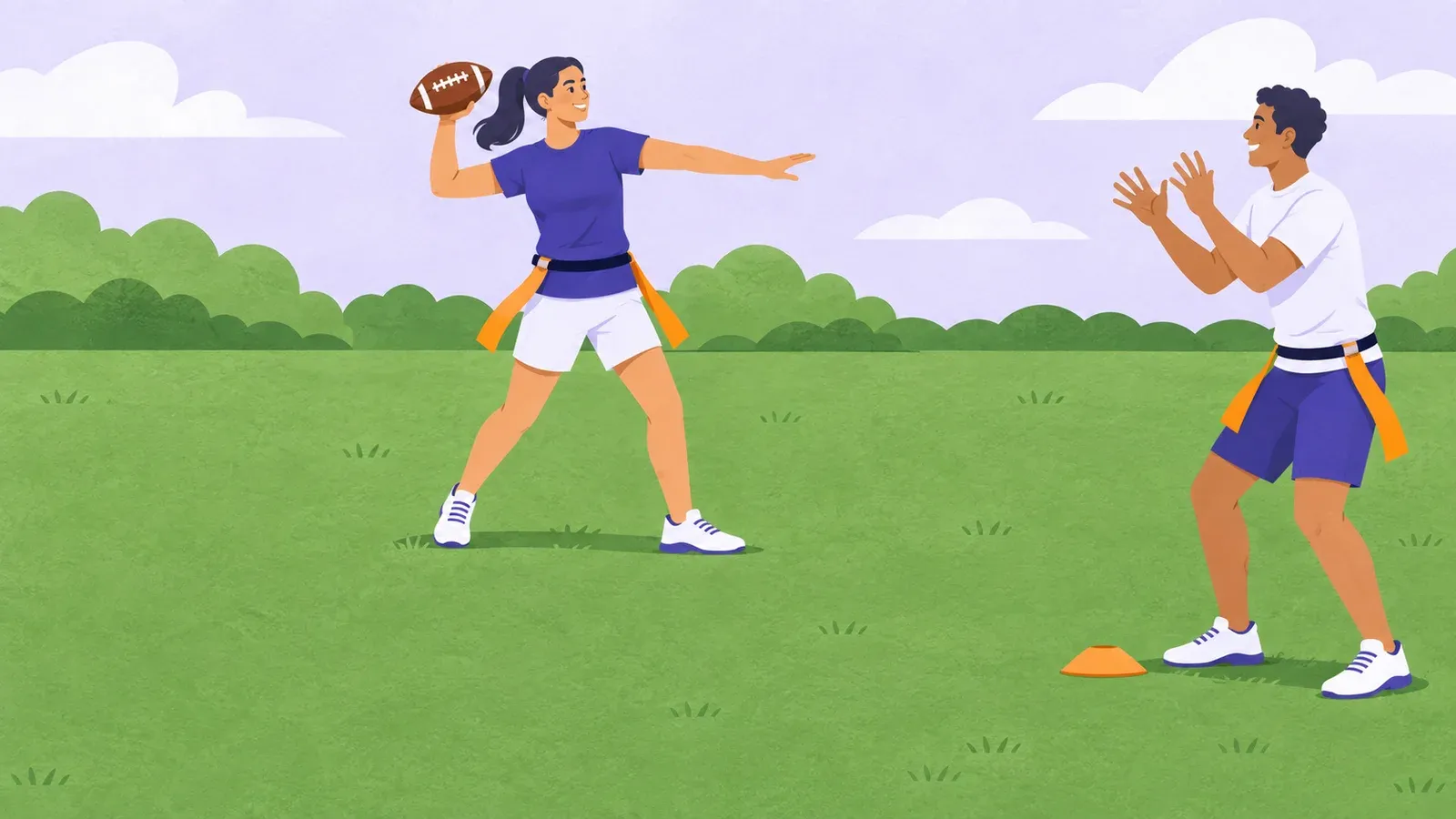
With the laces on top, put your thumb under the ball and your fingers near the laces. Hold it by your throwing shoulder, step towards your partner with the opposite foot, and make a gentle overarm throw to their ready hands at chest height. Let your arm follow through. The receiver faces you, watches the ball into both hands, softens the elbows and brings it towards the body. Take turns for several comfortable catches. Shorten the distance and soften the throw after repeated drops; a perfect spiral can wait.
Walk, stop and turn
Place the flat marker about four metres from the passer. The receiver begins beside the passer with clear separation, walks to the marker, stops, then turns to face the passer. Throw only when the receiver is still and shows ready hands. After the catch, walk back, reset and swap roles. Try for three completed route catches each, with rests.
Keep the drill clear
Leave out defenders, blocking, contact and flag pulling. Do not jump, dive or sprint after an inaccurate throw; let the ball land, then collect it safely. Stop if a movement hurts. Record how many short routes ended in a controlled catch and what caused misses. Next time, repeat at the same pace or find an adult beginner group for flags, snaps and the local rules. If you lack a partner or clear space, a group is the better first step; check eligibility, equipment and fees locally.

Prepare for your first practice
- NFL FLAG: how to throw a footballUse the standing grip, opposite-foot step and follow-through cues for short gentle throws.
- NFL FLAG: how to catch a footballReview how to face the passer, track a chest-height ball and cushion it with bent elbows.
- NFL FLAG: equipment checklistSee NFL FLAG's belt, mouthguard and clothing guidance, then check what a future league requires.