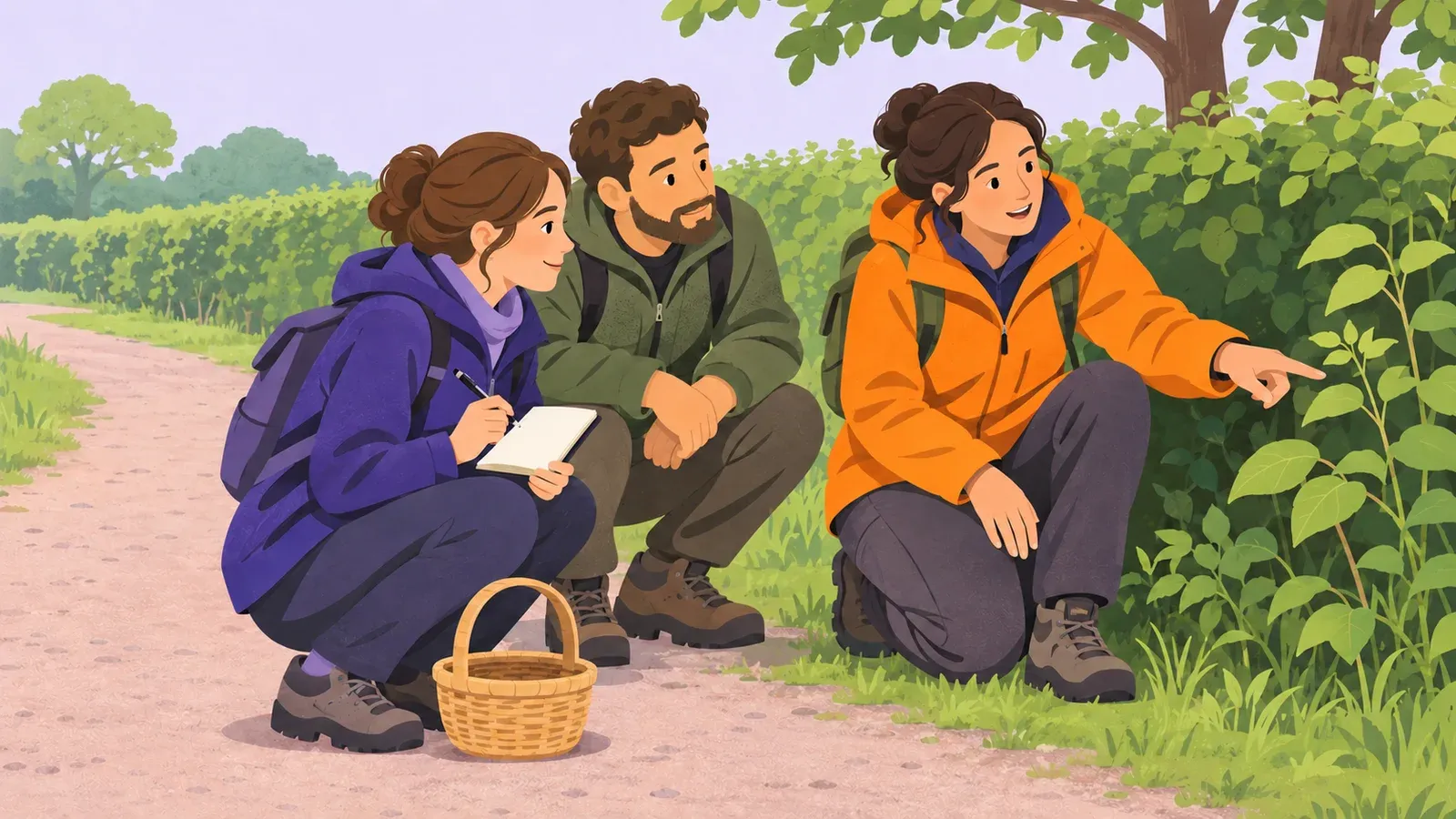
How to start foraging with an experienced guide
- Cost to start
- £65 adult course example
- Difficulty
- Beginner
- First result
- Guided plant-foraging session
Milton Keynes, England; checked Nov 2026; travel and extras separate
Field decisions under an instructor's supervision
Checked notes and approved harvest if conditions allow
Join a plant-foraging course, learn how the instructor checks a living plant and its site, then make a supervised harvest where permitted.
What you need to know
-
A plant-focused course booking
Choose a spring or summer outing with an experienced local instructor. Confirm the teacher, poisonous lookalikes covered and collection permission.
-
Clothes for the site
Wear weather-appropriate layers and comfortable footwear. Bring water; ask about terrain and access before booking.
-
Notebook and pencil
Record plant names, parts, season, lookalikes and reasons for leaving a specimen. Have the instructor check your notes.
-
Eating arrangements
Tell the provider about allergies and relevant health needs. Bring any cup, plate and cutlery it requests; tasting is optional.
Foraging means collecting wild plants for food where permitted. Begin beside an instructor who can inspect the living plant. Mushroom identification is a separate subject.
Book for your local season
Look for a spring or summer plant course. Ask who teaches, their local plant and lookalike experience, group size, first-aid and food-handling arrangements, and collection permission. Check access needs and full cost.
In England, Wild Food UK’s Ouzel Valley Park course has Parks Trust permission. A 13 March 2027 adult place was £65 when checked in November 2026. It runs 12:00–15:30 and may finish at 16:00. Instruction, refreshments and a seasonal meal are included; allow for travel and check extra charges. Dates and seasons differ elsewhere.
Follow one plant through the decision
Listen to the site’s rules before walking. Ask the instructor to show one living plant, the features they use to identify it, its poisonous lookalikes, and which parts and seasons matter. Note why they reject a damaged plant or a spot near roads, sprayed ground or polluted water. Ask them to check notes on one or two examples. A photo or app result cannot settle whether a plant is safe to eat.
Collect only what the instructor approves
Make a small harvest only when the instructor identifies the plant and approves the spot and amount. Leave sparse plants for wildlife and avoid trampling. Check local law and site rules; do not uproot plants or take protected species. Land-manager rules vary by site; course permission does not cover a later visit.
Stop if identification or conditions are uncertain. Keep unknown material out of the collection; never taste a plant to test its identity. Let the provider prepare approved food, follow its instructions and skip tasting if an ingredient or your health makes it unsuitable. Food Standards Agency guidance for England, Northern Ireland and Wales explains contamination and health risks. If you suspect harmful exposure, alert the instructor and seek urgent local medical advice without waiting for symptoms. In England, follow NHS poisoning advice. Review your notes and book another guided outing in a different season. Independent eating still needs reliable in-person confirmation.

Safety, site rules and course example
- Food Standards Agency safe-foraging guidanceCheck food-safety precautions for England, Northern Ireland and Wales before considering any wild food.
- Woodland Trust foraging guidelinesSee how a land manager sets harvesting limits and protects woodland habitat.
- Wild Food UK Ouzel Valley Park courseCompare a seasonal plant course's permission, field teaching and included meal.