Geocaching: find and log your first cache
- Cost to start
- US$0 with existing kit
- Difficulty
- Beginner
- First result
- One logged cache search
Assumes a phone, pen and free access; travel and data may cost.
Choose an easy cache on a short, permitted route.
Allow 45–60 minutes; a find is not guaranteed.
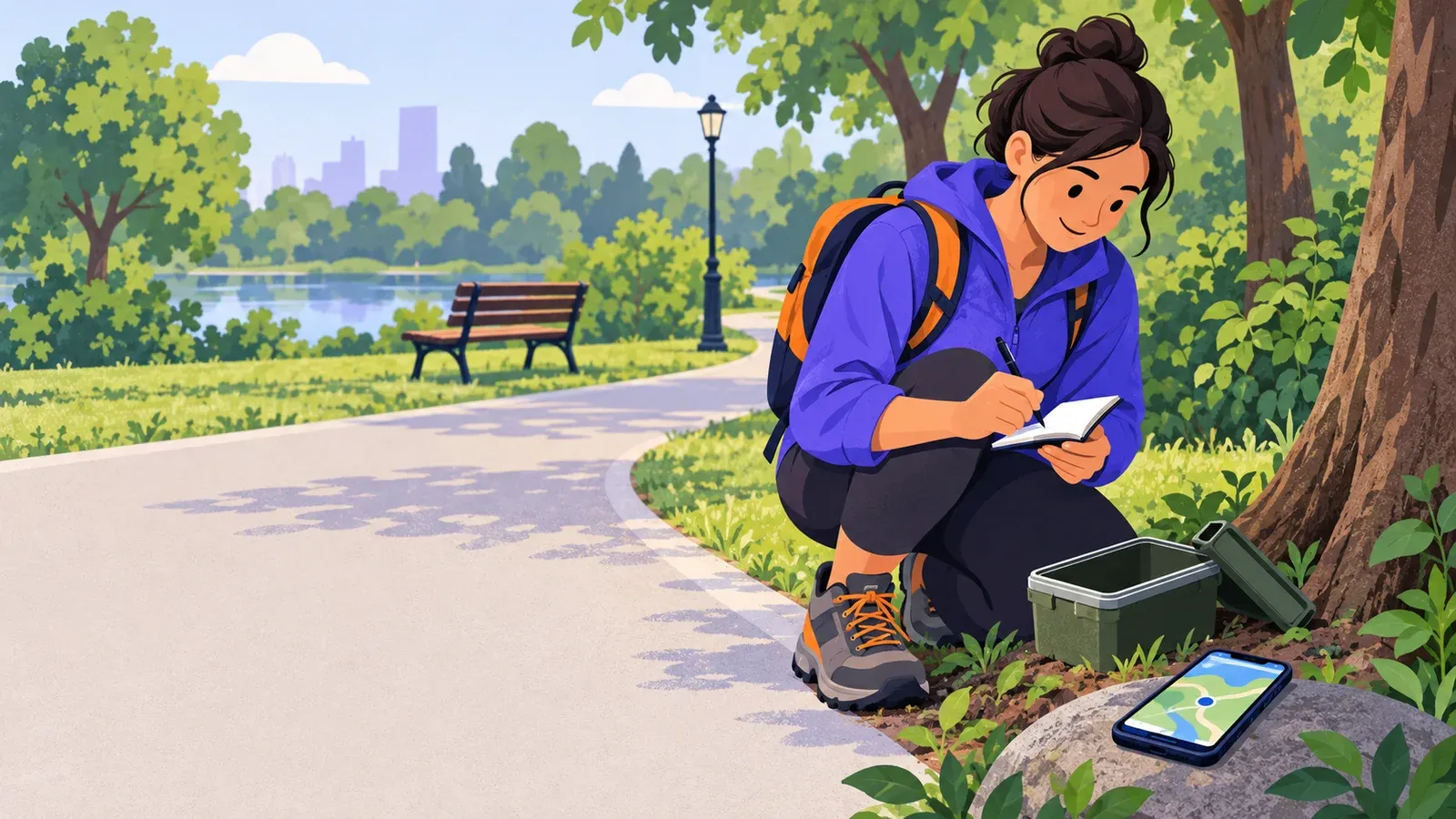
Choose an easy geocache near a permitted path, use your phone to search, sign the paper log and replace the container for the next visitor.
What you need to know
-
Charged phone and free account
Use the official Geocaching app and check that your chosen cache's full details open before leaving; know your return route if coverage drops.
-
Pen and walking kit
Bring a working pen, shoes and clothing for the forecast, and water for the outing. You need no swap items.
-
A short permitted route
Read the listing and recent logs, check path access and opening hours, and tell someone your plan or go with a friend.
Geocaching uses posted coordinates to find a hidden container. Allow 45–60 minutes for one local search. You can log an attempt even if you don’t find it.
Choose one reachable cache
Choose an available Traditional cache, with its container at the posted coordinates, and difficulty and terrain ratings of 1–1.5. Prefer a regular or large container and recent successful logs. Difficulty describes the search; terrain describes reaching the spot. Read the listing and hint. Skip disabled listings or several recent unsuccessful searches.
The current app feature chart limits Basic access and gives it neither filtered search nor offline maps. Inspect listings individually. A map pin does not grant access through a closed path or private land. The first-find guide recommends established paths over a straight line to the coordinates.
Search without disturbing the site
Walk the permitted path and stop when you need to read the phone. Near the coordinates, look around the likely hiding area and use the hint; GPS points to an area, not necessarily the exact container. Don’t dig, pull plants apart, dismantle structures or reach into a place you cannot see. Turn back if access or footing becomes unsafe. If nothing turns up after 10–15 minutes, stop searching.
Log what happened
If you find the container, note its exact position before lifting it. Sign the paper log with your account name and date, keep the paper dry, close the container securely and return it to precisely the same place and arrangement. Leave other contents alone. Then log “Found it” in the app. Geocaching 101 shows the sign, replace and online-log sequence.
If you cannot find it, log “Didn’t find it” instead. That reports your attempt; it does not prove the cache is missing. If the paper log is unusable or the container damaged, tell the owner; don’t claim to have signed. Keep your online log brief and avoid a photo or description that reveals the hiding place. Next time, try another similarly easy cache or revisit with an experienced cacher.

Plan and complete your first search
- Geocaching 101See the basic sequence of choosing a cache, navigating, signing the log and putting the container back.
- Finding your first geocachePlan the route, check terrain and prepare for the search with Geocaching HQ's first-find guide.
- Basic and Premium app featuresCheck which caches and navigation features the official app includes with a free Basic account.