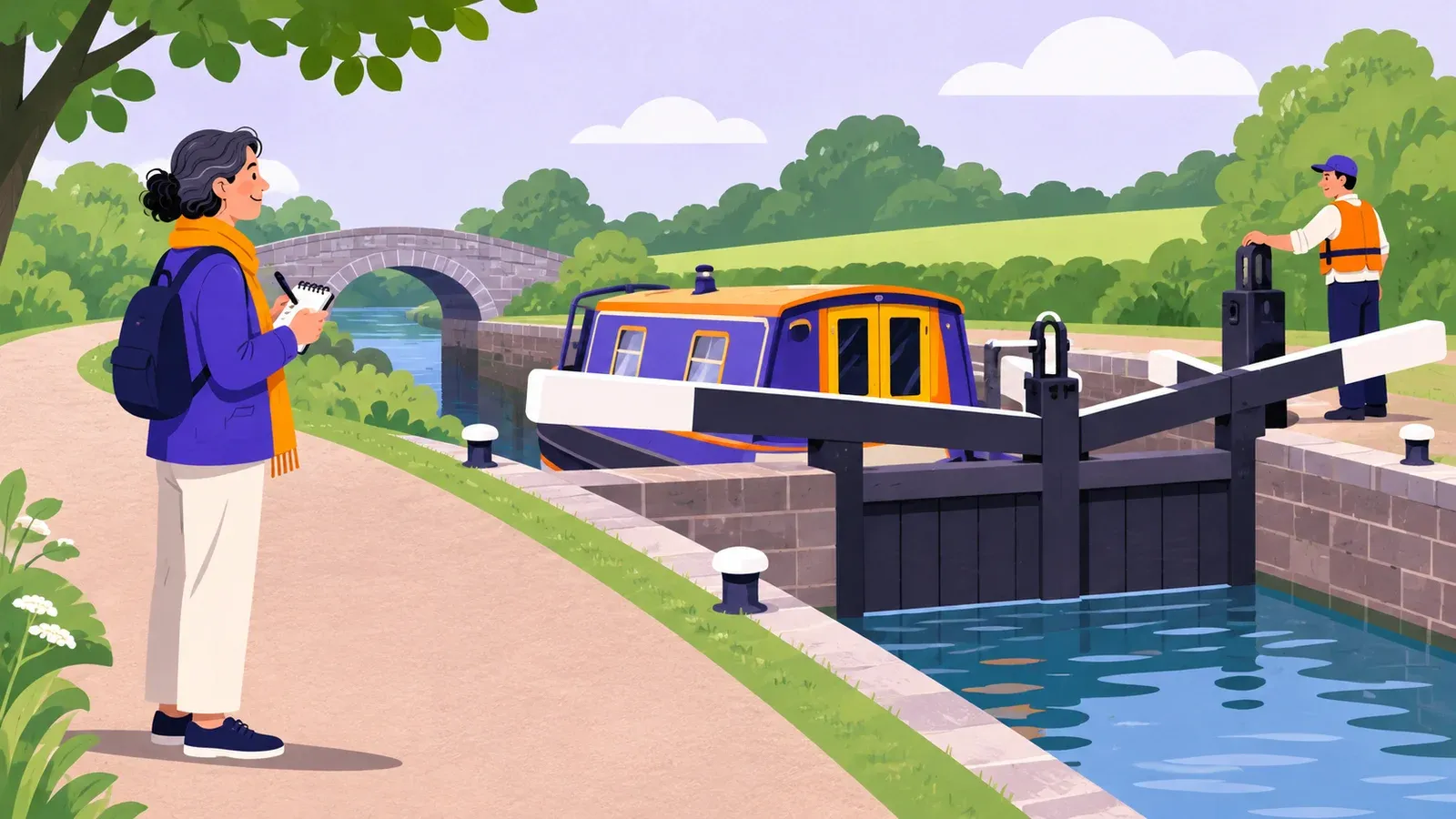
How to start gongoozling by watching canal boats
- Cost to start
- £0 with existing basics
- Difficulty
- Easy
- First result
- A short canal log
Free public access; allow for travel or parking costs
Observe from a public path with room to stand back
Allow 30–60 minutes, plus travel; boat traffic varies
Choose a public canal-side viewpoint, watch a boat pass through a lock, and make a short observation log while leaving crews space to work.
What you need to know
-
Find a public place beside a lock
Check the operator's map, visitor information and closure notices for your chosen spot. Pick a broad towpath or designated viewing area with space for crews and other visitors.
-
Dress for the path and weather
Wear grippy shoes and go in daylight. Postpone if the path is flooded, icy or slippery; keep children close beside the water.
-
Bring a notebook or an existing phone
Leave room for the time, lock name, boat description, direction, water level and gate sequence. A quick sketch can record the visible lock layout.
Choose somewhere to watch
Gongoozling means watching canal boats and canal activity from the bank. For a first visit, spend 30–60 minutes beside a working lock. The Canal & River Trust resources cover England and Wales; elsewhere, check your local waterway operator’s visitor information and rules.
Stay on a public path or designated viewing area, back from the edge. Keep the towpath, lock landing and the sweep of gate balance beams clear. Watch your step near mooring ropes and pins. Do not enter private moorings, climb gates or lean over the chamber. Leave gates, paddles and ropes to the crew, and save questions for a quiet moment. Boats may be homes, so ask before taking close photographs of people. If there is no room to stand clear, move to another permitted viewpoint or leave.
Follow one lock cycle
From your viewpoint, locate the enclosed chamber and the higher and lower stretches of canal. As a boat enters, note which way it is travelling and where the water stands inside the chamber. The gates close behind the boat. Water then enters or leaves through sluices, and the floating boat rises or falls. When the chamber water reaches the level beyond the exit, those gates can open. Watch the waterline on the chamber wall if the mechanism is hard to see. Mark anything hidden from view as unknown rather than guessing what the crew did.
Make a record worth revisiting
While standing still, write the time and place, a simple boat description, whether it travelled uphill or downhill, and the gate and water-level changes you actually saw. A colour or shape is enough; you need no registration number. If no boat passes by your planned finish, record zero movements and sketch the visible lock layout. Check notices before trying again. On a later visit, compare a boat going the other way or watch the same lock from another permitted viewpoint.

Plan a canal-side visit
- Canal & River Trust map (England and Wales)Find waterways and visitor information, then confirm access to your chosen viewing spot.
- Towpath and navigation notices (England and Wales)Check closures and restrictions that could affect access or boat traffic before your visit.
- Waterway code and waterside safety (England and Wales)Read the advice for everyone on bank-side hazards, children and what to do if someone falls in.