
Gymnastics: link two shapes in a beginner class
- Cost to start
- Class fee; check membership
- Difficulty
- Beginner
- First result
- Two seated shapes
Local class, existing kit; confirm insurance and travel
Coach adapts seated shapes to your starting range
Link a pike preparation and tuck with one correction
Find a coached adult beginner gymnastics class, learn seated pike and tuck shapes, and repeat a comfortable transition after one correction.
What you need to know
-
A structured adult place
Confirm a beginner class with floor coaching, the first-visit total including membership or insurance, and an available place.
-
Club-approved clothing
Ask what close-fitting clothes and footwear the club accepts; secure long hair and remove jewellery.
-
A mat and water
Use the club's assigned floor space after its warm-up. Bring water and ask before using other equipment.
-
Your starting range
Tell the coach about injuries, access needs or difficulty sitting down or rising from the floor.
Choose a taught adult class
Ask for a structured adult beginner gymnastics class with floor coaching. An open gym may give you space without a taught sequence. Woking Gymnastics Club in England lists both formats and welcomes complete beginners; ask whether its coach can adapt seated shapes for you. Its annual insurance charge is separate from the class fee. Confirm the full first-visit total and booking. The under-50 budget assumes a local class, existing clothes and any required insurance.
Tell the coach if sitting on the mat or getting up is difficult. Join the warm-up, use only the floor space they assign, and ask how to pause or change a movement. British Gymnastics’ UK flexibility policy supports asking for an easier version and stopping an uncomfortable stretch. You do not need a roll, jump or apparatus skill for this first attempt.
Link a pike and a tuck
Ask the coach to show the pike and tuck shapes while seated. For a pike sit, put your legs together in front with knees straight as comfortably possible, torso upright, eyes ahead and arms reaching over the legs. This is an upright shape, not a toe-touch stretch. If straight legs pull your back into a slouch, ask for a bent-knee pike preparation or support; call it a preparation rather than a full pike.
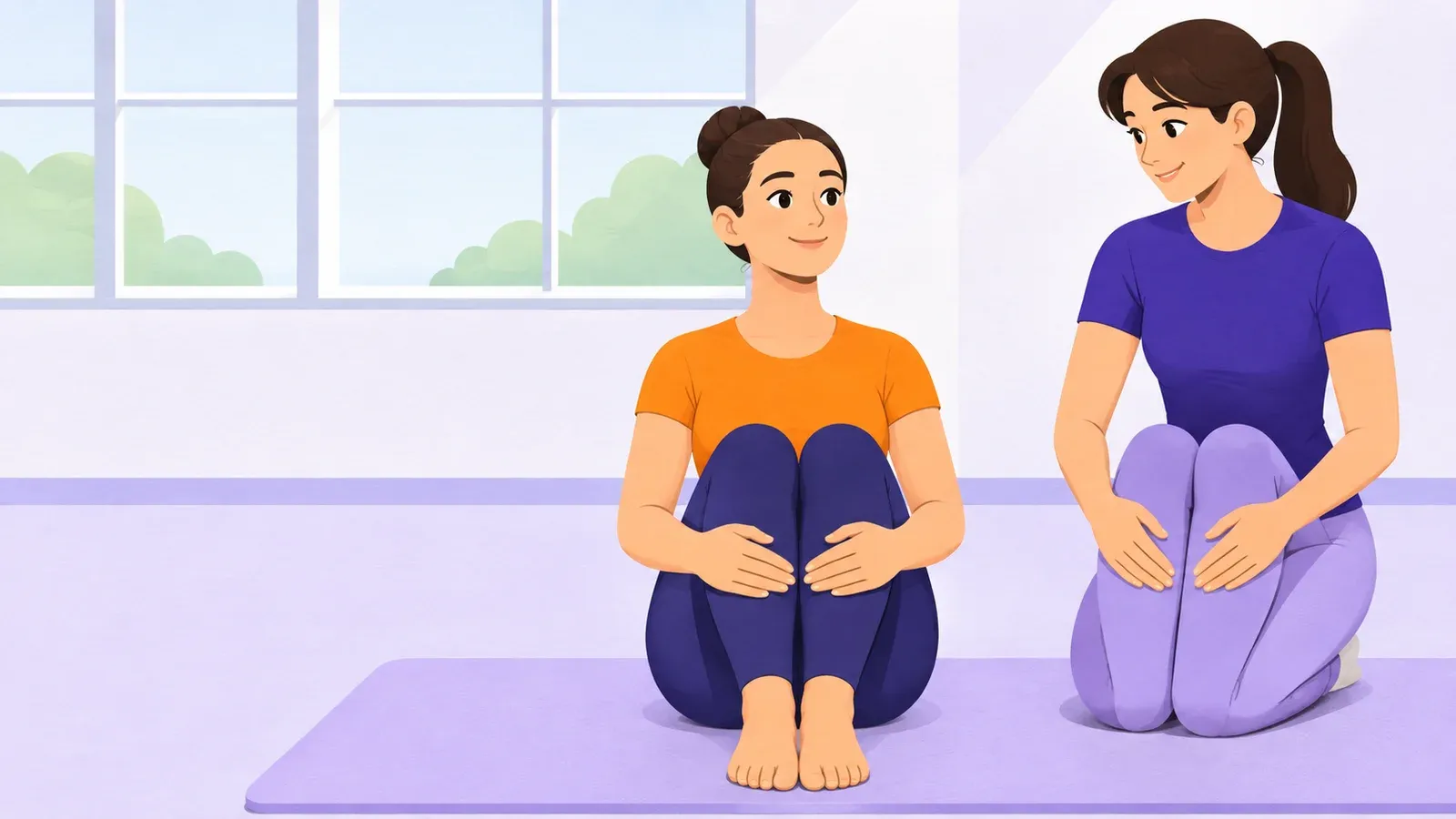
For the tuck, bend your knees together toward your chest, bring your feet nearer your bottom but leave them on the mat, and place one hand lightly on each shin below the knee. Keep your bottom on the mat. Do not pull the knees tighter. Then release your shins, slide the legs forward to your coach’s chosen pike or preparation, and pause. Breathe normally. Repeat that small seated change while the coach checks one detail.
If the knees drift apart or your back rounds, stop and let the coach reset the spacing or range. Tell them if you feel pain or dizziness. Ask which shape cue to remember for your next class. The result is a controlled transition you can name, even if you use the bent-knee version.

Find a class and learn the shapes
- Woking adult gymnasticsCompare its England structured class with open gym and check the separate insurance charge.
- Tooting basic shapes (PDF)Review the pike and tuck checkpoints with your coach, leaving its advanced moves for later.
- British Gymnastics flexibility policy (PDF)Read UK guidance on adapting or stopping an uncomfortable stretch.