
How to start team handball with a partner
- Cost to start
- £0 with a borrowed soft ball
- Difficulty
- Beginner
- First result
- Five controlled moving passes
Assumes free court access and suitable shoes you own
Learn a gentle overarm pass and controlled steps
Allow 20–30 minutes with a partner, including warm-up
Try team handball with a partner, practise gentle overarm passes and two-handed catches, and learn the three-step and three-second limits.
What you need to know
-
A partner and a soft ball
Borrow a small, non-slip ball that feels comfortable in one hand. Agree to throw gently and only when your partner is ready.
-
Permission to use a clear court
Choose a flat, dry outdoor space with room beyond both players. Check access rules and keep away from bystanders, obstacles and traffic.
-
Shoes, water and room to move
Wear grippy sports shoes and comfortable clothes. Bring water, leave out contact and contested catches, and stop if a movement hurts.
Team handball is a goal-scoring sport, distinct from wall handball. Try its passing with one partner before joining a group. Allow 20–30 minutes for a warm-up, practice and rests.
Begin with gentle passes
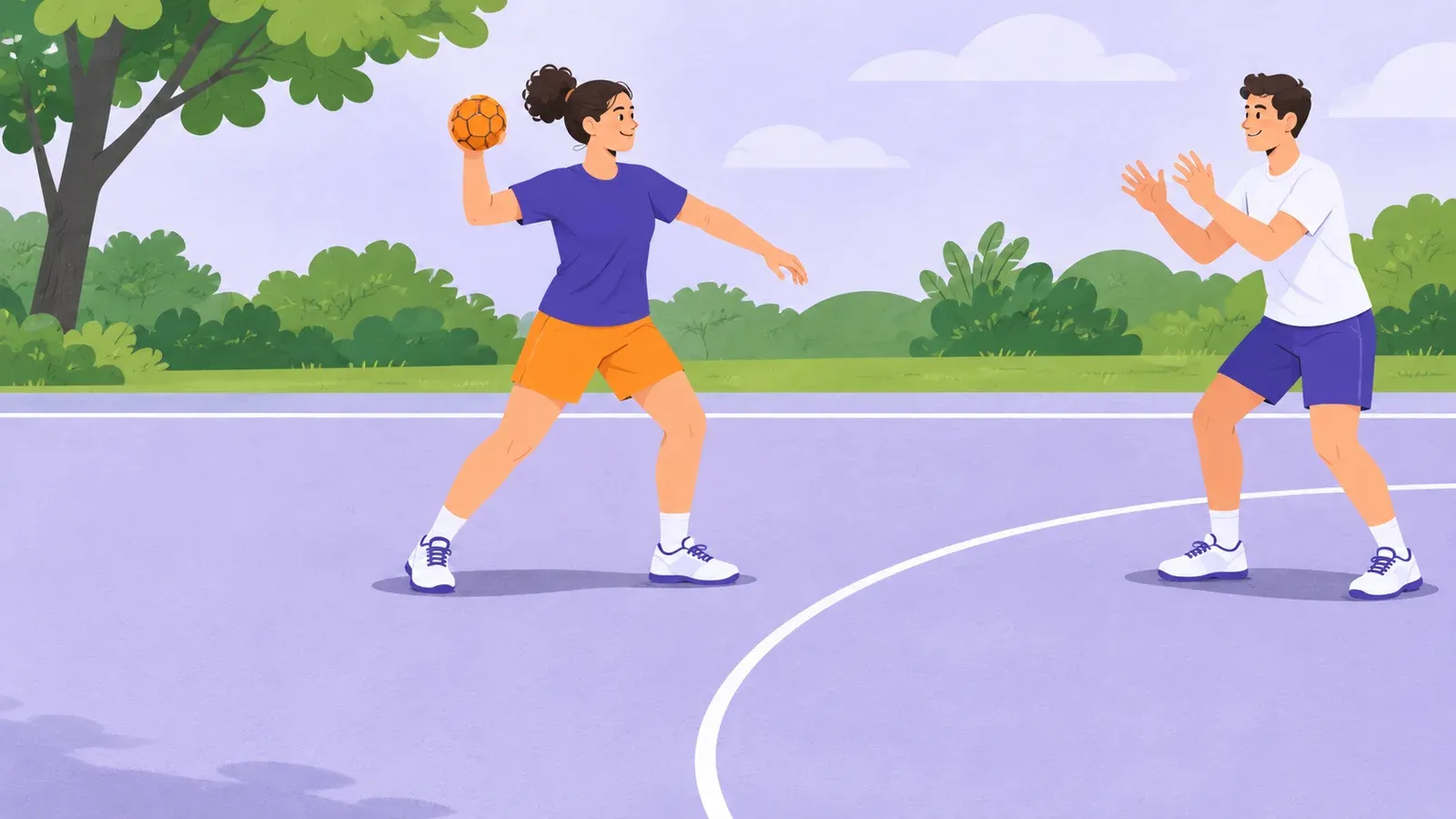
Walk or jog lightly, then loosen your shoulders, arms and ankles. Stand 3–4 metres apart, with the foot opposite your throwing hand slightly forward. Keep both feet planted. Hold the ball in one hand near your shoulder and send a gentle overarm pass toward your partner’s hands at chest height. Your partner catches with both hands, bending the elbows to soften it. Return the ball when both are ready.
If catches keep failing, stand closer or throw more softly. Keep throws away from faces and bystanders. Leave full-power shots, jumps and defenders for coached practice.
Add one step before the pass
Once stationary passes feel steady, catch with both feet on the ground, take one small step, then pass. Handball rules permit up to three steps with the ball and a hold of no more than three seconds without dribbling. This drill uses one step so you can pay attention to balance and release. Count the time from the catch, and pass before three seconds have passed. Reset your spacing after the ball leaves your hands rather than walking around while holding it.
If the step pulls your throw off line, slow down and practise a few stationary exchanges before trying again. Stop if the surface becomes slippery or a movement hurts. Do not add contact to make the drill harder; match defending has its own rules.
Record a clean sequence
Try for five controlled pass-and-catch exchanges with the small step before each throw. Five is a practice target, so note your longest clean run even if it is shorter. Write down whether timing, accuracy or catching needs work. Repeat at the same gentle pace next time. To learn goal-area rules, defending and team play, find a coached beginner group; if you lack a partner, that can be your starting point. Check age eligibility, booking, equipment and fees with the organizer.

