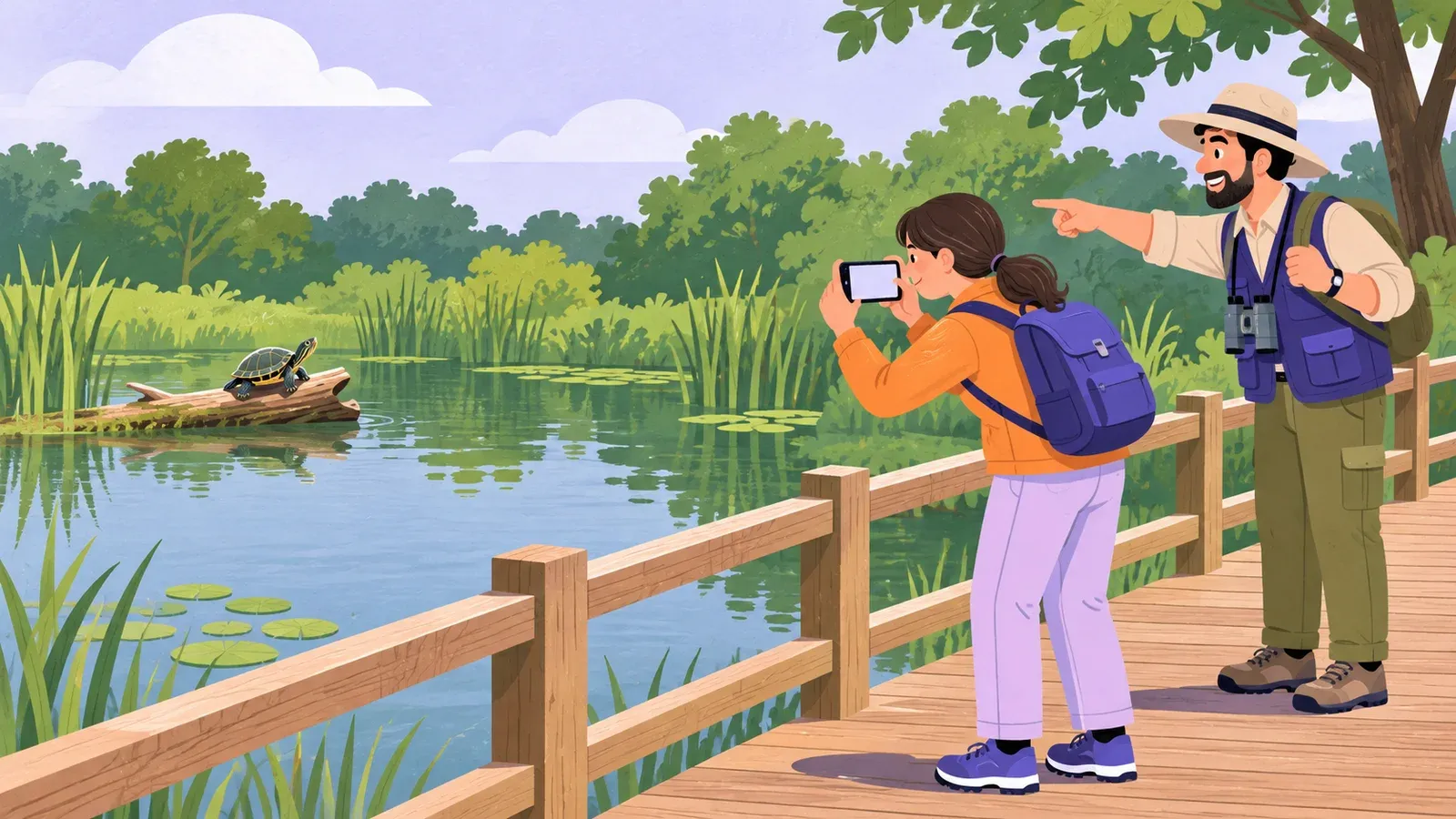
Herping: watch reptiles and amphibians on a first walk
- Cost to start
- Local walk costs
- Difficulty
- Beginner
- First result
- One short daylight walk
Assumes nearby low-fee route and own kit; check entry and travel
Watch from the path and check uncertain identifications
A field record and photo if an animal appears
Plan a daylight reptile and amphibian walk, photograph wildlife without disturbing it, and compare a sighting with a regional guide or naturalist.
What you need to know
-
A confirmed observation route
Ask a park or local naturalist about a permitted daylight path, suitable season, access restrictions and local hazards. Join a guided walk if the site is unfamiliar.
-
Clothes for the path
Wear sturdy footwear and weather-appropriate clothes. Bring water, tell someone your route and return plan, and check local entry or guide fees.
-
A camera and notes
Bring a charged phone or camera and a notebook. Borrow binoculars if available; a close-up lens is not required.
-
Clean footwear
Check the site's hygiene rules. Clean and dry muddy shoes and equipment before visiting another frog site.
Herping means watching wild reptiles and amphibians. A first walk can produce a sighting record or a note on conditions when none appear.
Choose a path and scan from it
Ask a park or naturalist for a short permitted daylight route and suitable season. Confirm entry rules and costs; a guide may exceed the nearby low-fee route assumed here. Check weather and plan your return.
Walk slowly and watch your footing. Stop on dry, stable ground before scanning sunny logs, rocks or waterside vegetation. Stay on the path or boardwalk and behind barriers. Do not enter the water or lift logs, stones or leaf litter. Give snakes ample space. If one blocks the route, wait well back or turn around. US National Park Service guidance advises using zoom and backing away if wildlife reacts; follow your site’s distance rules.
Make a record, then identify
From your safe position, photograph the whole animal if the view allows. A second angle can help only if available without moving closer. Note the date, general location, habitat and what the animal was doing. Keep the original photo; crop a copy later to examine visible details.
Compare body or shell shape and markings with a regional guide. Check the candidate’s range and ask a naturalist which features support the name. UF/IFAS’s herping guide gives photo advice and Florida examples. Treat an iNaturalist suggestion as an unverified lead. If the image is blurred, keep a broad label such as “freshwater turtle, species uncertain” rather than approaching for another shot. Share only a broad region when asking others to identify sensitive wildlife.
Leave animals where they are; do not touch, feed, catch or move them. Before another frog site, clean and dry muddy footwear and equipment, following stricter local rules if present. NSW Government guidance explains the disease concern. If no animal appears, record the habitat and conditions and ask the naturalist about another suitable time.

Watch, identify and protect wildlife
- Herping Adventures (Florida examples, PDF)Review trail observation and identification-photo advice, with Florida species examples.
- Watch wildlife from a distance (US)Check distance, zoom and trail precautions, then confirm the rules at your chosen site.
- Protect frog sites from disease (NSW, Australia)Learn why clean, dry footwear and leaving frogs in place help protect their habitats.
- Why photo suggestions can be wrongUnderstand why an automated suggestion still needs comparison with field clues and regional knowledge.
