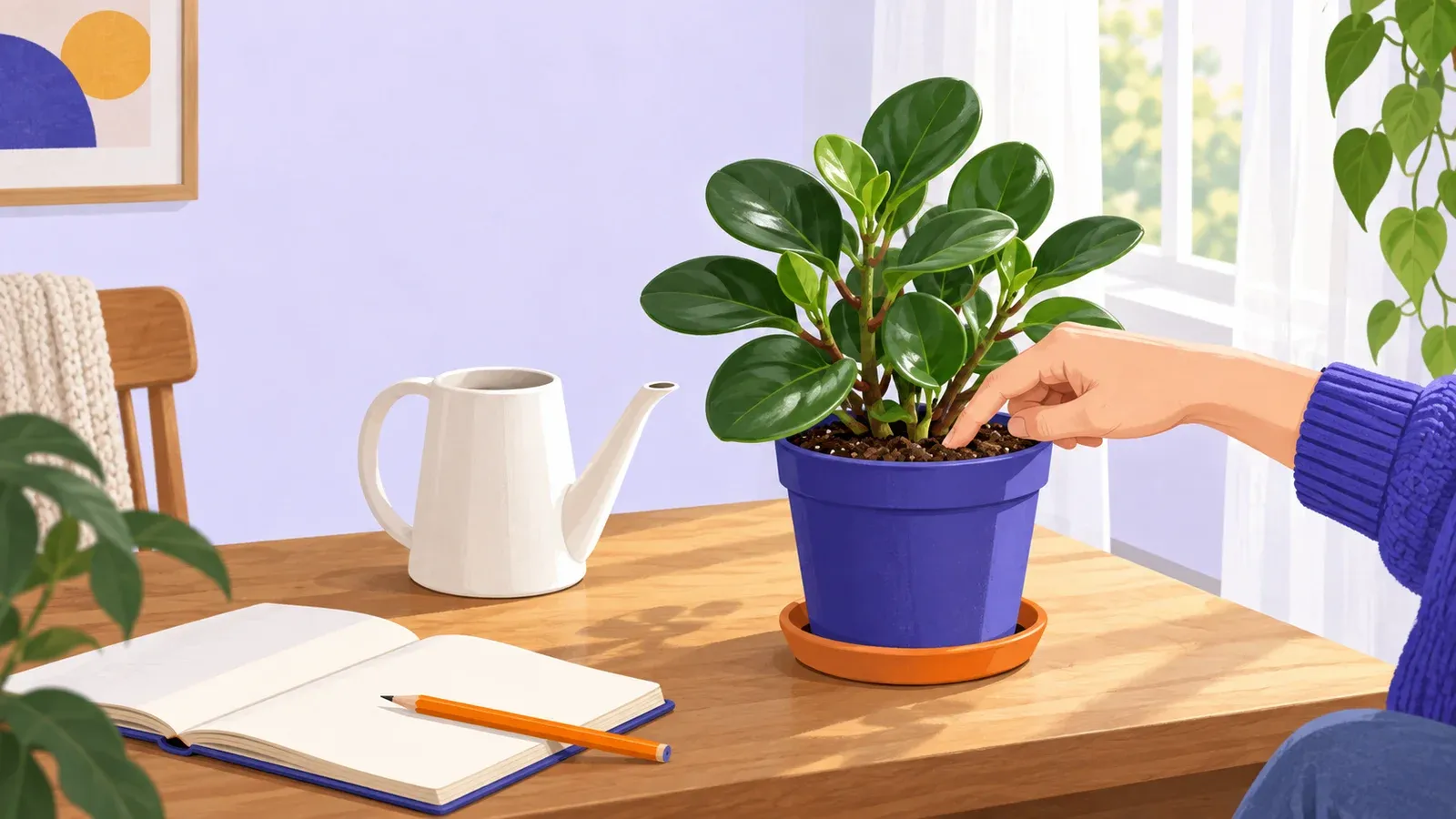
How to start houseplant care with one small plant
- Cost to start
- One plant, or use your own
- Difficulty
- Easy
- First result
- 30 minutes to set up
Keep the nursery pot; decorative pots and moisture meters are optional
Observation helps; watering needs change with light and conditions
A placed plant and care record, followed by brief regular checks
Set up a labeled peperomia in suitable light, check its soil before watering, and keep a simple care record to spot problems without buying extra equipment.
What you need to know
-
Start with one identified plant
Choose a healthy Peperomia obtusifolia with a botanical label, or use an existing identified houseplant and follow its species-specific guidance.
-
Keep a pot with drainage holes
Retain a suitable nursery pot and use a saucer or removable outer pot; check that excess water can escape.
-
Use a jug you already own
A small jug lets you water the potting mix gently; use room-temperature rainwater or suitable filtered water for peperomias.
-
Make a short care record
Record the plant name, location, soil checks, watering dates, and a starting photo in a notebook or phone.
Houseplant care suits people who enjoy gradual changes. Start with one plant. This example uses Peperomia obtusifolia, often called baby rubber plant; check the botanical name.
Choose a place and inspect the plant
Confirm the botanical label. The ASPCA lists Peperomia obtusifolia as non-toxic to cats and dogs; check other species separately in a home with pets.
Look beneath leaves and around stems for insects, sticky patches, or damaged growth. Keep a newcomer separate from existing plants while checking it for pests.
Put the peperomia near a bright window with filtered light, avoiding harsh direct sun, cold drafts, and radiators. Observe how the light changes during the day.
Keep a healthy plant in its current pot initially. Photograph it and record the location.
Check the soil before watering
Peperomias need the potting mix to partially dry between waterings. Feel below the surface in the upper few centimeters. If it is still damp, leave it and check again later. Lift the pot to learn how its weight changes as it dries.
When the upper mix has dried and the pot feels lighter, water slowly over the soil until water drains from the holes. Let excess water drain fully, then empty the saucer or outer pot before putting it back. Record the date.
Set a reminder to check soil twice a week initially. Watering intervals depend on the pot, mix, light, temperature, and growth; adjust checks as you learn its drying rate.
Watch for a pattern and make one change
Yellowing or drooping leaves can have several causes. Check moisture, drainage, light, and pests before acting. If the mix stays wet, empty trapped water and seek advice about drainage or root problems. Adding water to already-wet soil can worsen the problem.
After a few weeks, compare photos and notes. Change one condition at a time to judge its effect. Check feeding and repotting guidance before taking those steps, then consider a second plant suited to another spot.

Match care to the plant
- RHS peperomia growing guideCheck placement, watering, feeding, and repotting advice for this compact group of houseplants.
- NC State's Peperomia obtusifolia profileConfirm identifying features and the light, drainage, and common problems of the example species.
- RHS Houseplant 101 on lightWatch a horticulturist explain bright indirect light and how indoor plant positions affect it.