How to start hunting through supervised field learning
- Cost to start
- Course fee plus travel
- Difficulty
- Beginner
- First result
- One checked field decision
Free agency tuition exists; travel and permits may add costs.
Qualified instruction and local permissions come first.
Book ahead; course length and prerequisites vary.
Find approved local instruction, practise wildlife identification and land-access decisions with an instructor, and agree on a mentored next step.
What you need to know
-
Approved instruction
Find your wildlife authority's approved hunter-education route and an instructor-led field introduction. Confirm who teaches, eligibility, prerequisite study and whether equipment handling or live hunting is involved.
-
Local requirements in hand
Ask which documents, coursework, licences or permissions this teaching session requires. Education, hunting authorization and land access are separate; meet the programme's prerequisites before attending.
-
The provider's field list
Ask what clothing, water, food and equipment the provider expects or supplies. Follow local visibility requirements; do not assume ordinary outdoor clothes suffice. Wait for the list before buying.
Start with an approved course and a supervised outdoor exercise. Your first result is an identification or access decision that an instructor checks with you, followed by an agreed next learning step. Booking a place only starts the process.
Find a suitable introduction
Ask your local wildlife authority for approved hunter education and a later mentored introduction. Explain that you are new. Confirm the course’s prerequisites, fees, accessibility, schedule and whether its field part involves equipment handling or live hunting. The IHEA-USA course finder points US readers to state requirements. As one US example, North Carolina’s Learn to Hunt workshops require both hunter education and a valid state hunting licence. Other places differ.
Course tuition can be free, as Pennsylvania’s in-person basic hunter education shows, while travel, prerequisites, licences, permits and later equipment may cost more. Ask before paying or buying anything. Booking and prerequisite study may take weeks; the field session’s length depends on the provider.
Make a decision with the instructor
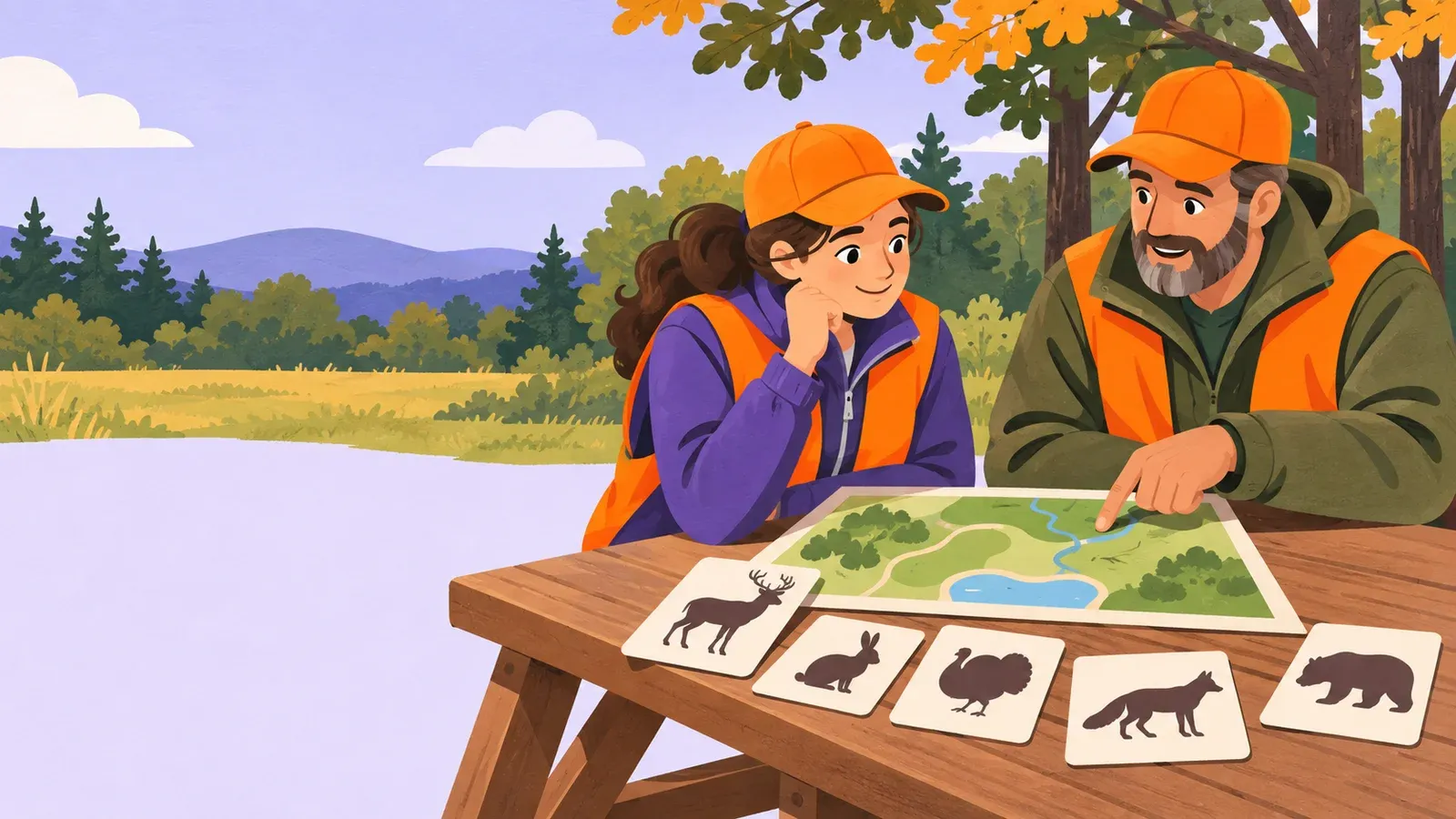
During the outdoor exercise, use instructor-selected images or cards and local rules to identify one species that may be hunted there. Explain how you distinguish it from a lookalike or protected species. Ask for correction rather than guessing. On a map, locate the boundaries, who controls access and which current rules apply. Explain what permission or authorization you would need. If the species, boundary or permission is unclear, stop and ask.
Discuss how the programme handles animal welfare, recovery, lawful reporting and care of harvested game before considering a future hunt. Follow the instructor’s directions for any practical equipment work. Keep unresolved skills for supervised teaching.
Agree on the next step
Repeat one identification or access decision correctly to the instructor and note what still needs work. Agree whether to finish an assessment, attend another skills session or arrange an eligible mentored outing. A certificate, where earned, does not replace local hunting authorization or land permission. LearnHunting.org describes one US adult mentoring route; availability and local requirements must be checked. Readers elsewhere should use their own wildlife authority.

Hunter education and mentoring in the US
- IHEA-USA: Find a hunter-education courseLocate your US state's education requirements and approved course options.
- Pennsylvania (US): Hunter educationSee what an official course covers and check its preparation requirements.
- North Carolina (US): Learn to Hunt workshopsSee a structured field-learning programme and check its attendance prerequisites.
- LearnHunting.org: Adult mentoring in the USExplore adult mentoring and ask what preparation is needed locally.