Ice skating: try a first recreational rink session
- Cost to start
- US$32 Dallas trial example
- Difficulty
- Beginner
- First result
- A few short taught glides
Nov 2026; own/borrowed helmet; confirm tax and extras
Balance and stopping take practice; stay in the beginner area
Progress varies; repeat with an instructor as needed
Book a short adult beginner introduction, fit rental skates, and practise a few small steps and glides while learning how to share public ice safely.
What you need to know
-
A taught beginner place
Ask for an adult first-timer introduction and beginner practice area; confirm ice time after the lesson.
-
Skates fitted at the rink
Ask staff to check rental fit and lacing. Bring lightweight socks; refit boots that pinch or let your heels lift.
-
Helmet and warm clothes
Wear a properly fitted helmet accepted by the rink. Ask if you can borrow one or should bring your own. Wear gloves and warm layers you can bend in.
-
A full quote and arrival time
Confirm tax, helmet or locker charges, cancellation terms and access needs before paying. Allow fitting time.
Choose an easy first session
Look for a short adult introduction with space away from faster skaters. Ask when the beginner area is available. A Saturday lesson is not automatically quiet.
At Galleria Dallas in Texas, US, the first-timer introduction was US$32 in November 2026. It includes admission, rental skates and 15 minutes of private instruction, usually on Saturday afternoons; reserve and pay in advance. Confirm adult availability, practice time, tax and any helmet or locker charge. Check cancellation, rescheduling and no-show terms. Travel or buying a helmet may take the total above US$50. The Learn to Skate USA adult finder can help compare local classes.
Fit the skates and try a few metres
Arrive early for rental fitting. Have staff check ankle support and heel hold. Walk only on designated matting. On the ice, ask your instructor to demonstrate falling, getting up and stopping slowly. The first-day guide covers clothes and fit.
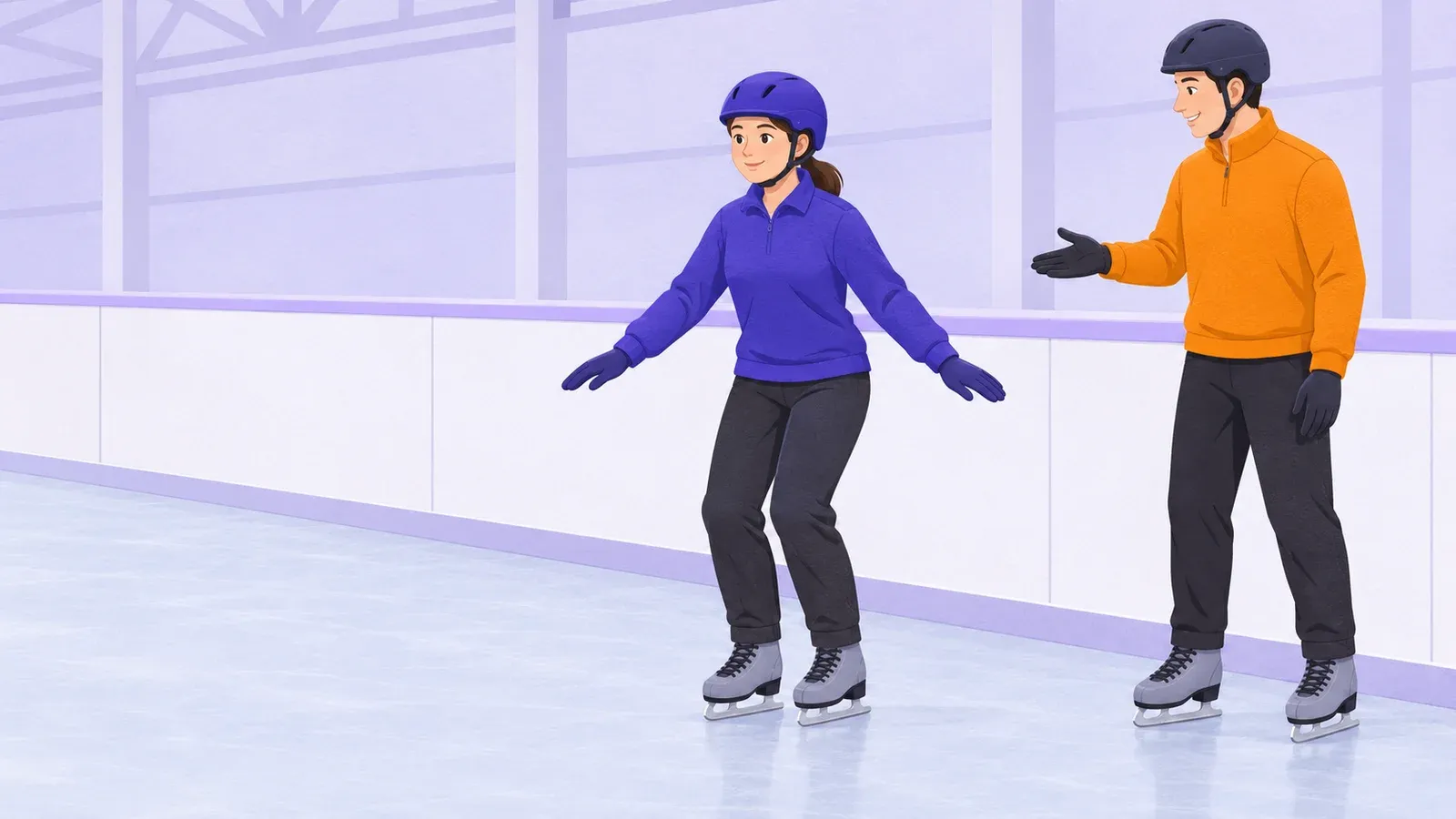
Stay in the area the instructor chooses. Try small marching steps, then a short two-foot glide with soft knees. Ask for another demonstration or a slower pace if your feet run ahead. Practise the taught stop before moving farther. If you cannot control speed or stop, ask for more help before joining public traffic. A few controlled metres are enough.
Share the ice, then decide what to repeat
Follow posted direction and staff instructions. Look ahead, leave room, and move out of the flow before stopping. Keep your phone off the ice. BGSU’s rink code is one example; local rules may differ. Leave the ice for resurfacing.
If skates hurt or feel loose, ask for a refit. Take a break when tired, and tell staff if a fall needs help. After the lesson, note one correction to repeat at another beginner session. If you want a figure-skating sequence later, see the figure-skating guide.

Plan a first rink visit
- Galleria Dallas first-timer introductionCheck a current US short-lesson example, its price and included skate rental.
- Learn to Skate USA adult programsFind adult classes in the US and compare local beginner arrangements.
- BGSU public skating codeSee one US rink's rules on control, looking out and ice resurfacing.
