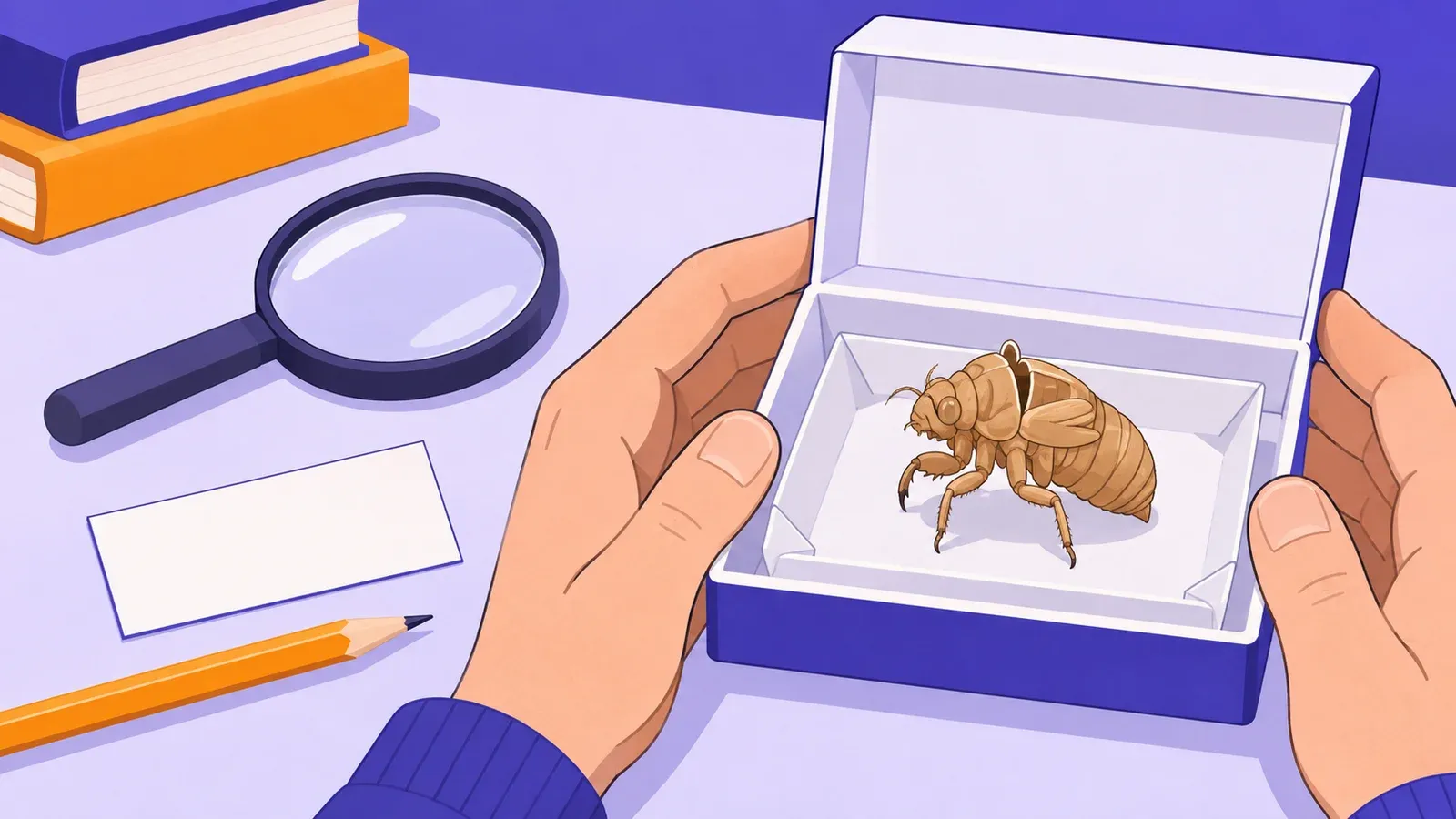
Insect collecting: label and house a shed shell
- Cost to start
- Shell and storage supplies
- Difficulty
- Beginner
- First result
- One session after sourcing
Assumes permitted free shell and reused box; confirm other costs
Gentle handling and accurate labels matter most
A labelled shell in a protective dry box
Start a small insect collection with a permitted shed shell, record its known history, and keep the fragile specimen with its label in a dry protective box.
What you need to know
-
One permitted empty shell
Ask a naturalist to confirm a dry, hollow cicada shell and collection permission. Leave damp or occupied finds alone.
-
Its known history
Retain the finding place, date and collector. For a supplied shell, note the supplier, receipt date and gift or loan status.
-
A small dry box
Use a lidded rigid box and smooth paper tray that supports the legs. Reused supplies suit this first session.
-
Labels and a camera
Bring pencil, paper and phone for a baseline photo. Work on a clean table; a borrowed magnifier is optional.
An empty cicada shell, or exuvia, can start a collection. Once sourced, give it a label, record and protective box.
Confirm the source
Ask a naturalist to confirm the hollow shed skin and the split where the adult emerged. UW–Madison Extension shows that process. Check landowner and site permission. Choose an easily detached shell; do not pull it from bark or damage a plant. Leave uncertain finds.
An existing teaching specimen needs its owner’s agreement. Preserve its labels and follow care instructions. Keep a mounted specimen on its original mount; the tray method below is for loose shells.
Support and record the shell
Slide stiff paper beneath the dry shell and move it into the tray. Do not grip legs, antennae or the hollow body. Ask for help if the transfer is awkward. Leave it unpinned and unglued. Take a baseline photo.
Give the shell a code such as IC01. Write it on the tray label and in a notebook, never on the shell. Record a supported identification, original finding place, date, collector and substrate if known. “Cicada shed shell; species unknown” is enough when that is all you can support. For a supplied shell, record the supplier and receipt date separately. Write “unknown” for missing details; receipt date is not collection date. Link permission, condition and photo to the code. If you revise the ID, retain the old name and its source. Texas Tech’s collection guide explains why the number matters.
Place the label beside the shell without pressing its legs. Close the lid around dry material and store the box level in a dry cupboard, away from sun and knocks. Compare it regularly with the photo for fragments, holes, debris or insects. Keep any broken part with its code and note the change. For dampness, mould or pests, separate the box and ask an experienced keeper before treatment. The small-collection storage sheet shows damage to watch for. Check this specimen and its record before adding another.

Source, label and protect a specimen
- Cicadas and their shed shells (US Midwest)See how a cicada leaves its empty nymphal shell and distinguish it from an emerging insect.
- Collecting permissions and records (UK code)Review permission, habitat care and specimen records, then check your own site's rules.
- Specimen numbers and collection labelsLearn how locality, date, collector and a unique number link an object to its record.
- Care for a small insect collection (PDF)Check how knocks, light and pests can damage a collection and what signs to inspect.
