How to start jigsaw puzzles with a small first puzzle
- Cost to start
- Borrow a puzzle or price one
- Difficulty
- Easy
- First result
- 30-60 minutes
Reuse a table and box lids; special accessories are optional
The picture and piece size matter as well as the count
A sorted puzzle with a border or recognizable section started
Choose a manageable jigsaw, sort its pieces, and build a recognizable section while learning to spot false fits and keep an unfinished puzzle safe.
What you need to know
-
Choose a small, readable picture
Try 100-300 pieces with distinct objects and colors; large areas of similar sky or water make a first puzzle harder.
-
Check the finished dimensions
Allow space for the completed picture and loose pieces; a plain rigid board lets you move the work if the table is needed.
-
Reuse shallow containers
Box lids or trays keep sorted pieces visible; keep the reference picture upright beside the work.
-
Protect pieces between sessions
Choose good lighting, keep drinks off the surface, and store small pieces out of young children's and pets' reach.
Jigsaws suit quiet sessions where you enjoy spotting visual connections. Aim to build one recognizable area first; a whole puzzle may need several sittings.
Sort once, then build a section
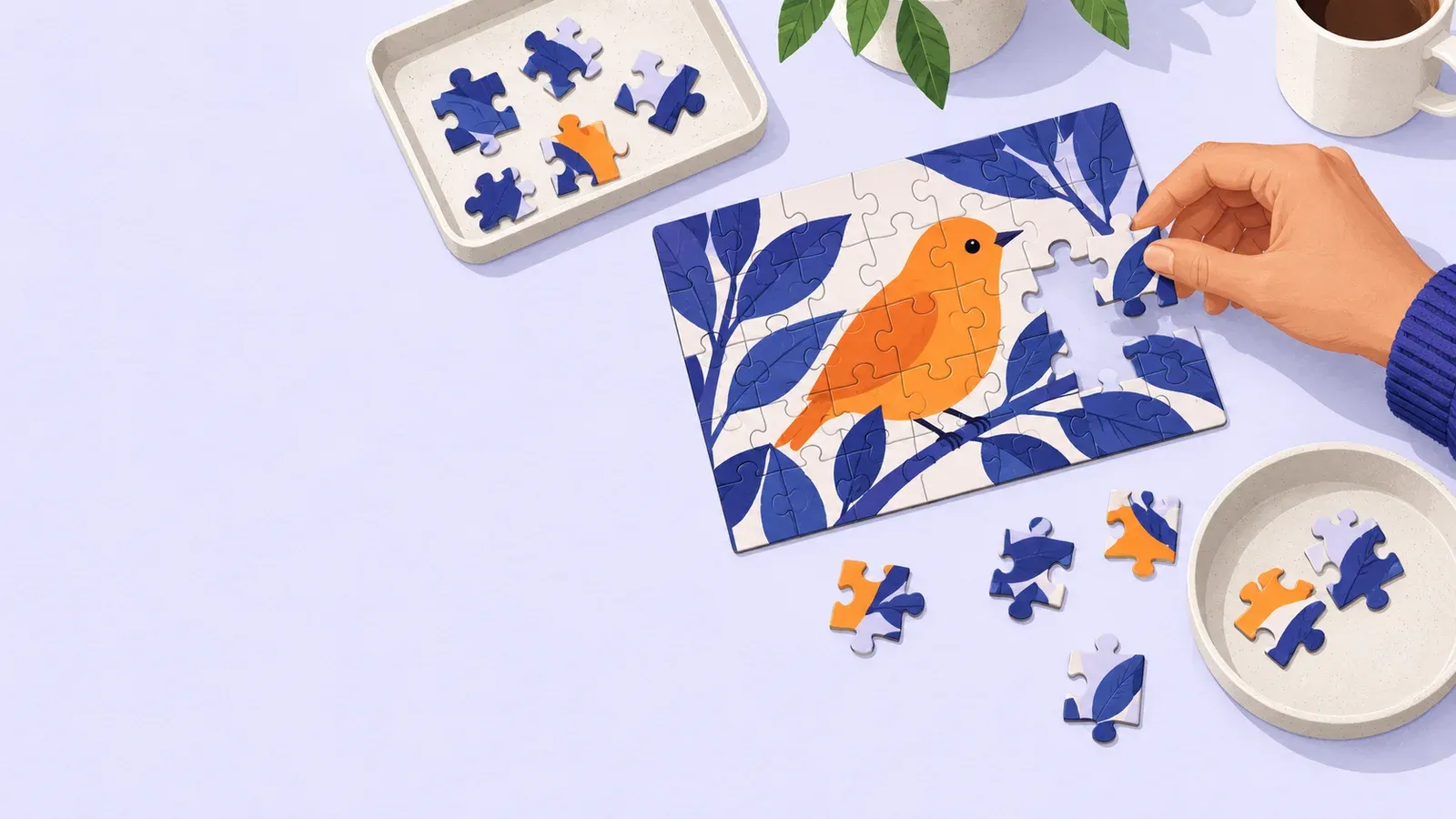
Turn the pieces face up. Separate straight edges and corners, then group the rest by obvious colors or features in the reference picture. A striped roof or an animal’s face is easier to recognize than a pile of nearly identical blue pieces.
For a conventional rectangular puzzle, try the border first. Match both the image and the shape. If an edge is elusive, begin an interior object and return later. Cloudberries’ guide explains why the picture should guide your assembly order.
Build a small cluster on the board, using the reference to estimate its position. Add neighboring pieces and connect it to the border when the surrounding image makes sense. Leave room for other sections.
Check a doubtful fit
A piece should sit flat without being forced. Compare the printed lines across the join and check the neighboring tabs and holes. If the picture breaks abruptly or nearby pieces cannot fit, remove the doubtful piece and try another.
When you stall, switch sections or sort one small group by shape. Take a break if you start trying the same candidates repeatedly. Keep a troublesome gap open while you work elsewhere.
For an apparently missing piece, check the box corners, trays, floor, and clothing before contacting the maker. Replacement policies differ; retain the box and purchase details. The Ravensburger FAQ illustrates why a single-piece replacement is not always available.
Photograph your progress and cover the board securely between sessions without pressing down on the pieces. After finishing, check the image, enjoy the result, and return every piece to its box. Try another puzzle with a similar count and a different picture before increasing the size.
