
Kabaddi: try your first coached raid
- Cost to start
- £7 England training example
- Difficulty
- Beginner
- First result
- One coached session
January 2026 EKU fee; confirm it and allow for travel or new kit
Practise light tags before coached contact skills
Complete a light-touch raid, return and role swap
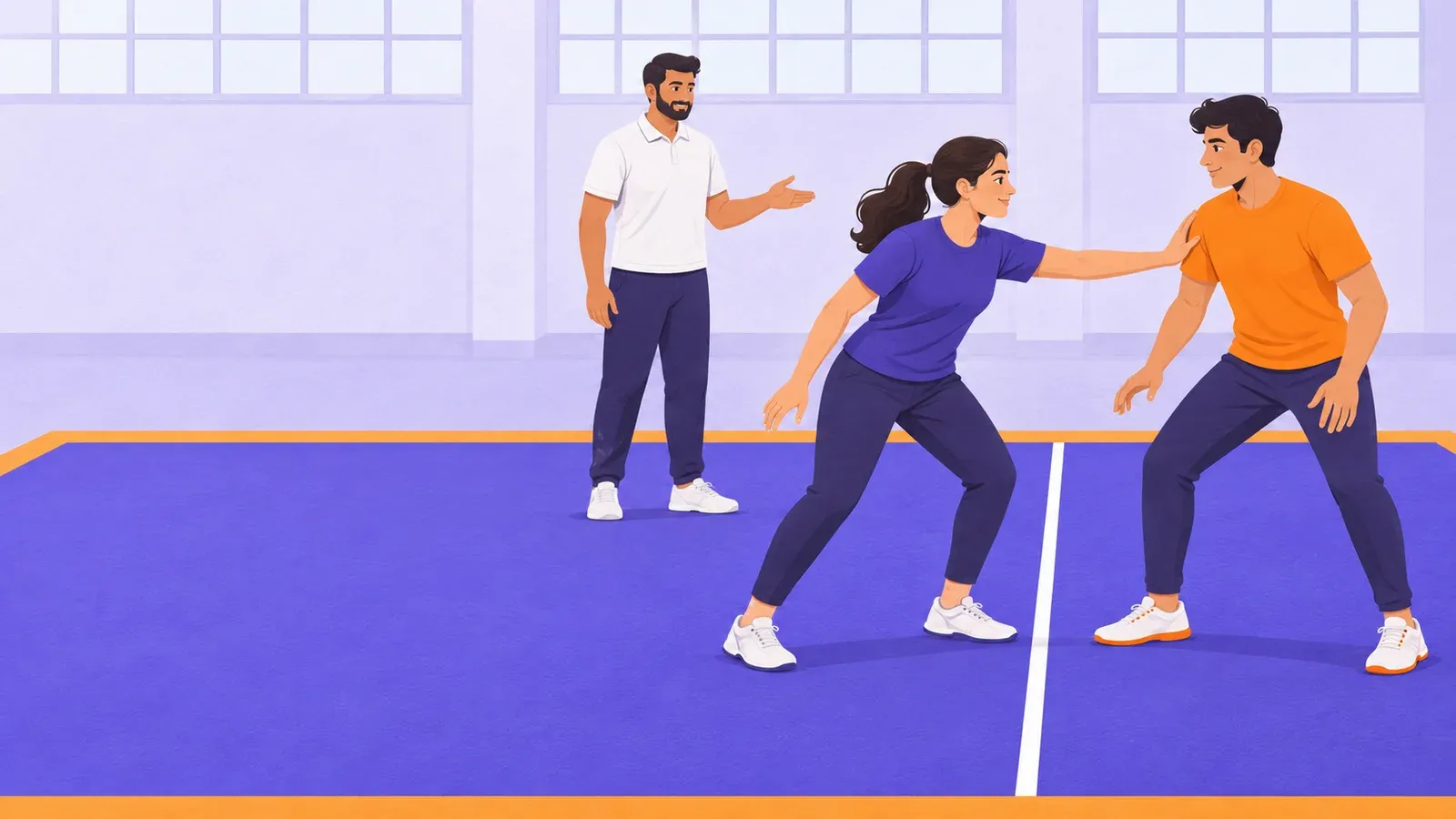
Join an adult beginner kabaddi session and try a slow, no-tackle raid: enter the opposite half, make an agreed light tag and return across the midline.
What you need to know
-
A confirmed adult beginner session
Ask an experienced kabaddi coach about eligibility, the fee and whether you can try an adapted no-tackle raid first.
-
A partner and safe practice space
Have the coach choose a willing partner and a suitable pace. Use secure sports mats with clear room around the drill.
-
Approved clothes and shoes
Wear unrestricted sportswear and thin-soled indoor shoes approved for the surface. Remove jewellery and trim your nails.
-
Water and a readiness check
Tell the coach about anything that affects your movement, and confirm any required protection before attending. Bring water.
Kabaddi is a contact team sport: sides alternate raids while defenders try to stop the raider returning. For a first session, ask a coach to adapt that raid into a slow, light-tag exercise without tackles. Contact skills come later under instruction.
Confirm the session and rules
In England, EKU adult training is one entry route. Confirm the current venue, beginner access and fee before travelling. Its January 2026 policy lists £7 per session, subject to change. That assumes clothes and approved shoes you already own; travel or new kit costs extra. Elsewhere, ask a local kabaddi club for an adult coach and its own terms.
At the session, ask the coach to adapt the light-tag raid for your group. Learn the midline, practice boundaries and stop signal, then warm up together. Ask which rules the club uses. EKU’s rectangular rules describe its competition format; this light-tag drill is an adaptation, not a regulation match.
Make a light tag and return
Watch the coach demonstrate with a stationary partner. Agree on a light upper-arm tag and leave room to turn. On the coach’s cue, cross into the opposite half, touch the agreed target, then return fully across the midline into your own half. Stop and reset. The partner does not grab, block or chase. Swap roles so each person completes the sequence.
Repeat slowly until both of you can find the midline and return under control. The coach may then allow gentle movement. If spacing closes or a tag becomes a grab, stop and reset at a slower pace. Leave holds, tackles, kicks, jumps and breath-holding challenges out of this first drill. EKU player safety guidance covers warm-up and graded training; your coach decides how to progress.
Stop for pain, dizziness or lost control and tell the coach. Finish by asking for one footwork correction and which coached drill should follow next time.

England training, rules and safety
- England Kabaddi Union adult trainingFind an adult training contact in England and confirm beginner arrangements, footwear and the current venue before travelling.
- EKU rectangular kabaddi rulesCheck this England body's rectangular rules and ask your coach how the first drill is adapted.
- EKU player safety guidance (PDF)Read the England body's guidance on preparation, suitable training and responding to injury.
- EKU training fees and conditions (PDF)Check England training fees, cancellation terms and participation requirements before confirming a session.