Kayaking: make your first coached paddle
- Cost to start
- £35 England example
- Difficulty
- Beginner
- First result
- One coached lesson
90-minute taster with kit; travel extra, confirm dates/price
Stay within the instructor's sheltered practice area
A short paddle route, safe return and one technique cue
Take a supervised lesson on sheltered water, learn forward strokes, turning and stopping, then complete a short route and return to the launch.
What you need to know
-
A confirmed beginner lesson
Ask for an instructor qualified for the water and craft. Check swimming confidence, access support, lesson dates and the full price.
-
Fitted boat and flotation
Request a stable single sit-on-top kayak. Have the instructor confirm its fit, the paddle, buoyancy-aid size and required clothing.
-
Clothes that can get wet
Bring swimwear or quick-drying layers, secure wet shoes, a towel and a dry change. Use the centre's wetsuit if required.
-
Water and weather protection
Bring drinking water and suitable sun protection. Ask about wind, water temperature and what to do if conditions change.
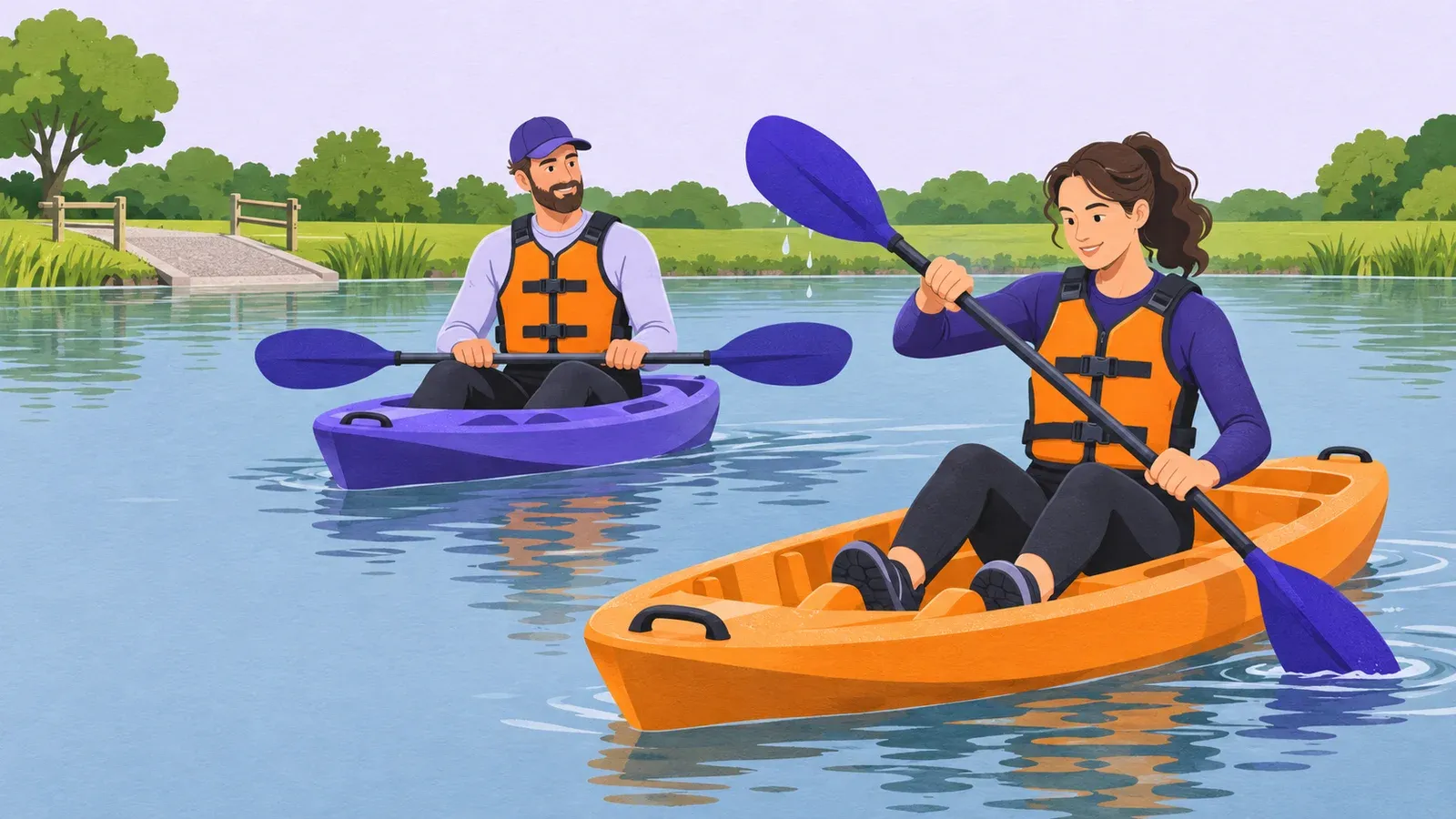
Start in a seated kayak with a double-bladed paddle on very sheltered water. With an instructor, launch, paddle a short route, turn, stop and return. Record one technique cue for the next lesson.
Choose the lesson and prepare to launch
Paddle UK describes beginner sessions. Ask the provider for a stable single sit-on-top kayak that fits you, and confirm swimming or water-confidence requirements, launch assistance and access needs before paying. Tittesworth in England listed £35 for a 90-minute taster (ages 8+) with an instructor, wetsuit and required kit when checked November 2026. Its page does not promise a sit-on-top. Confirm the craft, final price and seasonal lesson dates; the 1 November 2026 notice closes general hire and self-launch November–February, while some courses continue where possible.
Before launching, let the instructor fit and fasten your buoyancy aid and check the boat, paddle, clothing and conditions. Ask about boundaries, stop and recall signals, what you should do if you capsize, and how staff will help. Follow the demonstrated entry and launch procedure. Even a calm day can have cold water; let the instructor decide whether the protection and conditions suit the session.
Paddle a short route and return
Sit upright with a relaxed grip. As the instructor shows, put one blade in near your feet, turn your torso and lift it near your hip. Alternate sides to move forward. If the kayak veers, slow down and ask the instructor to check your strokes. Practise a wide sweep stroke to turn, then gentle reverse strokes to slow and stop. The REI stroke guide illustrates these movements, but follow the instructor’s demonstration for your boat.
Paddle the short loop or out-and-back the instructor chooses, stop where asked and land with help. Keep within the agreed area and leave space between boats. If you feel cold, frightened, tired or in pain, tell the instructor and return with help. After landing, ask for one technique cue to practise next time and about coached capsize and re-entry training before any independent paddling.

First lessons and water safety
- Paddle UK beginner coursesFind a UK beginner session and understand Start, Discover and later practical safety training.
- Tittesworth kayaking tasterCompare this England taster's kit, 90-minute duration and £35 fee, then confirm seasonal dates and suitability.
- RNLI kayaking and canoeing safetyReview flotation, changing conditions, training and calling for help from the UK and Ireland rescue charity.
- RNLI cold-water adviceLearn why water temperature and suitable clothing matter even when the air feels warm.
- REI basic kayak strokesReview illustrated forward, reverse and sweep strokes after the instructor demonstrates them.
