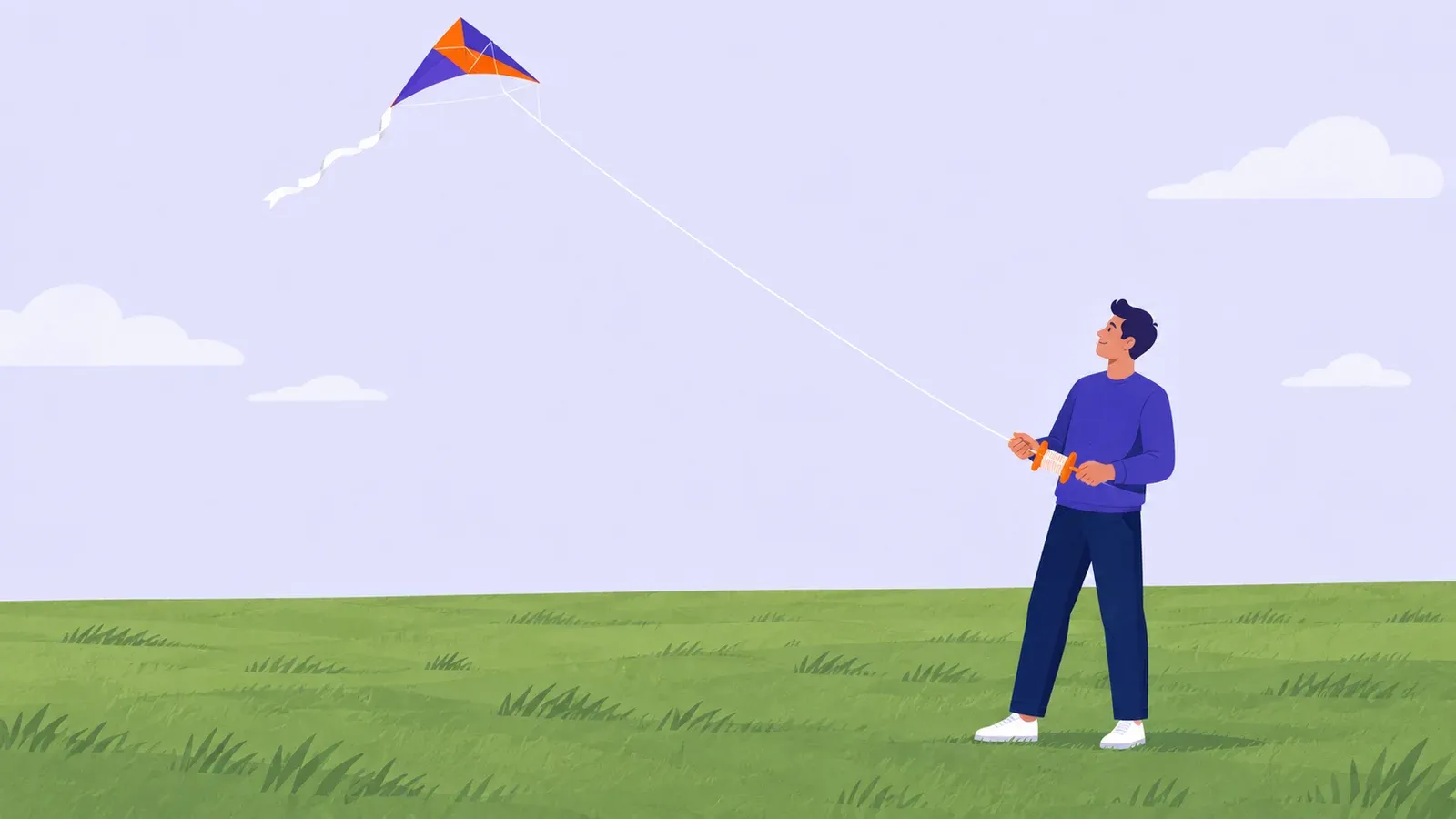
How to start kite-flying with a small single-line kite
- Cost to start
- A small kite with line
- Difficulty
- Easy
- First result
- 30-60 minutes
Borrow a complete single-line kit; stunt and power kites can wait
Steady wind and open space make the first launch easier
A short flight and controlled retrieval in suitable conditions
Choose a clear site and suitable wind, launch a small single-line kite, and practice bringing it back safely before adding more line or trying another design.
What you need to know
-
Borrow a small beginner kite
A single-line delta is a practical start; follow its assembly instructions and use any tail supplied for it.
-
Use its recommended line and winder
Check the connection and line for damage; use kite line rather than wire or monofilament fishing line.
-
Prepare for time outside
Bring water, sun protection, and suitable clothing; a helper makes launching easier.
-
Check access before travelling
Confirm landowner permission, park restrictions, and local aviation rules, including height limits and prohibited areas.
Try kite-flying if you enjoy watching wind at work. Aim to launch, hold a steady flight, and retrieve your kite.
Choose the day and field
Choose a wide, unobstructed field where flying is allowed. Stay away from power lines, roads, airports, trees, nesting birds, and people. Leave room downwind for landings; keep your line shorter than the distance to hazards.
Check the forecast and conditions on arrival. Choose dry weather with steady wind comfortably inside your kite’s stated range. Avoid rain, approaching storms, and strong gusts. Buildings and trees create turbulent wind; a sheltered garden can be difficult even when the forecast looks suitable.
Launch with the wind behind you
Assemble the kite and check its spars, sail, bridle, and line attachment. The bridle connects the kite to your flying line. Keep it untangled.
Stand with your back to the wind. Have a helper hold the kite facing you about 15 metres downwind while you hold the winder. Keep everyone clear of the line.
Ask them to release it without throwing. Draw in line gently to help it climb. Once it pulls steadily, let out line gradually. Stop releasing if it sinks. Watch the kite and your surroundings; avoid running backward.
Hold the winder securely. Never wrap line around fingers or let it slide rapidly through your hands. Land if the pull becomes difficult to manage or someone enters the flying area.
Retrieve and check
Wind in slowly until the kite is within reach. Hold it at the bridle attachment or leading edge as its instructions allow, then lay it down without straining the frame. Wind all loose line onto the holder.
If it sank tail-first, the wind may have been too light. Diving or spinning can indicate excessive wind or an assembly fault. Check the manual before adjusting the bridle or adding a tail; try calmer, steadier conditions first.
If a kite catches on power lines, leave it and contact the electricity provider. Do not attempt retrieval.
Note what worked. Repeat with the same kite before trying longer line or another design, checking local limits.

Learn launching, wind, and line handling
- American Kitefliers Association flying guideFollow the single-line launch instructions and diagnose sinking, spinning, or unsuitable wind.
- American Kitefliers Association safety adviceReview weather, electrical, road, crowd, and line hazards, noting that its airport-distance advice is US-specific.
- Prism's kite-flying basicsLearn how obstacles disturb the wind and how to handle flying line, using your own kite's manual for model-specific limits.
- A Wind of Change's launch and landing lessonRead the single-line sections for controlled line release and retrieving the kite without damaging its frame.
- World's Greatest Kiting's delta demonstrationWatch assembly and flight of a larger Zenith delta, then follow your own kite's instructions for its fittings and wind range.
