Try kitesurfing with a ground lesson first
- Cost to start
- £180 UK one-day course
- Difficulty
- Beginner
- First result
- Rehearse the safety controls
Hunstanton example, Nov 2026. Check the final fee and weather policy
Start on the ground with an instructor
Identify one beach hazard and have the instructor check your reset
Book a qualified beginner lesson, learn the beach boundaries and rehearse the school's safety controls with an instructor before any kite flying.
What you need to know
-
A qualified beginner lesson
Choose an accredited school. Confirm the age limit, swimming requirement, kit sizes and any health or access needs before paying.
-
Fitted school equipment
Use the school's kite gear, harness, helmet, buoyancy aid and wetsuit. Ask staff to check the fit rather than buying equipment for day one.
-
Beach and changing clothes
Pack old trainers, a towel, warm dry clothes, sunscreen, lunch and any medication you need. Allow for travel and parking.
Book a beach lesson
A kite pulls a rider over the water through lines and a harness. The board comes later. Start with a British Kitesports approved school and a qualified instructor, not a borrowed kite and an open beach.
Hunstanton Watersports in Norfolk, UK, lists a £180 per-person, one-day beginner course of about 4.5 hours, with no prior experience required and a minimum age of 16. Tuition and required kite, wetsuit, harness, buoyancy aid and helmet are included. Its season runs April to October. Ask about your swimming confidence and the school’s requirement before booking, since the course page gives no swim-distance test. Confirm your date, kit fit and any relevant health needs with the school.
Wind and tides can change the plan. The booking terms provide credit or rescheduling for weather interruptions rather than a refund. Check the current terms before paying. Food, travel and parking need their own budget.
Find the safe teaching area
Let the instructor choose the conditions, equipment and permitted area. Ask where people must stand, how far to keep clear of lines and what signal means stop. Point out one obstruction or boundary the instructor identifies. If other beach users enter the area, tell the instructor and wait. A clear beach matters before the kite is powered, too.
Practise the controls without power
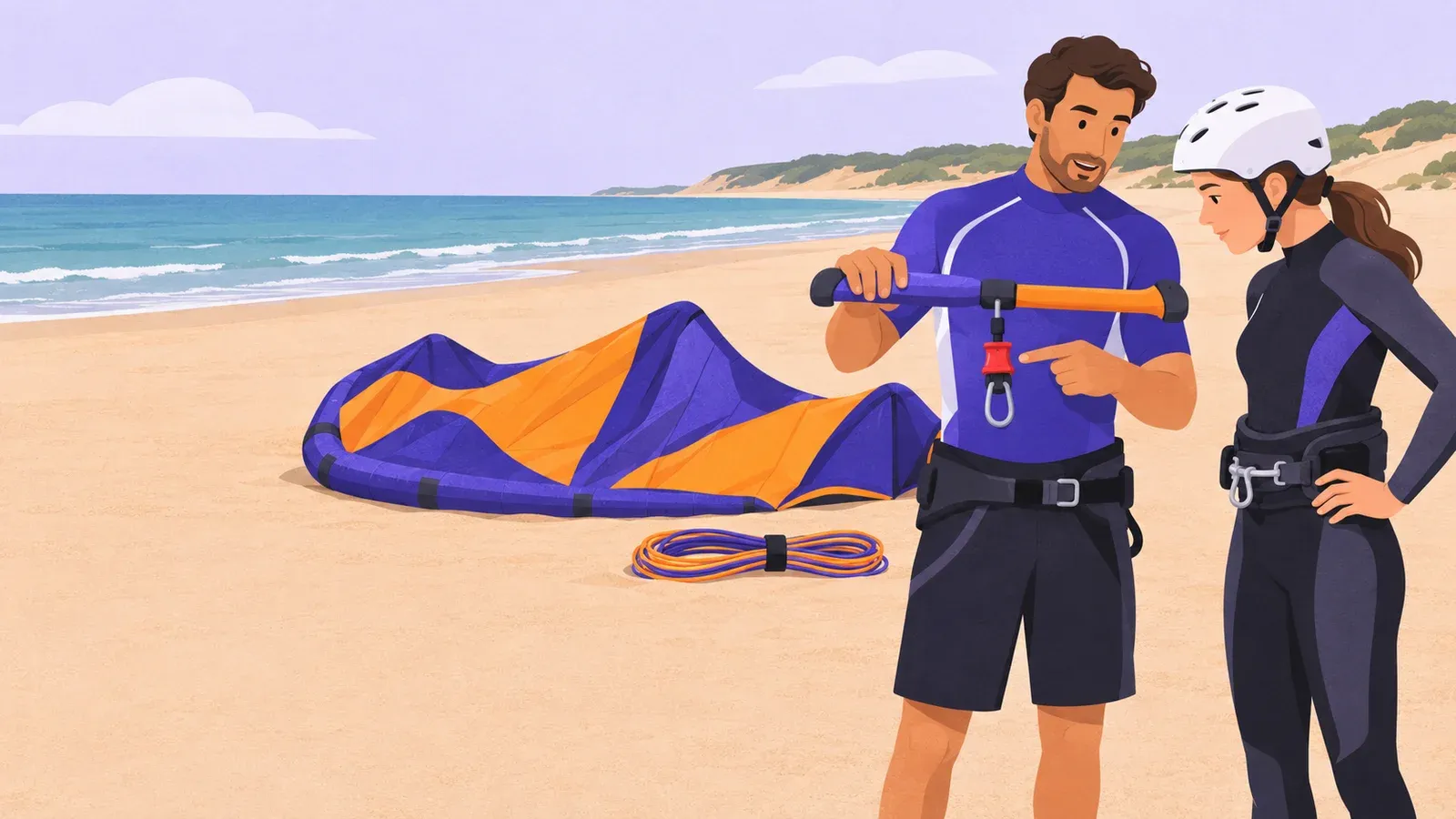
Ask the instructor to secure and unload the training equipment, then show you the control bar, main quick release and safety-leash release. Have them explain what each does and when they would use it on that setup. On their cue, rehearse the controls and let them check that everything is reset correctly. If you lose track of a control or miss a signal, say stop and ask for another demonstration before flying.
The school’s outline includes trainer-kite work and may reach the water, but the instructor decides what is suitable that day. A useful first result is a checked safety rehearsal and one site hazard you can name. Ask which part to repeat in your next lesson before moving toward board riding.

Choose and prepare for a lesson
- British Kitesports learning stagesSee how qualified UK instructors teach basic kite handling before board riding.
- Hunstanton beginner courseCheck this UK course's age limit, price, duration and first-day outline.
- Hunstanton booking termsReview included equipment, the operating season and weather rescheduling before paying.
- RNLI kitesurfing adviceRead the RNLI's UK and Ireland guidance on conditions, swimming ability and protective kit.

