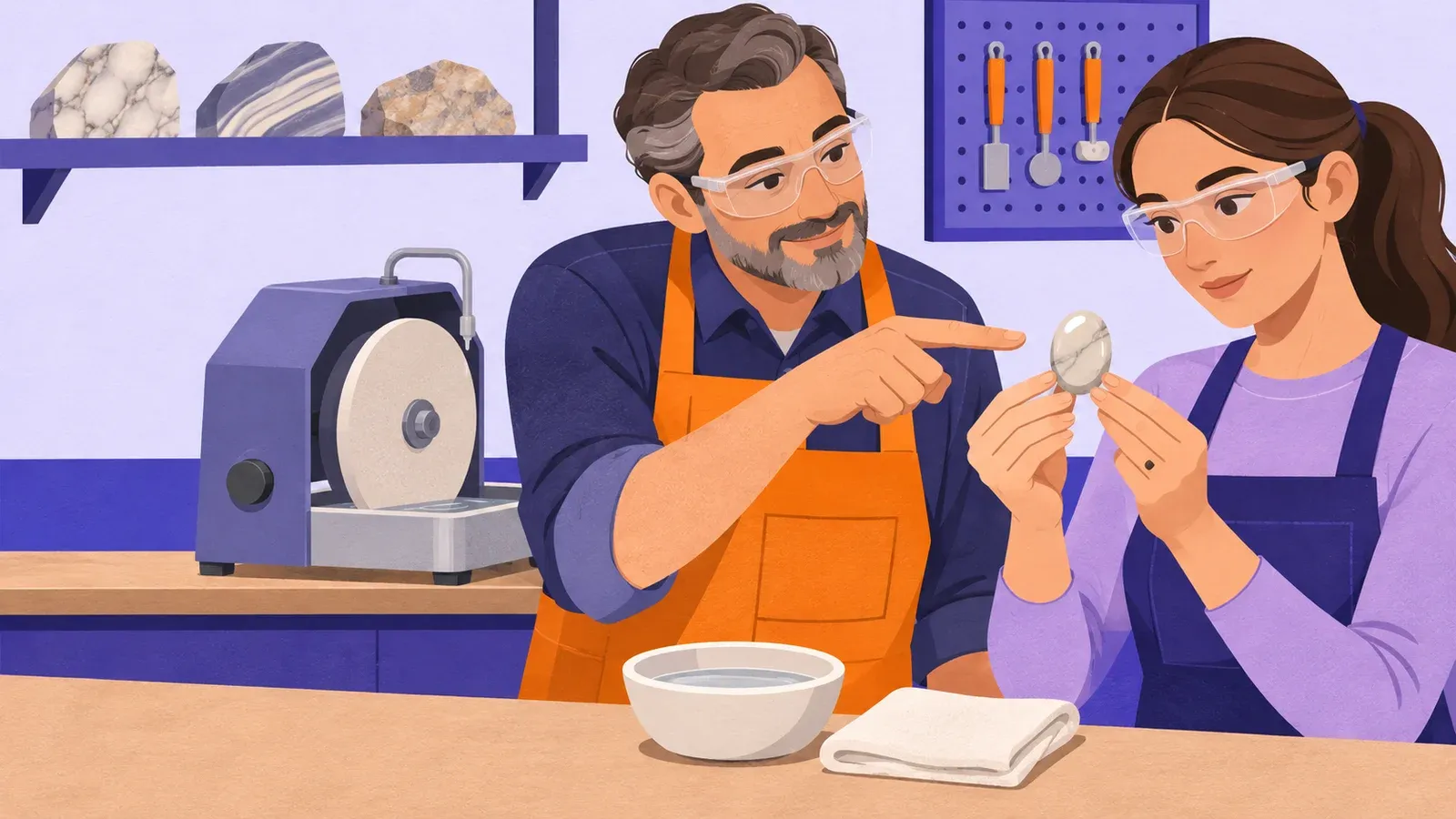
Lapidary: polish a stone at a club workshop
- Cost to start
- Workshop fee; club kit
- Difficulty
- Beginner
- First result
- One smoother stone
Confirm local fees, supplied stone, membership and travel
Tutor selects the stone and demonstrates each machine
Compare its dry surface before moving to a finer stage
Try stone polishing with a club tutor, work on a prepared marble cabochon, and learn to check its dry finish before moving to a finer stage.
What you need to know
-
A beginner workshop
Confirm the full fee, membership, supplied materials, what you may operate and any standing or access needs.
-
A prepared, identified stone
Ask the tutor for a suitable pre-shaped marble cabochon, a stone with a smooth rounded top, to practise finishing.
-
Club-prescribed protection
Confirm eye protection and other required gear. Wear washable clothes and secure hair and loose items.
Lapidary changes a stone’s surface.
Arrange a supervised stone task
Ask a local lapidary club whether an introductory tutor can supply an identified, prepared marble cabochon for a smoothing exercise. Leith Lapidary Club in Edinburgh, Scotland supplies Scottish marble and equipment in its broader introductory course; a prepared-stone start is a request, not the advertised lesson. Confirm the full workshop and membership charges, any standing-height access issue, and what protection the club supplies. Budget for the workshop fee and travel, using club equipment and washable clothes you already own.
Let the tutor identify and inspect the stone. With the machine stopped, photograph its dry working face in good light and notice dull patches or scratches. Ask the tutor to show the intended shape, stage, grip, contact point, movement and stop control on that machine. They choose its setting and water or other approved coolant. Keep hair and loose clothing secured and wear the club’s eye protection. Ask how it controls stone dust. Do not dry-grind or blow dust from the bench; stop and call the tutor if the water supply fails, dust appears, the stone loosens or equipment seems wrong.
Check before moving finer
When the tutor says to begin, guide the stone as demonstrated, keeping your hands clear of other moving parts. To inspect it, stop work and move to the safe station they designate. Let rotating parts come to rest. Rinse and dry the stone there, then tilt it under the light and compare it with the starting photograph. CabKing’s guide shows why a scratch left by an earlier stage can remain visible after polishing. Wash the stone and your hands before a finer abrasive so coarse grit does not follow it.
If you still see a scratch, show the tutor rather than spending longer on the final pad. Repeat the stage they choose, then inspect dry again. For final polishing, let the tutor choose the pad, compound and water use. Follow that setup; never dry-grind. Hi-Tech Diamond’s manuals illustrate why machine-specific instructions matter. Aim for a visibly smoother area and note what changed. Continue with another supervised session if you want more practice.

Plan a supervised workshop
- Leith Lapidary Club workshopsSee a Scottish introductory course with supplied stone and equipment; ask about a prepared-stone start.
- CabKing cabochon guideSee why scratches are checked between smoothing and polishing stages with a tutor.
- Hi-Tech Diamond machine manualsRead the model-specific instructions if your club uses one of these machines.
