How to start magic with the 21-card trick
- Cost to start
- An ordinary deck of cards
- Difficulty
- Easy
- First result
- 30-60 minutes
Use an existing deck; special cards and paid lessons can wait
No sleight of hand, but the dealing order must stay consistent
A rehearsed card reveal ready to try with one volunteer
Learn a self-working card trick with an ordinary deck, practice the dealing sequence, and rehearse a short presentation for one willing spectator.
What you need to know
-
Use an ordinary deck
Borrow a deck with readable faces and matching backs; take out 21 different cards and set the rest aside.
-
Clear a table
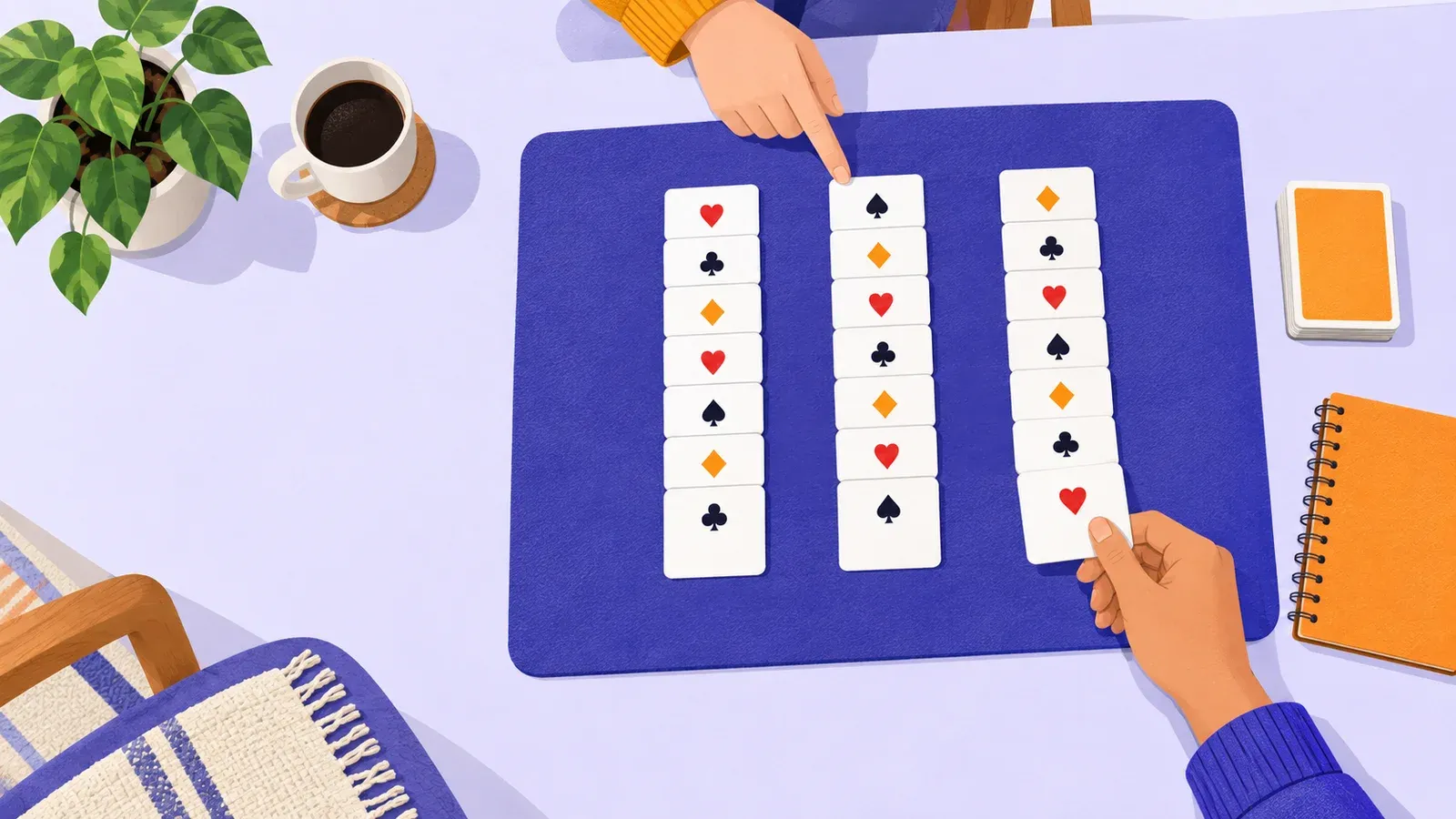
Leave room for three columns of seven overlapping cards; a plain mat or tablecloth helps keep them from sliding.
-
Keep a practice note
Write down the three rounds and middle-pile reminder; a notebook or scrap of paper is enough.
Magic suits people who enjoy giving others a surprise. In the traditional 21-card trick, dealing moves a remembered card to a known position. Practice calm handling and clear instructions.
Learn the three rounds
Practice alone first, remembering one card yourself. Shuffle your 21-card packet, then hold it face down.
Deal cards face up from left to right into three columns, one card per column in turn. Continue across each row until every column has seven cards. Overlap them enough to fit, while keeping every card’s identity visible.
Find the column containing your card. Gather each column into a face-up pile, preserving its order. Stack the chosen pile between the other two piles. Turn the whole packet face down.
Deal, identify the column, and gather this way twice more. That means three deals and three collections altogether. Always put the chosen seven-card pile in the middle, even when its column changes.
After the third collection, hold the packet face down. Count ten cards off the top, then turn over the next card. This eleventh card is the remembered one.
Try different selections. If the reveal is wrong, recount the packet and check your dealing. Filling one column before moving to the next breaks the method. So does shuffling between rounds or collecting the chosen pile on top.
Rehearse a short performance
Once you can repeat the method reliably, practice speaking while dealing. Ask a willing spectator to remember any card from the initial face-up display. Square the packet, turn it face down, and begin the same three rounds.
Each time, ask them to point to the column containing their card without naming it. Pause until they are sure. Keep the faces visible and the packet intact throughout; do not offer a shuffle between rounds.
Reveal the eleventh card, let them respond, and finish. Avoid presenting the trick as a test of their intelligence. If you lose track, acknowledge the mix-up and reset rather than blaming the spectator.
Notice where you hesitated or gave an unclear instruction. Rehearse that moment next. Then borrow a beginner magic book or ask a local club about another self-working routine. Learn one trick’s handling and presentation thoroughly before tackling sleight of hand.

