
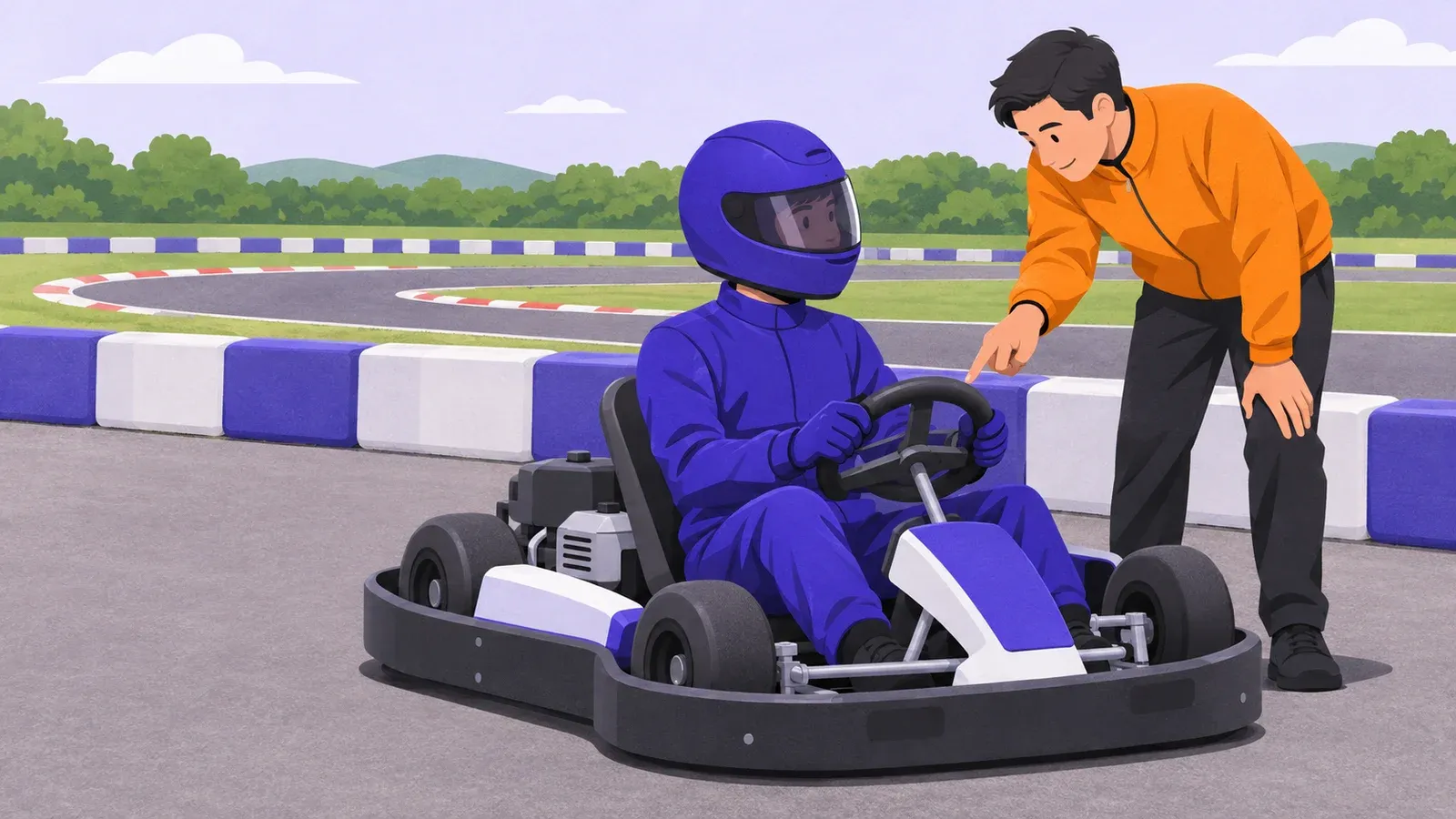
Motor sports: choose a first supervised session
- Cost to start
- £42 advertised session fee
- Difficulty
- Moderate
- First result
- Marshalled rental-kart practice
Northamptonshire, England; Nov 2026; total and travel may cost more
Briefing, control familiarity and traffic awareness
One controlled session and a question for the next visit
Compare practical ways into motor sports, then try a marshalled rental-kart session on a closed circuit and decide what to practise next.
What you need to know
-
A novice session with marshals
Tell the operator you are new. Confirm a controlled circuit, briefing, protective kit, active marshals and a suitable practice slot.
-
Health and fit checks
Read the current declaration. Disclose relevant health, medication, pregnancy or access needs; ask about seat fit and reaching the pedals. Seek medical advice if unsure.
-
Secure clothes and shoes
Wear closed shoes and fitted clothes. Ask how to secure hair and loose items; let staff fit and check the supplied helmet, suit and other required kit.
-
A final payable quote
Ask about mandatory fees, any licence or membership, insurance or damage liability, and the current weather and cancellation terms. Allow for travel and briefing time.
In the UK, rental kart practice lets you try a closed circuit without owning a vehicle. A club AutoSOLO uses an eligible road car on a coned, forward-only course; a circuit-racing school suits someone drawn to cars. Each has different entry requirements. The worked first attempt is marshalled rental practice.
Check the session before paying
At Whilton Mill in Northamptonshire, England, the National Circuit Arrive & Drive advertised a 20-minute session for £42 per person in November 2026. Kart use, timing and a lap printout, gloves and a balaclava are listed; the operator also says it supplies helmets and suits. The published minimum age is 14, with a 1.4–1.9-metre height range; this guide covers adults.
Ask whether your activity requires a road-driving or competition licence, membership, insurance or a damage waiver; ask what liability remains. The published session information does not settle every charge or the current cancellation terms. Allow time for registration, kit fitting and the briefing as well as the 20 minutes on track. Travel and optional extras cost more.
Make a calm first circuit visit
Check in as a complete beginner. Let staff fit your kit and show you the kart’s controls. At the briefing, ask about flags or lights, pit entry and exit, stopping and help signals, and what to do if stranded. Ask for another explanation before driving if anything is unclear.
On track, follow the marshals’ instructions and use a pace you can manage. Leave room around other karts and respond promptly to signals. Avoid contact or chasing a lap-time target. If controls are hard to reach, kit hurts or you feel unwell, use the briefed stopping and help procedure to alert staff.
Return as directed. Keep the timing sheet as a baseline, then ask staff for one thing to practise and whether another supervised session or coaching fits. Competition entry can wait until you choose a discipline and check its separate requirements.

Choose a route and a first venue
- Motorsport UK disciplinesCompare UK motorsport activities before choosing a supervised first visit.
- Motorsport UK AutoSOLO starting pointLearn how a club's coned car event works and which entry requirements to check.
- Motorsport UK circuit-racing starting pointSee why an ARDS-member school is a first step toward car racing.
- Whilton Mill Arrive & DriveCheck the worked rental-kart session's current price, duration and height limits.
- Whilton Mill visit informationRead how the operator briefs newcomers and supplies protective equipment and marshals.
