Mushroom hunting/mycology: make a first field note
- Cost to start
- £5 England walk example
- Difficulty
- Beginner
- First result
- One checked fungi field note
Sheffield, Nov 2026; travel and any extras separate
Record features with a group leader
Photos, habitat details and an honest confidence level
Join an experienced fungus-group walk, photograph a find in place, and leave with one checked note even if its identity remains unknown.
What you need to know
-
A place on a led foray
Ask a local fungus group for a beginner place. Confirm the leader, route, site rules, first aid and weather plans.
-
Clothes for the route
Wear sturdy shoes and weather layers; bring water. Ask about terrain and access needs before booking.
-
A way to record
Bring a camera phone and notebook. A borrowed mirror may reveal a feature without moving the fungus.
-
Clean hands and clear limits
Keep food in your bag, wash hands before eating, and tell the leader about relevant health needs. Do not taste a find.
If you’re 18 or over, look for a led foray. Aim for a checked field note, even without a species name.
Join a local fungus foray
Ask a local fungus group or natural history society for a beginner walk led by a fungus recorder. Confirm route access, group size, full cost and booking terms. A ticket does not give collection permission; follow site rules.
Friends of the Porter Valley listed a two-hour Trippet Wood walk in Sheffield, England for 21 November 2026. A non-member adult ticket was £5; places were capped at 15. Sorby Fungus Group recorder Michael “Ziggy” Senkans was named as leader. Expect steep, uneven ground. Check the next date, weather, access and cancellations. Ticket confirms meeting point; travel and extras cost more.
Make one field note
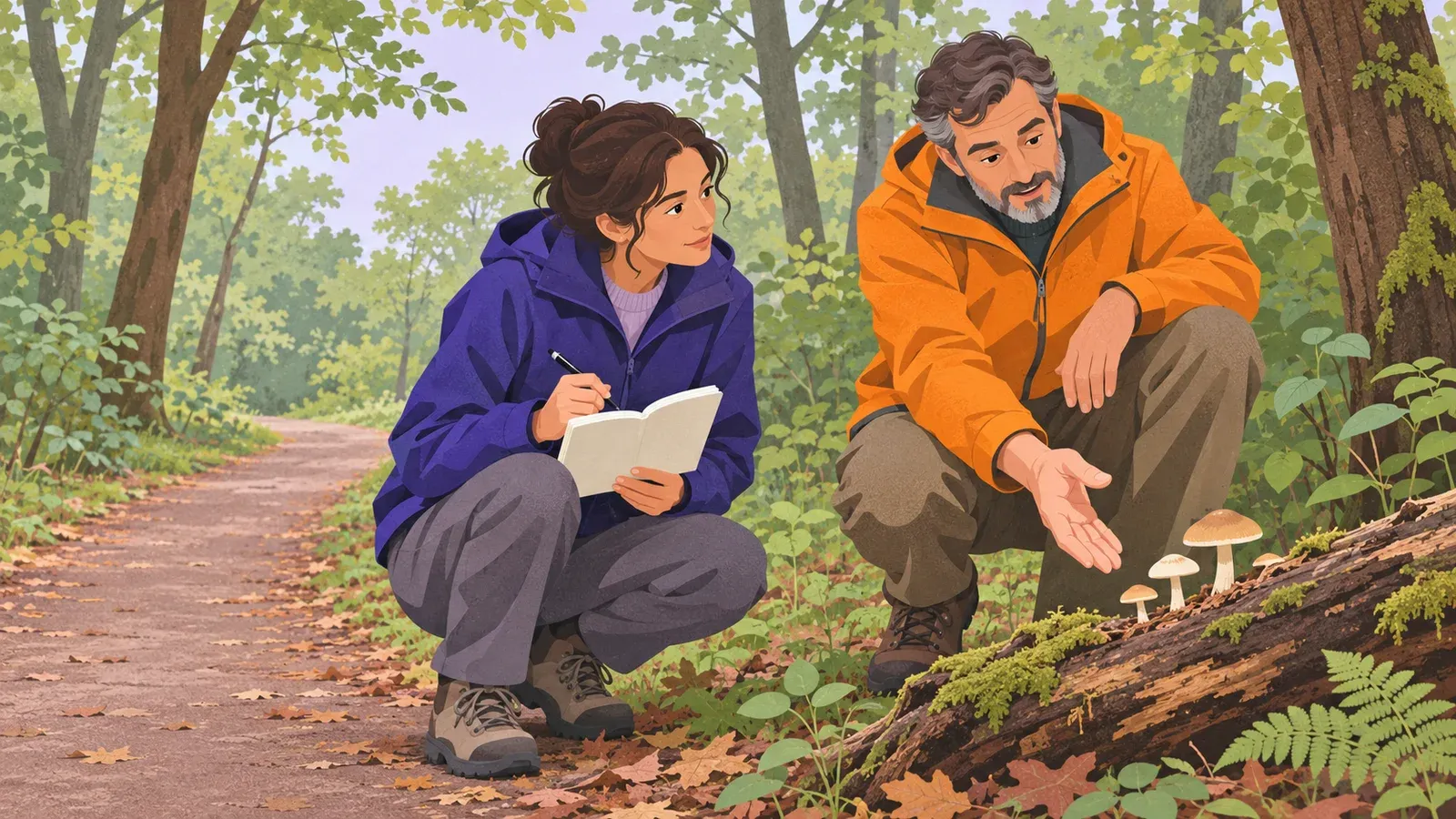
Stay with the group and ask the leader to choose an accessible fruiting body. Photograph it in place with its habitat. Use the FRDBI record guide to note the date, location, substrate (soil, litter or wood), and any nearby tree the leader can identify. The British Mycological Society photo guide shows useful cap, stem, underside and base views. A borrowed mirror may show the underside if the leader agrees and it is safe.
If a feature is hidden, write “underside not seen” or “base not seen” rather than lifting the fungus. Ask the leader to check one note and explain how a visible feature or substrate narrows the possibilities. Some finds need later review. Mark an identification as leader-confirmed, provisional or unknown; a photo match or app answer cannot settle edibility.
Leave with the record
Leave finds in place and stay on the route. Ask the leader and check site permission before any disturbance; site rules vary. Do not eat anything found on the outing. If harmful fungus ingestion may have happened, tell the leader and seek urgent medical advice without waiting for symptoms or online identification. In England, follow NHS poisoning advice.
Ask the recorder whether your note could be submitted later and what evidence it needs. An unknown label is a valid first result.

Find a walk and check site rules
- Friends of the Porter Valley fungi walkSee a dated Sheffield foray example, its listed adult fee and terrain, then check for a current place.
- Woodland Trust foraging guidelinesSee how a UK land manager may restrict collection and protect woodland habitat.
- NHS poisoning adviceFollow current England advice if harmful ingestion may have happened.
