
How to start netball with a simple passing practice
- Cost to start
- £0 with a borrowed ball
- Difficulty
- Beginner
- First result
- A controlled passing sequence
Assumes free court access and suitable shoes you own
Practise catching, passing and keeping a pivot foot
Allow 20–30 minutes with a partner, including a warm-up
Try netball with a partner, practise catching and chest passes, and learn the footwork and three-second rule before joining a beginner group.
What you need to know
-
A partner and a borrowed netball
Agree to pass gently only when the receiver is ready. You do not need a goalpost or a full team for this first practice.
-
Permission to use a clear outdoor court
Check access or booking rules. Choose a dry, flat area away from the post, other players and nearby traffic; postpone if the surface is slippery.
-
Shoes and clothes you can move in
Wear grippy sports shoes, bring water, remove jewellery, keep nails short and smooth, and tie back long hair. Stop if you feel pain or unwell.
Standard netball has seven players per team, each position limited to certain court areas. Try its passing and footwork with one partner before joining a group. Allow 20–30 minutes for a warm-up and the practice below.
Start with accurate passes
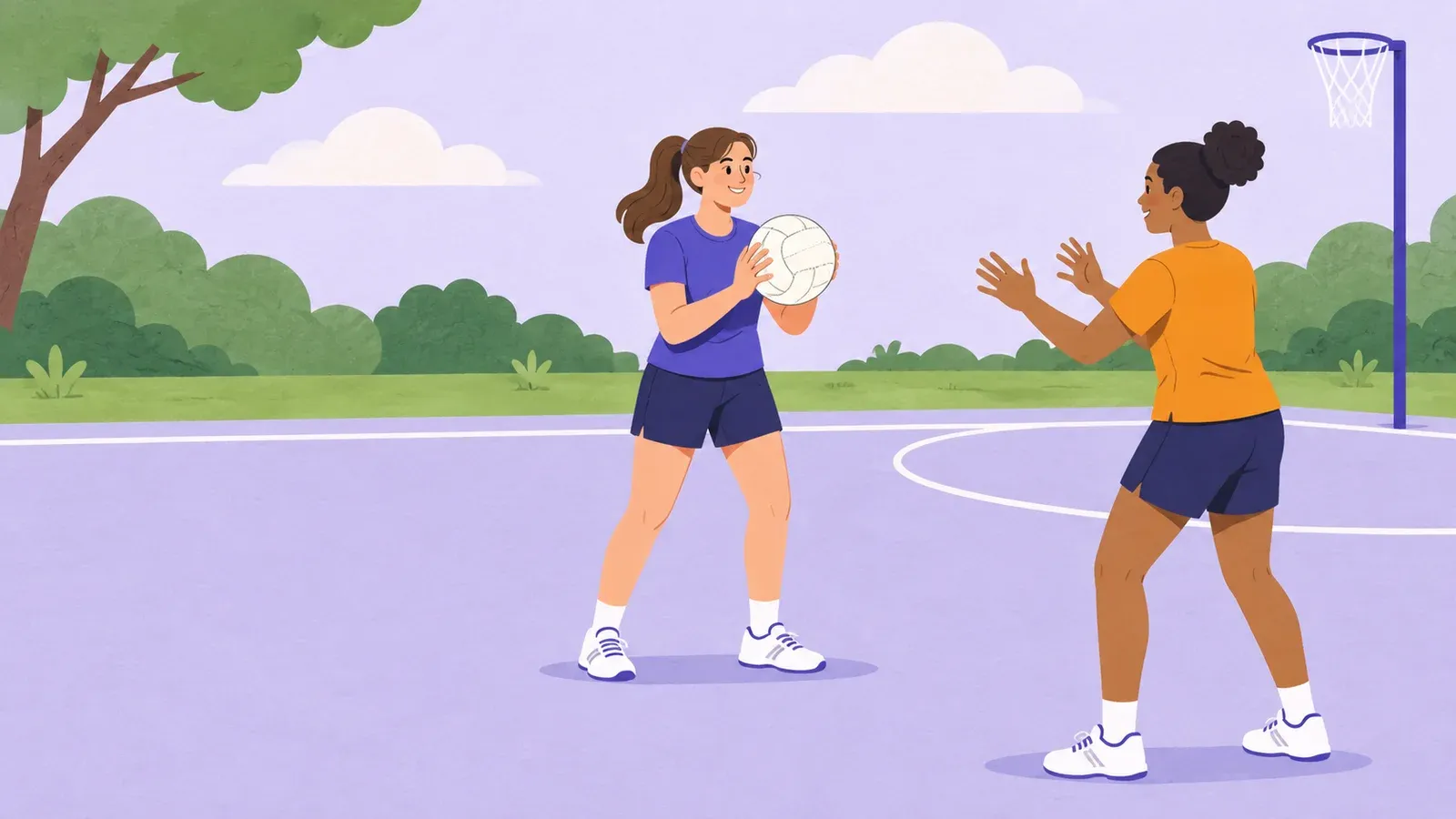
Stand 2–3 metres apart with relaxed knees. Catch with both feet grounded. Hold the ball at your chest with two hands behind it and fingers spread. Look at your partner’s ready hands and send a gentle chest pass. The catcher watches the ball into both hands, bends the elbows to cushion it, then returns it.
If catches keep failing, move closer and pass more softly. Leave defenders and jumps for a coached session.
Add a simple pivot
On the next catch, choose one foot as your landing foot. Keep it in contact with the court while you turn, moving your other foot to face your partner. Pass before moving the landing foot to a new spot. This is a simple drill; the full footwork rule also allows you to lift the landing foot if you release the ball before it touches down again.
Once your catches are steady, try releasing each pass within three seconds of receiving it. The player without the ball can take one small sideways step, giving the catcher a reason to pivot. Keep the pace gentle. Running with the ball and repeated dribbling are outside this practice.
Count a clean run
Aim for ten controlled passes between you. Count a pass when the catcher is balanced and returns the ball within three seconds; restart the count after a drop or rushed throw. Ten is a practice target, so record your longest clean run and what caused a break. Repeat the drill at the same distance next time before adding movement. Then look for a coached beginner group to learn where one position may move and how defenders play. Check its age requirements, booking, equipment and fees locally.

