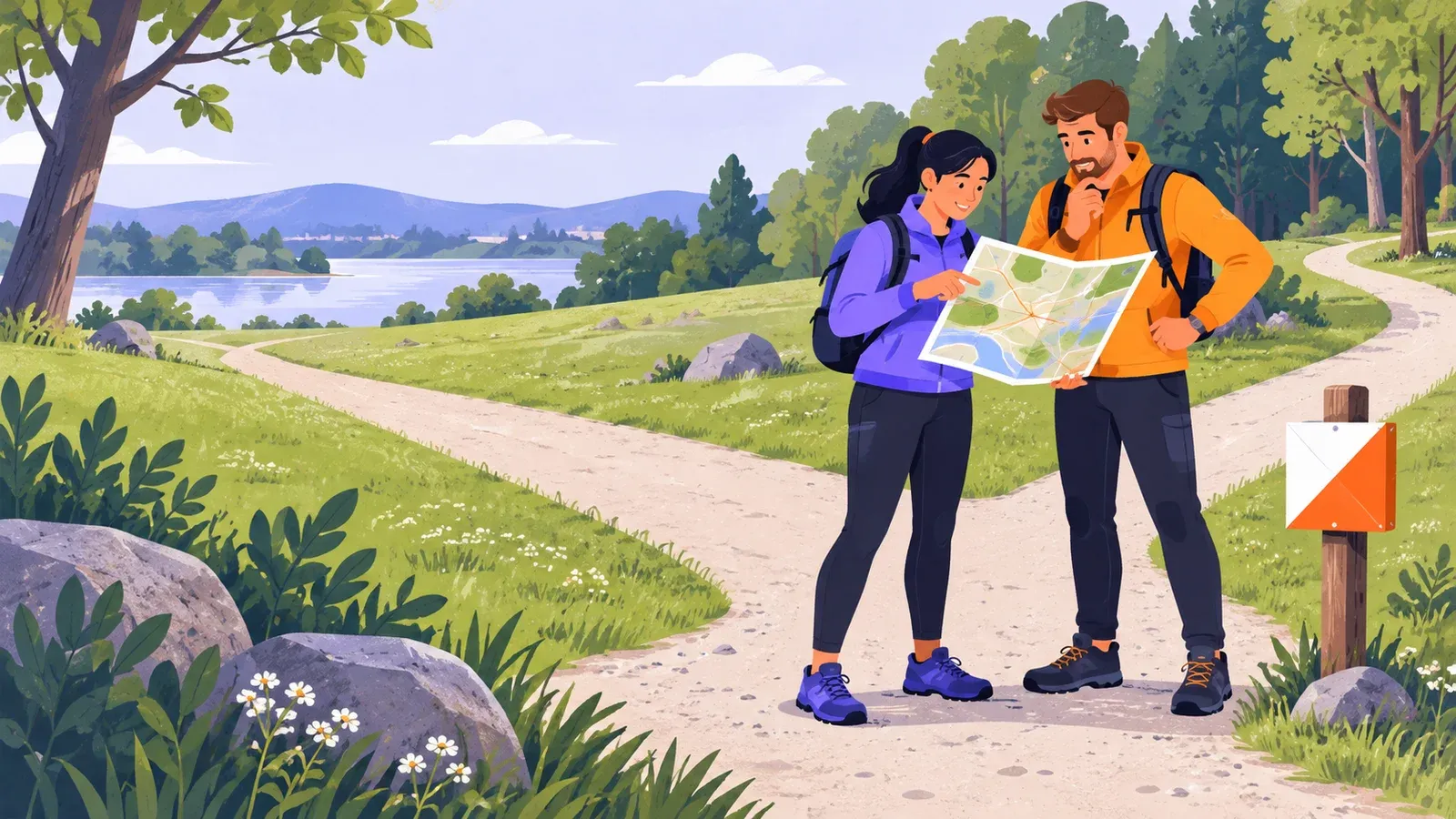
How to start orienteering on a park course
- Cost to start
- Free course option
- Difficulty
- Beginner
- First result
- 30–60 minutes
Free map and entry assumed; printing, travel and classes cost extra.
Walk a short path-based route and check the map at junctions.
Find three nearby controls and return by your planned route.
Use a paper map to find three checkpoints on a beginner park course. Learn to match paths, check control codes and return by a planned route.
What you need to know
-
A suitable course map
Find a current permanent park course with physical markers, a legible legend and control instructions. Bring its paper map and a pencil.
-
A safe walking plan
Check park access, closures and weather. Pick three controls beside paths, plan your return and tell someone when to expect you.
-
Walking kit
Wear grippy shoes and weather-suitable clothes; carry water and a charged phone. Allow enough daylight for the return.
Try an untimed 30–60-minute walk to three nearby controls on a permanent park course. You choose the paths using the map. The markers confirm locations; they do not give turn-by-turn directions.
Choose three controls and a way back
Use a current beginner map with physical markers. Choose three controls on or beside clear paths from a mapped entrance. Trace a route out and back. Check the legend and control descriptions for each feature and marker. Go Orienteering’s finder has UK filters for permanent, beginner and parkland courses, including some free maps. Check the listing, park hours and fees. Elsewhere, ask a local club for a suitable course. If you cannot confirm a manageable route, arrange an introductory club session instead.
Walk one leg at a time
At the entrance, identify two things you can see, such as a path junction and a building, on the map. Turn the paper until the mapped paths point the same way as the paths around you. Put your thumb at your current position. Choose the path to the first control and name the next junction you expect to pass. At each junction, compare what you see with the map before moving on. British Orienteering’s tips explain map orientation and keeping track of your position.
At the marked location, check the feature named in the control description. Compare the marker’s code, number or letter with the course instructions; its visit-order number may differ. Write down the requested code or answer and leave the marker in place. Repeat for the other two controls, then follow your planned path back.
If the paths and map stop matching, stop. Retrace only a route you can confidently follow to your last confirmed position. Otherwise stay on a safe known path and seek help; do not guess a shortcut through closed land or vegetation. Turn back before your daylight or return-time limit. Orienteering USA’s guide explains relocation; at an organized event, report to the finish even if you leave the course early. Next time, try another short route or join a beginner club session.

Read the map and find a course
- British Orienteering: beginner map tipsCheck how to turn the map toward visible features, follow your position and confirm control codes.
- Orienteering USA: how to orienteerLearn route choice and what to do if your position becomes uncertain; US readers can also find clubs.
- Go Orienteering: find a UK courseFilter UK listings for permanent, beginner park courses and check each provider's map and access details.