
Polo: start with a coached first lesson
- Cost to start
- £120 England lesson example
- Difficulty
- Moderate
- First result
- Coached polo practice
Confirm the current fee and any extras before booking
Horse control and mallet work need a coach
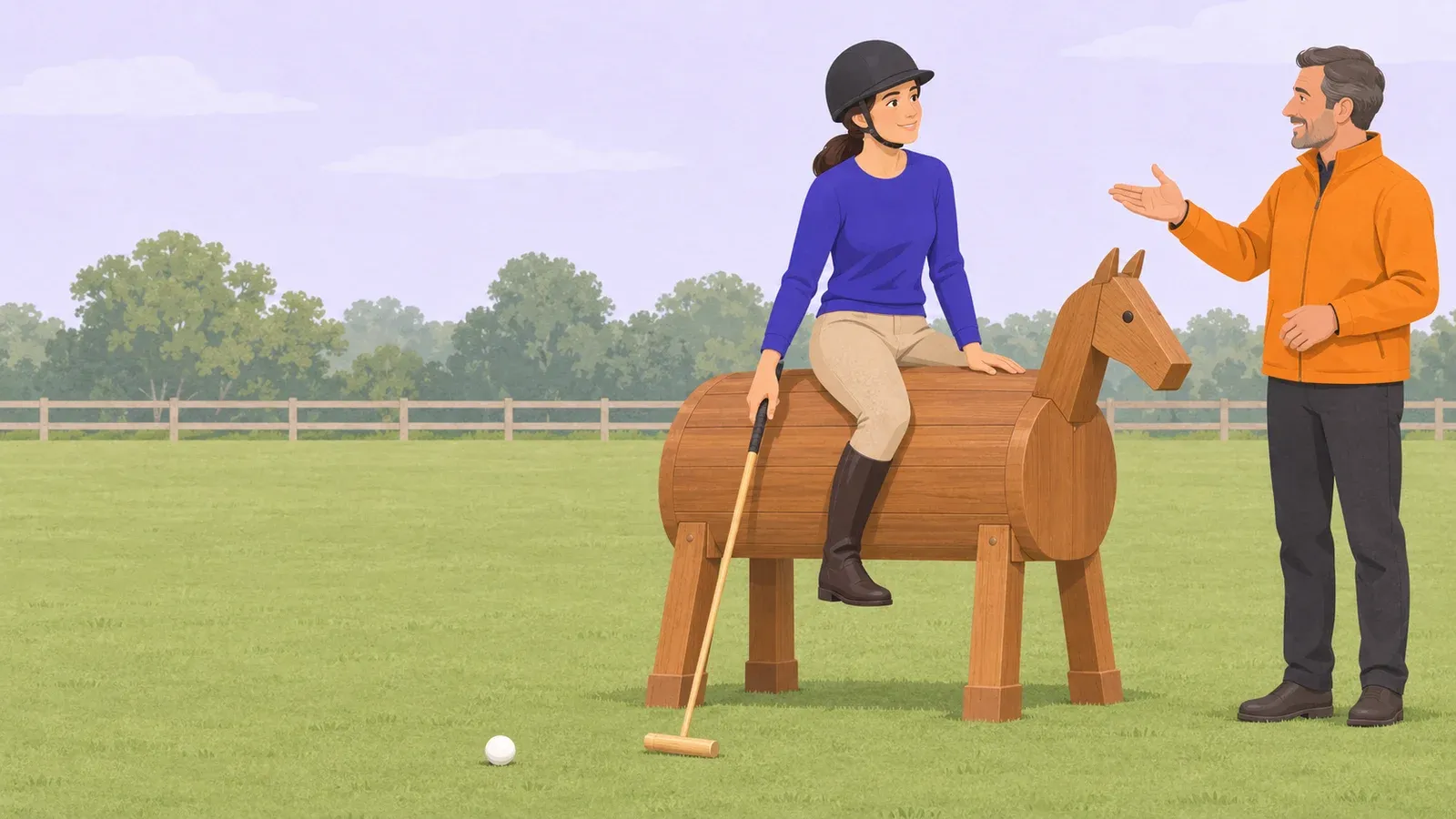
Practise ball contact on a wooden horse
Try polo at a school that matches a pony and lesson to your riding experience. Practise mallet contact on a wooden horse before the coach considers mounted work.
What you need to know
-
A lesson suited to your riding history
Ask whether an adult introduction accepts your riding experience and provides a coach, practice horse and suitable pony.
-
A candid pony-matching conversation
Share your confidence around horses and relevant mobility or health needs. Ask about rider limits, mounting help and pace.
-
Clothing and protection the school approves
Bring long trousers and approved heeled footwear; ask about gloves, helmet fitting, loans and protection for each exercise.
-
The complete booking terms
Check fees, extra charges, cancellation and weather plans. Ask what cover applies and whether you need separate personal-injury cover.
Polo is a mounted team game played with mallets and a ball. A coached introduction separates ball contact from riding a polo pony. Some schools welcome non-riders; other courses require riding experience. Ask which class fits you.
Check the lesson before travelling
The HPA academy directory lists UK schools. At Herts Polo in England, a two-hour introduction was listed at £120 per person on 17 November 2026. The named inclusions are a pony, hat and mallet. Confirm the current total and terms; footwear, travel, other protection and insurance are not listed as included.
Have the school fit and approve your riding helmet and confirm protection for each exercise. The HPA’s March 2026 rules require approved helmets and eye or face protection during play. Ask the school what its simulator drill requires.
Practise contact on the wooden horse
Wait for the coach to clear the practice space and demonstrate. Try a few gentle ball contacts from the wooden horse or polo box, then ask for one correction. If you keep missing, ask the coach to check your setup and demonstrate again. Keep people and ponies outside the mallet’s reach.
Add riding only when the coach agrees
Let staff handle the pony and equipment. Mount only when directed. Follow the coach through a walk, halt and steering check with the mallet still. The coach decides whether to add a short mounted ball exercise and manages pace, spacing and retrieval. If riding takes all your attention, keep it separate from mallet practice today.
Report pain, fear, fatigue, loose gear, a fall or a head knock so the exercise stops for a check. Note one improvement and one correction. Ask whether your next lesson should focus on riding or stick work. Leave match play to the coach’s assessment.

Find and prepare for a polo lesson
- HPA affiliated academiesFind a UK academy with coaches and ponies, then ask which introduction suits your riding experience.
- Herts Polo introductionCheck the England lesson example, its named inclusions and the clothing requested before booking.
- HPA guide to poloLearn the basic aim of polo and how field and arena formats differ.
