
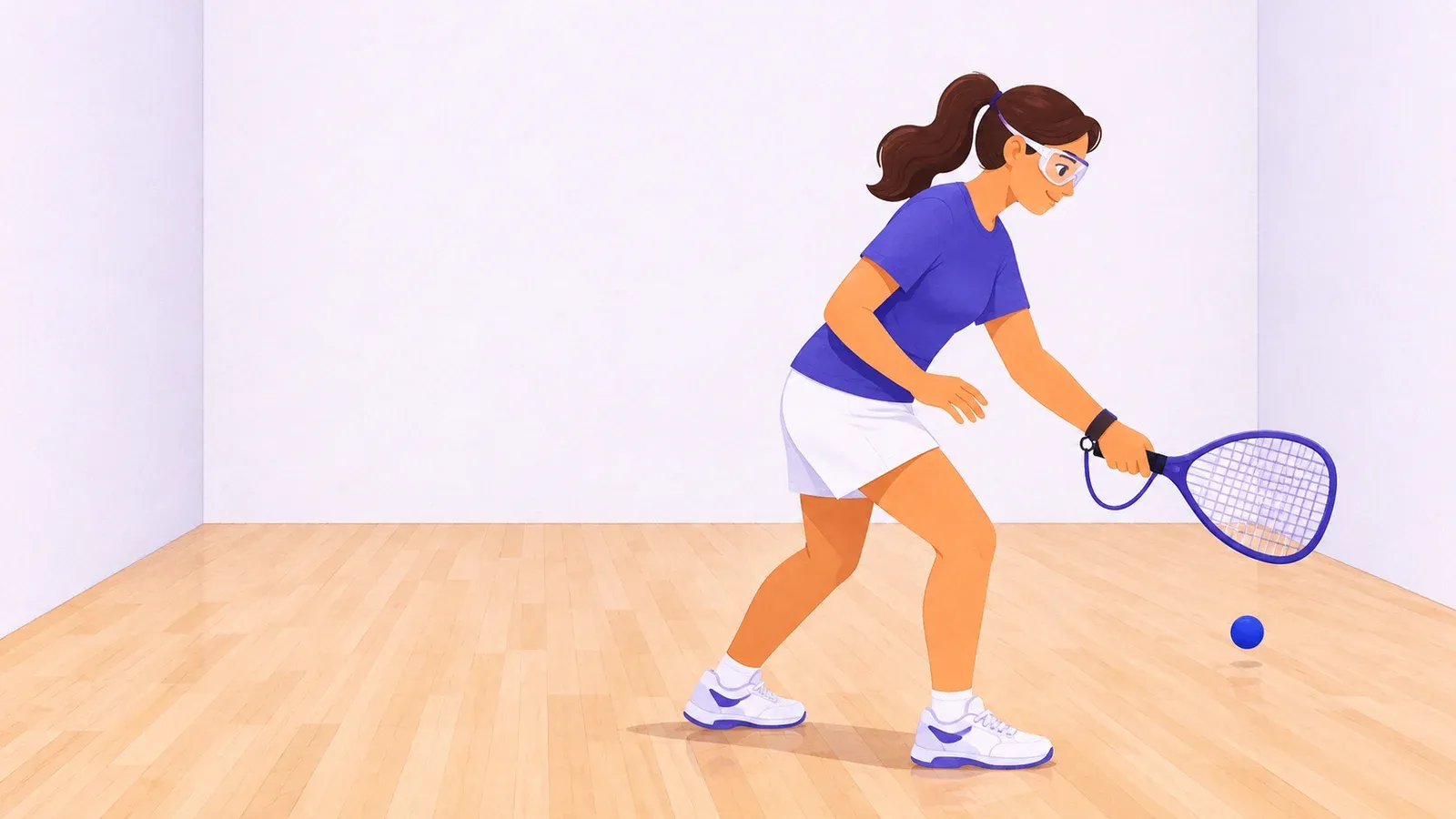
How to start racquetball with controlled solo shots
- Cost to start
- Intro lesson + any kit fees
- Difficulty
- Beginner
- First result
- Five controlled front-wall hits
Budget assumes a group introduction and borrowed kit
A coach checks your grip, swing and court spacing
During your first coached session, with warm-up and rests
Book a beginner racquetball lesson, check your eye protection and wrist tether, then practise gentle forehand shots against the front wall.
What you need to know
-
An introductory lesson on a racquetball court
Ask about a beginner group, session length, court access, all fees and loan equipment before booking. A coach can check your swing space.
-
A loan racquet with a wrist tether
Check that the racquet is for racquetball, the tether is intact and it stays secured to your wrist during warm-up and practice.
-
Racquetball-rated protective eyewear
Have the instructor check fit before anyone hits. Ordinary prescription glasses alone are not suitable; ask about compatible over-goggles.
-
Clean court shoes and water
Wear comfortable clothes and clean, non-marking indoor shoes. Bring water and check that the court floor is dry.
Racquetball uses a shorter racquet and larger, bouncier ball than squash. Book racquetball specifically and tell the instructor you are new.
Set up one safe shot
Before the instructor’s warm-up, have them check your goggles and wrist tether. Follow their warm-up, then ask for a safe position away from walls and anyone else on court. Clear spare balls from the floor and check that the door is latched. Rehearse a slow forehand without a ball while the coach checks your grip and swing. Keep your knees comfortably bent and turn your body side-on.
Drop, bounce and hit
With your goggles on and tether secured, drop one ball on your racquet side. Let it bounce once, then use the forehand your coach demonstrated to send it gently towards a broad area of the front wall. Follow through under control and watch the rebound. Wait until the ball stops and the path is clear before walking to collect it. Reset for the next attempt instead of hitting a hurried second shot. The instructor can choose a suitable distance and target height.
If the ball reaches the floor before the front wall, count it as a miss for this drill. Repeated misses call for a pause: ask the coach to adjust the drop, contact point or target rather than swinging harder. Stop if a movement hurts, the floor is slippery or the goggles or tether loosen. Never swing while someone is in the racquet or ball path.
Record five separate hits
Count each controlled hit that reaches the front wall before the floor. Try for five, but record attempts and successes even if you stop earlier. Note one correction that helped. On a later session, repeat the drill for control before asking the coach about a serve and a cooperative rally. Leave hard drives, back-wall returns and contested play for later instruction.

Prepare for your first court session
- Racquetball Ontario: getting startedSee the equipment and court basics, plus facility leads in Canada; confirm local hours before visiting.
- USA Racquetball: official rules (PDF)Read sections 2.4–2.5 on printed pages 7–8 for the US wrist-cord, eyewear and shoe requirements.
- USA Racquetball: instructor manual (PDF)Review the forehand setup on printed pages 45–47 and the drop-and-hit exercise on page 141 with your coach.
- William & Mary racquetball instructionOpen the stroke demonstration to compare your forehand with the university coach's example.