Try rafting with a guide and a coordinated paddle crew
- Cost to start
- From US$72 guided trip
- Difficulty
- Beginner
- First result
- Crew forward and stop calls
North Carolina, Nov 2026. Confirm taxes, fees and food
Follow the guide's calls even when the river is noisy
About three hours total, two on the river
Join a fully guided beginner raft, practise forward and stop-paddling calls as a crew, then repeat them on calm river water under the guide's direction.
What you need to know
-
A fully guided beginner place
Book a trip with the guide in your raft. Discuss the operator's walking, instruction-following, fit and water-confidence requirements before paying.
-
Fitted river equipment
Have staff fit and fasten the provided life jacket and helmet, then check your paddle. Ask whether cold-water layers or splash gear are needed.
-
Clothes that can get wet
Wear secure shoes, not flip-flops, and quick-drying layers. Bring a dry change and ask about food before travelling.
Choose a fully guided trip
Choose a paddle raft with the guide aboard to call the crew’s strokes. Nantahala Outdoor Center in Bryson City, North Carolina, USA, lists a first-timer trip with Class II–III rapids and calmer stretches. It takes about three hours, two on the river, and starts at US$72 (November 2026). Trips are advertised March through October. Arrive 30 minutes before your reservation. Confirm availability and final taxes or fees.
Raft, paddle, life jacket, helmet, shuttle and guest parking are included. The FAQ lists a US$5 walk-up surcharge, so book ahead. Ask about food, and allow for travel and missing shoes or clothes.
NOC’s eligibility rules require following directions under stress and walking unassisted for at least 200 yards over uneven, wet ground. It recommends swimming ability. Discuss inability to swim, immersion anxiety, fit, mobility or health needs before booking. A life jacket and guide do not remove moving-water risk.
Rehearse as a crew on shore
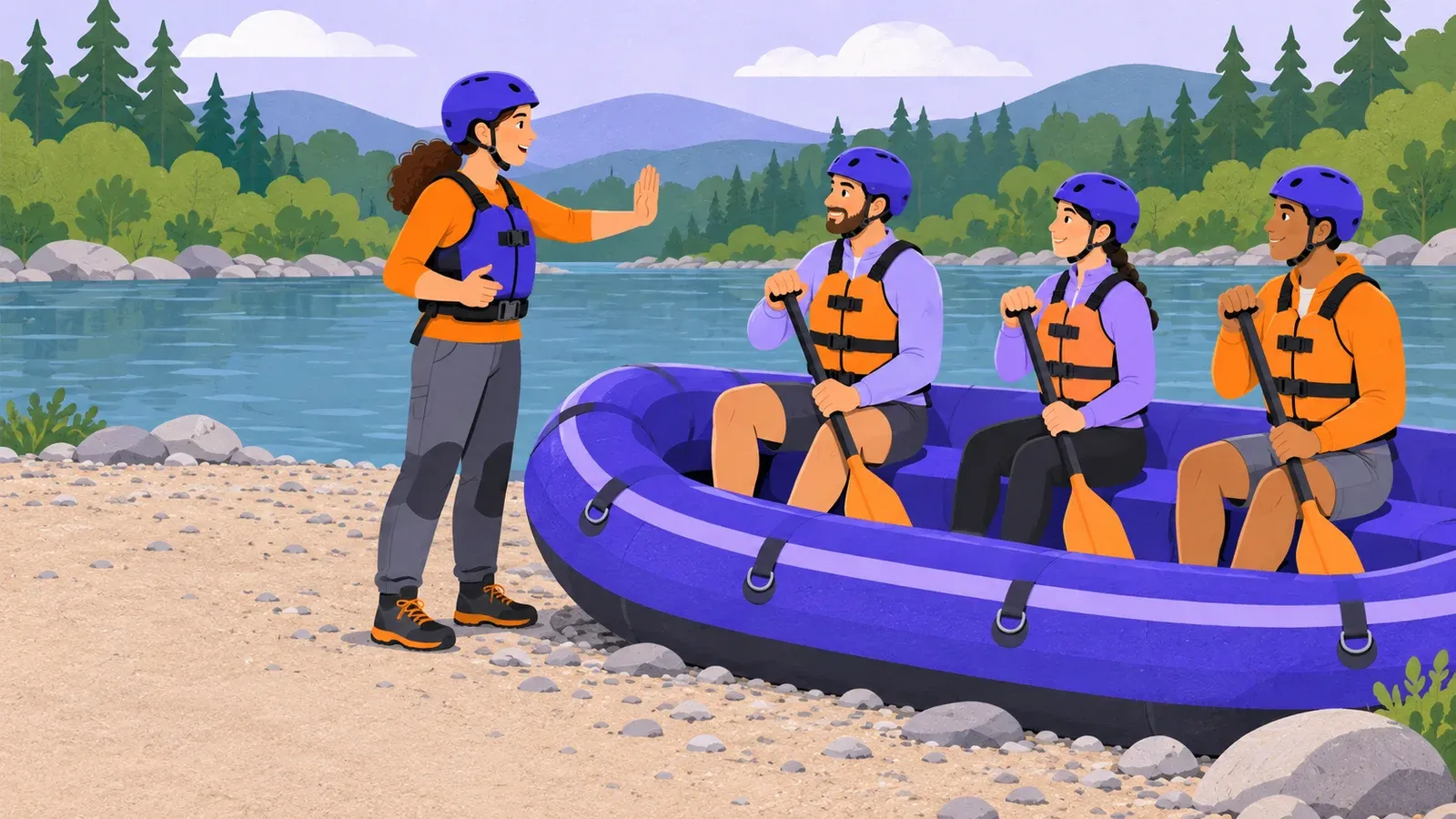
Have staff fit your life jacket and helmet. Ask the guide to show seating, foot brace, paddle grip and calls, and to explain what to do if someone falls out. Keep one hand over the paddle’s T-shaped grip to help keep the handle from hitting a teammate, the other on the shaft.
With the raft beached, practise a few forward strokes in time, then stop paddling on the guide’s call. Keep the blade low and clear of others. Once afloat, the raft can still drift after paddling stops. If a call or grip is unclear, ask the guide to repeat it on shore before launching.
Follow the calls on the river
On guide-selected calm water, paddle forward in time and stop on call. Listen while the raft continues moving. Stay seated and do not practise falling in. Tell the guide if cold, tired or missing calls. They choose the river line and any change of plan.
If the briefing or river feels beyond your comfort, step back before launch and ask about an easier guided float. Afterward, ask the guide which crew cue to practise next. Try it on another guided trip.

Choose and prepare for a trip
- NOC fully guided Nantahala tripCheck the current starting fare, trip length, equipment and guided format.
- NOC participant eligibilityReview its walking, instruction-following and equipment-fit requirements before booking.
- NOC trip questions and logisticsConfirm shuttle, parking, walk-up surcharge and weather arrangements.