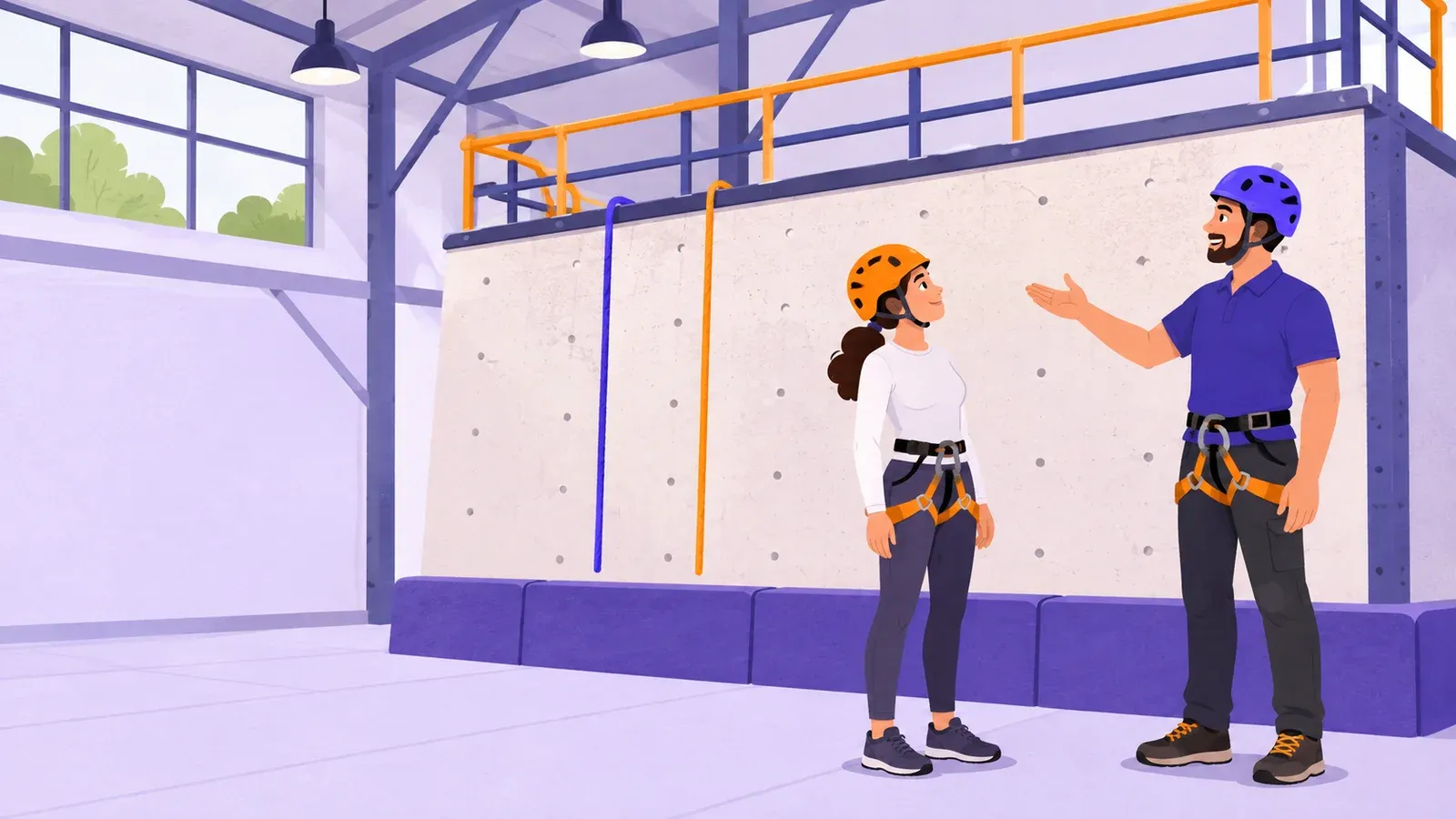
Try rappelling with a supervised first descent
- Cost to start
- £45 Brighton taster example
- Difficulty
- Beginner
- First result
- One short coached descent
Nov 2026. Technical kit included, travel extra
Instructor checks and controls the backup system
Ground practice counts if you decline the height
Book an indoor beginner abseil, rehearse a stop at ground level, then try a short instructor-managed descent only if you feel ready.
What you need to know
-
A qualified instructor and staff backup
Ask for an indoor beginner taster with an instructor qualified for that setting, venue-rigged ropes and a separate safety rope controlled by staff. Confirm the lowest practice option.
-
Fitted venue equipment
Have staff fit and check your helmet and harness and explain who connects and disconnects the ropes. Do not set up or adjust the technical system yourself.
-
Clothing and access that work
Wear closed trainers and comfortable long trousers. Tie hair back, tuck loose clothing and remove dangling jewellery. Ask what gloves the venue wants and whether stairs, weight or health limits affect you.
Choose a low indoor wall
Rock climbing moves upward on holds. Rappelling, called abseiling in the UK, is a rope descent using a friction device. A qualified instructor handles the system. Mountain Training explains qualifications for indoor walls. Before booking, confirm venue rigging, a separate staff-controlled safety rope, a low first option and the freedom to stop after ground practice.
Hatt Adventures in Brighton Marina, England, UK, listed a one-hour taster on a 15-foot indoor wall at £45 per person (November 2026). It supplies technical kit, sets a 115 kg limit and has steep stairs. Ask about availability, health or access needs, gloves and the backup arrangement before paying. Travel and missing clothing cost extra.
Rehearse the pause before height
Tell the instructor about nerves or discomfort. Wait in the marked safe area. Staff fit and check your helmet, harness and connections. Do not unclip or adjust them.
At ground level, have the instructor show the stance and start-and-stop action. Ask which is the braking hand and keep it on the rope as taught. Agree on a pause word such as “stop” and rehearse saying it while the instructor responds. You may decline the descent afterwards.
Take small steps and speak up
If you go on, wait for the instructor’s cue. Settle your weight into the harness and take small backward steps with feet apart, as shown. Keep your feet on the wall. Do not jump or rush.
If your feet bunch, you turn sideways or you rush, say the pause word. Keep your braking hand as taught and let the instructor correct your stance. If anything catches, hurts or feels wrong, ask to stop and wait for staff help. Do not fix or disconnect the rope system yourself.
At the bottom, wait for staff to clear and disconnect you. Name one awkward step to repeat on another low, supervised try. Independent rappelling needs further hands-on training.

Choose a supervised first session
- Hatt Adventures indoor abseil tasterCheck the Brighton session's price, supplied kit, steep-stair access and participation limits.
- Mountain Training instructor guidanceLearn which UK and Ireland qualifications fit instruction on an indoor abseil wall.
- Llangorse beginner tower tasterCompare the Welsh venue's low-tower introduction and clothing advice, then confirm its current price.
