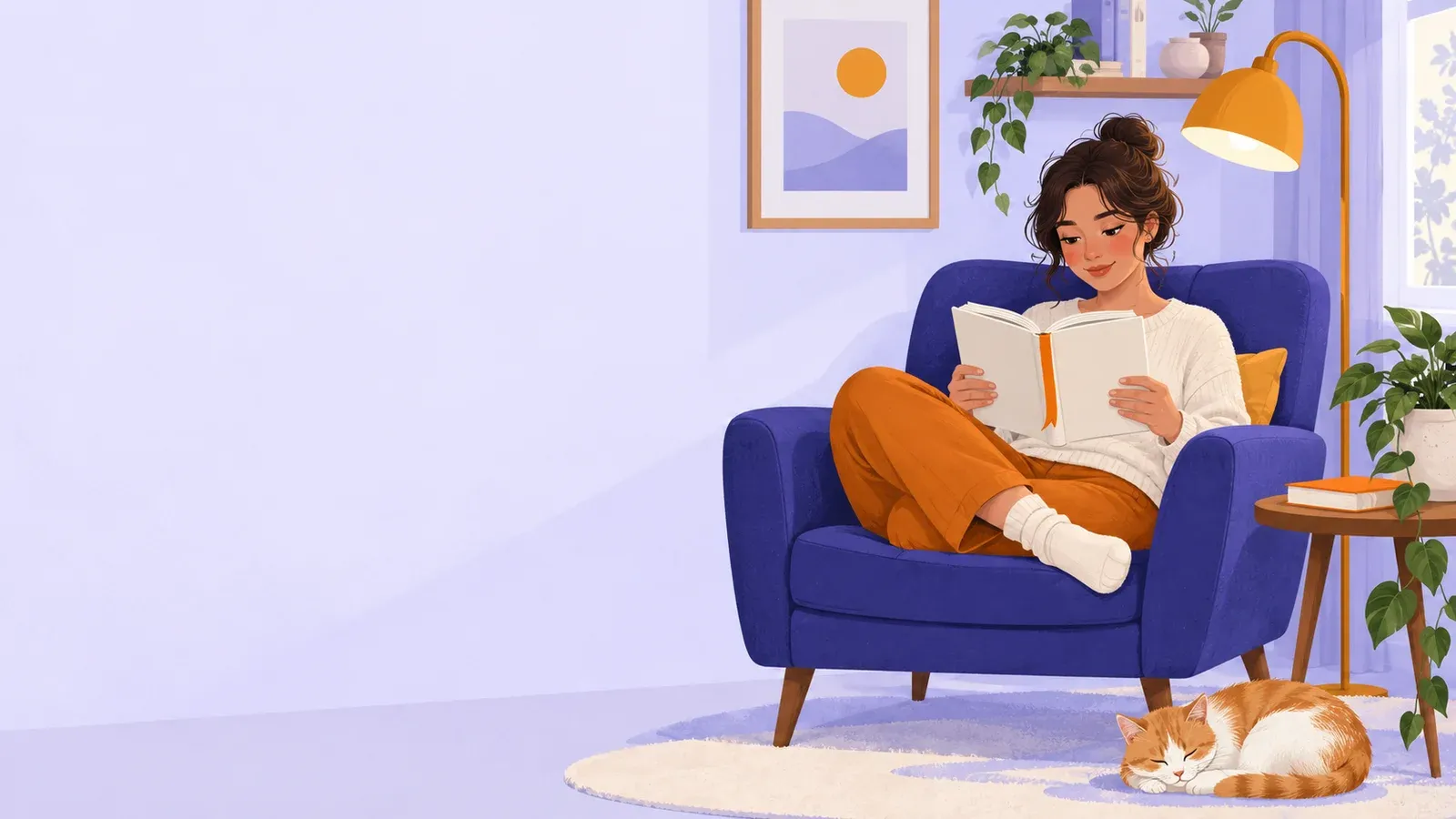
How to start reading for pleasure in short sessions
- Cost to start
- $0 using a book you own
- Difficulty
- Easy
- First result
- 15-20 minutes
Borrowing terms vary; a dedicated reading device is optional
Finding a style you enjoy may take a few samples
A first reading session and a decision about continuing the book
Choose a book that interests you, make time for a short first session, and adjust the format or reading choice when attention starts to wander.
What you need to know
-
Choose one appealing book
Start with a subject or story you already enjoy in another format; a short story, comic, or accessible nonfiction chapter can be enough.
-
Use what you have
Try a book at home, borrow from someone, or check your local library's membership and lending terms before buying.
-
Make the page comfortable
Use enough light and a relaxed seat; for an ebook, adjust the font size and spacing before the session.
-
Keep your place
A scrap-paper bookmark or the reader's bookmark function is sufficient; use a separate note if you want to record a reaction.
Reading for pleasure gives you time with a story or subject you choose. Your first goal is a session you would like to repeat.
Sample before committing
Read the description and a page or two. Notice whether you want to know what happens next or learn more about the subject. Put aside a book whose style feels like a struggle and sample another.
For shorter adult books, the UK Quick Reads programme is a useful starting point. Ask a librarian for something brief in a genre you like, mentioning any content you prefer to avoid.
If you use Project Gutenberg, its licence is based on United States copyright rules; readers elsewhere need to check their local rules. Its reading guide explains the browser option, so you can try an ebook before installing anything.
Give the book a short, quiet session
Set aside 15-20 minutes and silence notifications. Begin at the story or chapter itself. Read at a comfortable pace. If an unfamiliar word matters to understanding the passage, look it up; otherwise continue and see whether the context explains it.
When your attention wanders, return to the last paragraph you remember. Try a shorter session if you keep losing your place. An audiobook or large-print edition may suit you better, depending on what makes the page difficult.
Decide what to read tomorrow
At a natural pause, mark your place. Optionally write one sentence about a moment or idea that stayed with you. This gives you something concrete to recall next time.
Keep going with the same book if you are curious. If you are bored, identify what put you off, such as slow pacing or too much technical detail, and use that when choosing another. Leave the next book and bookmark somewhere convenient, and reserve another short session at a time you can usually manage.

Find something manageable
- The Reading Agency's Quick ReadsExplore short, accessible books for adults through this UK programme, then check availability locally.
- Project Gutenberg ebook catalogueBrowse older books and short-story collections, checking the ebook's licence and your country's copyright rules.
- Project Gutenberg reading optionsLearn to open a book in your browser or use an EPUB reader you already have.