
How to start rugby league with a simple passing drill
- Cost to start
- Borrowed ball + possible fees
- Difficulty
- Beginner
- First result
- Five backward passes caught
Use free permitted space; club sessions and travel are extra
Practise a gentle two-handed pass
Allow 20–30 minutes for warm-up, practice and rests
Try rugby league handling with a partner, learn a gentle backward pass and count controlled catches before joining a beginner session.
What you need to know
-
A borrowed oval rugby ball
Choose one you can grip comfortably in two hands. This passing drill needs no posts, full pitch or team.
-
A willing partner
Agree to throw gently only when the receiver shows ready hands.
-
Clear, permitted grass and two flat markers
Use dry, level ground with room around both people. Keep away from traffic and other players; stop if anyone enters the practice area.
-
Shoes, comfortable clothes and water
Wear grippy sports shoes and bring water. Ask a future beginner group about its equipment and fees before joining.
Rugby league is separate from rugby union. Standard teams have 13 players, with possession normally changing after the sixth tackle. This two-person drill covers handling only.
Set up a backward pass
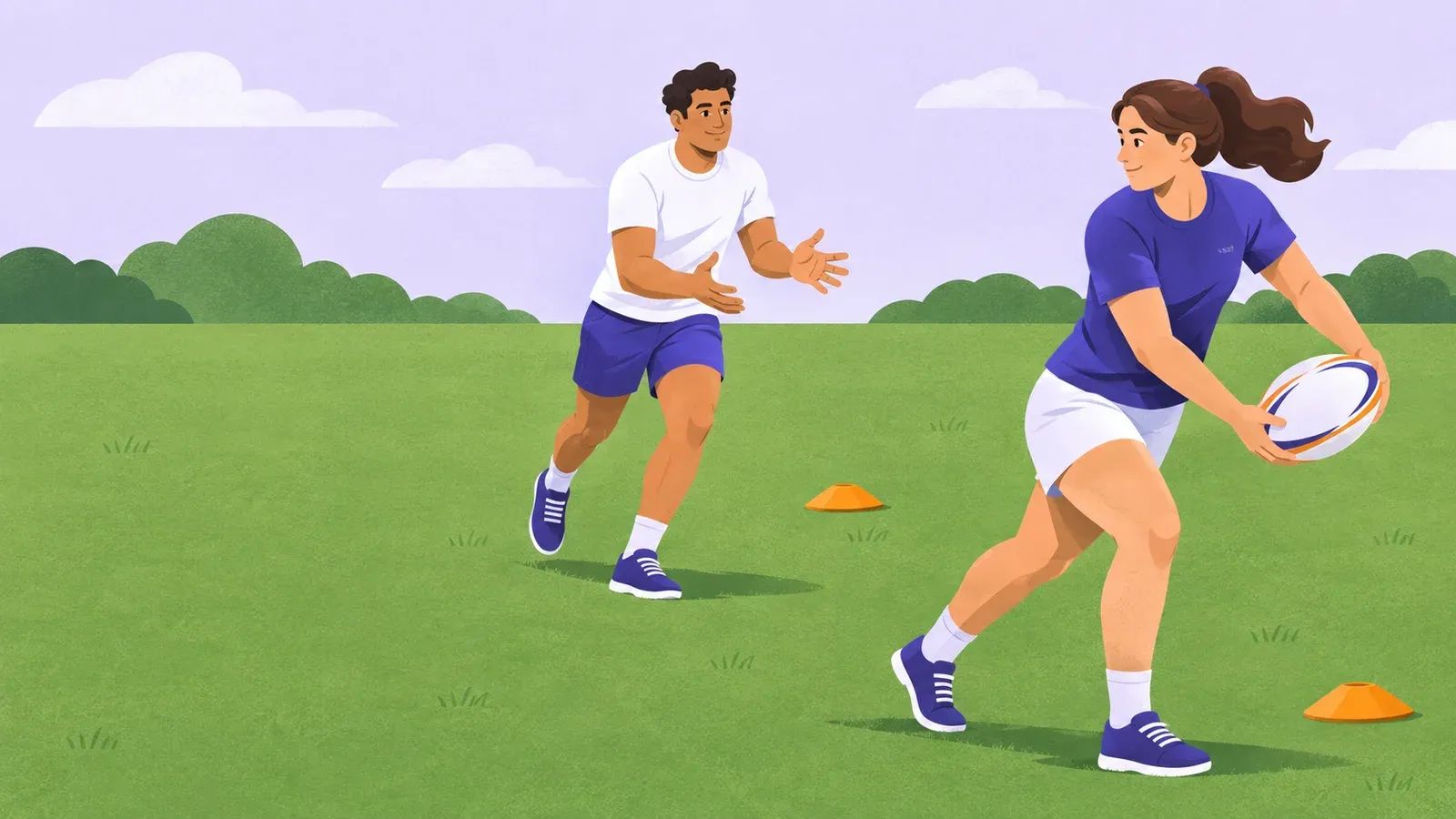
Check the grass, then warm up with easy walking and arm movements. Agree which direction is forward towards an imaginary goal. Mark the passer’s spot. Put the receiver’s marker about three metres sideways and one metre behind it. Both face forward, then turn their shoulders to see each other.
The receiver shows both hands and calls when ready. Hold the oval ball near your waist with fingers spread and one tip pointing down. Swing both hands through to send a short, gentle backward pass towards the receiver’s hands at chest height. The receiver watches the ball, catches it with both hands in front of the body and brings it under control.
Reset and count the catches
After each attempt, the receiver walks the ball back. Both return to their markers before the next pass. A straight throw back from the receiver’s spot would travel forward in your agreed direction. Count a success when the backward pass is caught under control. Aim for five, then change roles and reset the markers so the receiver remains behind the passer. If comfortable, move the receiver’s marker to the other side and try again.
If passes drop, narrow the gap while keeping the receiver behind, and soften the throw. Let a poor pass fall and retrieve it when the space is clear. Record caught passes and one adjustment that helped. Stop if a movement hurts or footing becomes slippery. Leave tackling, barging, kicking and contested catches for coached play.
Next time, find an adult rugby league beginner group or a suitable touch or tag session. RFL Touch RL is a minimal-contact format, so ask the organiser about its rules, eligibility, kit and fees. If you lack a partner or safe space, a group can be your first step.

Prepare for your first passing session
- RFL: beginner skills (PDF)Use the catching-and-passing card on PDF page 12 of this school resource for basic handling cues.
- Canberra Region Rugby League: catch and passReview ready hands, catching in front of the body and practising passes to both sides.
- RFL: Touch Rugby LeagueExplore minimal-contact clubs in England, then confirm beginner access, current sessions and charges.